
Canada’s revised National Building Code, published in December 2024, has imposed stricter energy efficiency and occupancy standards on loft-equipped steel garages reshaping permit requirements and construction costs for property owners from British Columbia to Ontario just as demand for the structures reaches a new high.
The NBC 2025 edition, released by the National Research Council of Canada, tightened thermal performance thresholds and occupancy classifications for accessory structures with conditioned space, including the growing category of steel garages built with enclosed upper-floor lofts. Permit activity for garages and accessory structures surged in major Canadian cities between 2020 and 2023, according to data tracked by the University of Toronto’s School of Cities, and industry participants say that pace has continued.
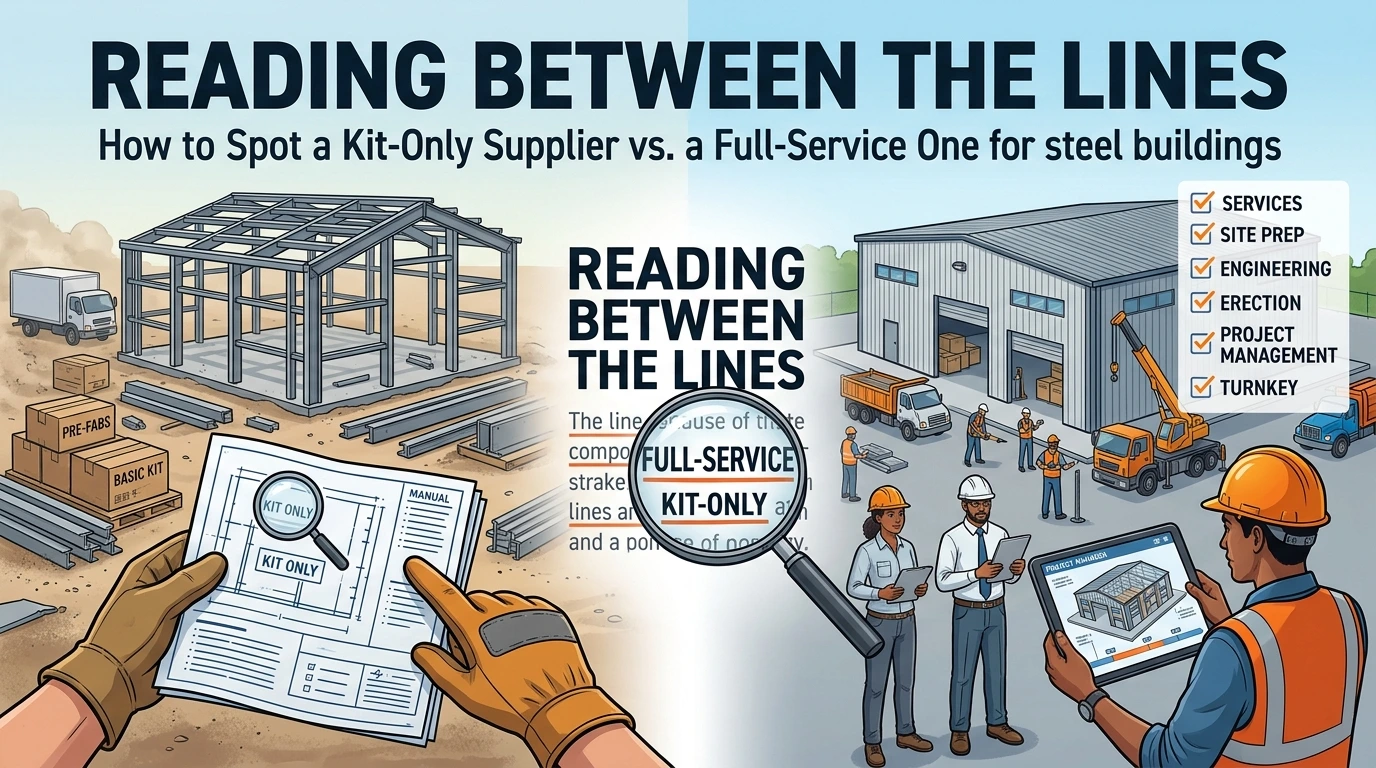
Some U.S. and overseas factories do carry welding certifications such as CSA W47.1, W47.2, W186, and W55.3 , but holding those certifications alone is not enough. Without AC660 certification, buildings produced by these manufacturers do not meet Canadian compliance standards and will not pass building code requirements. This is a critical distinction for anyone importing steel building kits from the U.S. or abroad. As Herbert Broderick, CEO of Metal Pro Buildings in Thornhill, Ontario, explains: “Each city and province has its own rules, and they’re getting more detailed, not less.” Imported steel building kits ( whether from the U.S. or elsewhere ) often arrive with U.S. engineering seals, which are not valid in Canada. Regardless of origin, every design must be stamped by a Canadian-licensed engineer referencing the correct NBC or provincial building code.
Provincial adoption of the NBC 2025 is rolling out on different timelines. Several provinces have not yet formally adopted the revised edition, meaning local requirements may still reflect earlier standards. Broderick said buyers should confirm current code adoption status with their local building department before finalizing structural drawings, since the applicable code determines insulation minimums, occupancy classifications, and fire separation requirements that directly affect both cost and schedule.
Structural demands rise with the loft floor
A steel garage with loft differs from a standard single-storey structure in one fundamental way: the upper floor must be engineered to carry live and dead loads safely, typically 1.9 to 4.8 kilonewtons per square metre depending on intended use. Cold-formed steel and I-beam framing systems are capable of spanning wide bays while supporting a full mezzanine or enclosed loft, an outcome achievable with wood framing but at a higher long-term maintenance cost, according to industry data.
Snow load calculations are a critical variable for loft-bearing steel garages. A building designed for Northern Ontario’s heavy snow load requires substantially different framing than one in Southern Alberta heavier gauge steel, deeper roof members, and reinforced bearing points where the loft floor meets the exterior walls.
Rocky View County in Alberta has issued specific design guidelines for “garages with habitable space,” requiring that loft areas meet minimum ceiling heights, egress window dimensions, insulation values, and fire separation distances from the garage bay below requirements that now align with the NBC 2025 provisions.
Permit requirements are non-negotiable
A building permit is required for all accessory buildings more than 10 square metres in most Canadian jurisdictions, according to guidance from the British Columbia Regional District of Okanagan-Similkameen. Structures with a loft, especially those with habitable space trigger additional requirements under Part 9 of the NBC, which governs small buildings of residential occupancy.
All engineered steel building packages for the Canadian market must also conform to CSA S16, the Canadian Institute of Steel Construction’s standard for the design of steel structures. For loft-bearing structures, compliance with both S16 and the applicable NBC or provincial building code is mandatory before any permit is issued.
Costs range widely by region and finish
Steel garage kits typically cost 30% to 50% less upfront than comparable wood-framed builds, according to industry data cited by Canadian steel building suppliers. Turnkey finished steel garages in 2025 are quoted broadly at $24 to $43 per square foot ($258 to $463 per square metre) across Canadian markets, with loft configurations, insulation, and regional labour costs pushing final pricing higher.
A two-car garage with a finished loft in Alberta or Saskatchewan typically lands between $80,000 and $140,000 CAD depending on size, finish level, and site conditions.
Finishing a loft for habitable use adds further cost. Electrical work, insulation, drywall, egress windows, and a compliant staircase can add $25,000 to $60,000 CAD to a project budget, depending on region and finish quality. Properties with legal secondary suites generally command a resale premium, according to commentary from accessory dwelling unit consultants in Ontario and British Columbia.
Insulation is not optional
Steel conducts cold. Without adequate insulation, a loft space in a Canadian climate becomes unusable for much of the year. Fiberglass batt insulation is a common baseline; spray foam provides superior air-sealing and vapour control, particularly in the Prairie provinces and northern Ontario where temperatures regularly reach –30 C and lower.
“The NBC 2025 update placed real emphasis on thermal performance for any conditioned space including workshop or office lofts,” Broderick said. “We advise clients to specify spray foam or a hybrid insulation system at the design stage. Retrofitting insulation in a steel-frame mezzanine is costly and disruptive.”
Canada’s pre-engineered steel building sector has tracked volatile material markets since 2020, when pandemic-era supply chain disruptions drove steel prices to record highs. Prices moderated through 2023 and 2024, but industry forecasts cited by Canadian building cost analysts point to flat or slightly higher steel costs through 2026, with rising labour and transport expenses offsetting material savings.
Provinces including Ontario, British Columbia, and Alberta have moved since 2024 to override restrictive municipal zoning and encourage accessory dwelling units , what planners call “gentle density.” A loft converted to a legal secondary suite above a steel garage can generate meaningful monthly rental income, particularly in high-demand markets such as the Greater Toronto Area, Metro Vancouver, and Calgary.