
Imagine waking up after a massive January blizzard. You look out your window, and where your shed used to be, there is only a twisted pile of metal or shattered plastic. Your expensive lawnmower and snowblower are now crushed under 400 pounds of wet snow.
For Canadians, a shed isn’t just “extra storage.” It is a survival pod for your gear. Our winters bring a “Deep Freeze” that can turn flexible materials into brittle glass. Then there is the “Snow Load” , the literal weight of winter pushing down on your roof for months.
Choosing the wrong material isn’t just a minor mistake. It is a $1,500 gamble that most people lose when the first “Polar Vortex” hits. This guide will show you which material actually stands its ground when the mercury hits -30°C.
Prefab Steel Sheds: The “Industrial Strength” Contender
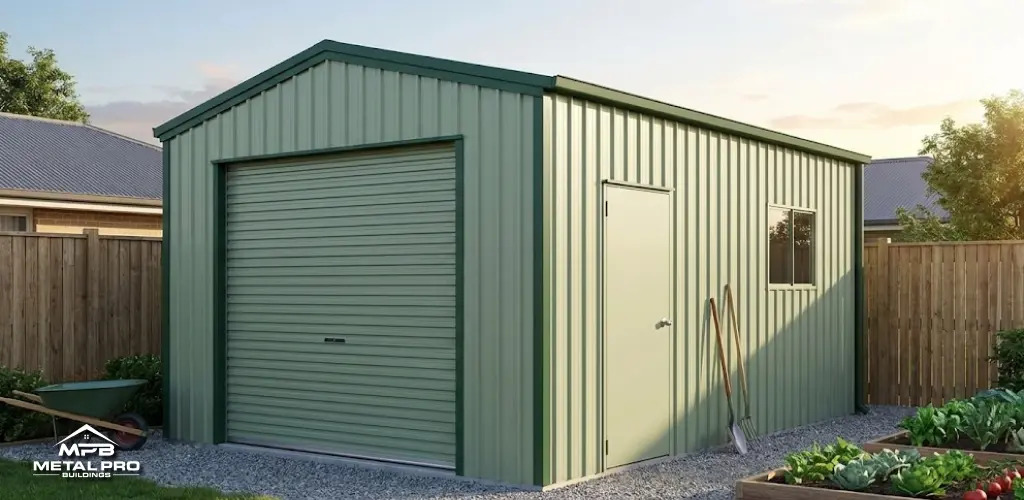
If you want a structure that acts like a vault, steel is your best bet. Prefab steel sheds are built for the long haul. They don’t just sit there; they work to keep your gear safe.
The Pros: Why Steel Rules the Tundra
- High Snow Load Ratings: Galvanized steel is the king of weight-bearing. While a cheap shed might buckle under a foot of snow, a quality steel shed can hold the weight of several full-grown grizzly bears.
- Fire & Pest Resistance: Steel doesn’t burn, and it certainly doesn’t taste good to mice. In the winter, critters look for warm places to nest. They can chew through wood and thin plastic, but they can’t get past a steel wall.
- Dimensional Stability: Unlike wood, steel doesn’t “warp” or “heave” when the sun comes out in February. It stays the same shape whether it’s +30°C or -30°C.
The Cons: The Metal “Must-Knows”
- The Rust Factor: In Canada, we use a lot of salt. If you live near a salty road or the coast, untreated steel can rust. Look for “Hot-Dipped Galvanized” steel to stop rust before it starts.
- Condensation Issues: Metal sheds can “sweat.” When warm air inside hits the freezing metal walls, water droplets form. This can ruin your tools if you don’t have good ventilation or a bit of insulation.
What to Look For: The Gauge Secret
Don’t be fooled by “budget” metal sheds. Most are made of 29-gauge steel, which is as thin as a soda can. For a Canadian winter, look for 26-gauge steel or thicker. The lower the number, the thicker the metal. A 26-gauge shed is roughly 25% thicker than a budget model, which makes a huge difference when the wind starts howling.
Big Box Vinyl Sheds: The “Low-Maintenance” Alternative
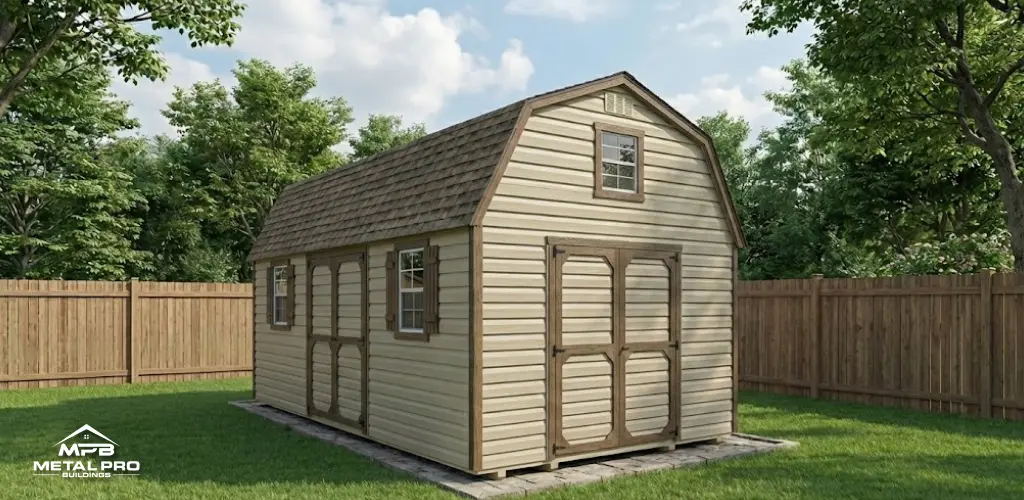
You’ve seen them at every major hardware store. They look like mini-cottages and come in “Desert Sand” or “Classic Gray.” Vinyl (or resin) sheds are the most popular choice for suburban backyards, but how do they handle a Yukon-level freeze?
The Pros: Why Canadians Love Vinyl
- Zero Rust: This is the biggest win. If you live in the Maritimes or near a salted highway, vinyl won’t care. It won’t peel, rot, or corrode.
- Aesthetic Appeal: Let’s be honest steel sheds can look like industrial shipping containers. Vinyl sheds often have shingle-style roofs and faux-wood siding that matches your house perfectly.
- Double-Walled Insulation: Many vinyl sheds use a double-wall design. This creates a small air pocket that acts as a natural thermal buffer, keeping the interior slightly less “fridge-like” than single-sheet metal.
The Cons: The Cold Hard Truth
- The “Brittle” Risk: While modern high-density polyethylene (HDPE) is tough, many “big box” vinyl sheds can become brittle at -30°C. If you accidentally hit the wall with a snow shovel in mid-February, it can crack or shatter rather than dent.
- Roof Sag: Most vinyl roofs are rated for about 20 lbs per square foot. In many parts of Canada, a single heavy snowfall can double that weight. Without an aftermarket “snow load kit” (extra steel beams for the roof), your ceiling might start to look like a bowl by March.
- The February Door Jam: Vinyl expands and contracts more than steel. In the summer heat, the material grows. In the winter, it shrinks. If the shed isn’t perfectly level, you might find that your doors simply won’t latch during a cold snap.
Head-to-Head: The Winter Survival Matrix
When the winds howl across the Prairies or the snow piles high in Quebec, you need to know exactly how these materials compare. This matrix breaks down the “make or break” factors for Canadian homeowners.
| Feature | Prefab Steel | Big Box Vinyl (Resin) |
| Snow Load | Superior. Can handle 30+ lbs/sq ft easily. | Moderate. Often needs a “Snow Kit” to prevent sagging. |
| Wind Resistance | High. Heavy and stays anchored in “Clipper” winds. | Low. Lightweight; can act like a sail if not anchored. |
| Cold Impact | Indestructible. Does not get brittle in the freeze. | Sensitive. Can crack if hit by a shovel at -30°C. |
| Rust/Corrosion | Risky. Needs galvanized coating to survive road salt. | Immune. Salt and slush won’t touch it. |
| DIY Setup | Hard. Sharp edges and hundreds of tiny screws. | Easy. Panels snap together like giant Lego bricks. |
The Wind Factor: Anchors Aweigh!
In a “Prairie Clipper,” a vinyl shed is a liability. Because they are lightweight, they have been known to “walk” across yards or even flip over if the wind gets under the floor. Steel is naturally heavier and offers a lower profile to the wind, making it the safer bet for open, windy areas.
The Snow Squeeze
While steel handles the weight, vinyl offers one sneaky advantage: snow slide. High-quality vinyl roofs are often smoother and steeper. This allows snow to slide off before it can build up to dangerous levels. However, if that snow stays on top, steel is the only material that won’t bow or “creep” over time.
The Foundation: The Secret to Winter Survival
It doesn’t matter if your shed is made of aerospace-grade steel or high-tech resin; if your foundation is weak, your shed is doomed. In Canada, the ground doesn’t just sit still ,it “heaves.”
The Frost Heave Factor
When the water in the soil freezes, it expands. This can lift your shed several inches in one corner and not the other.
- The Result: Your steel shed doors won’t close, or your vinyl shed wall panels might literally pop out of their tracks.
- The Fix: Never build a shed directly on bare grass or dirt.
Best Foundation Choices for Cold Climates
- Concrete Pads: The gold standard. A 4-inch thick reinforced concrete pad is heavy enough to stay put and provides a perfectly level surface.
- Gravel and Pressure-Treated Frames: A cheaper, highly effective alternative. Dig out 6 inches of soil, fill it with crushed stone (3/4″ clear), and build a frame using 4×4 pressure-treated runners. This allows water to drain away from the shed so it doesn’t freeze and lift the structure.
- Screw Piles: If you live in an area with very soft soil or high moisture, “Techno Posts” or screw piles go below the frost line (usually 4 feet deep). This ensures your shed stays level even if the top layer of ground turns into an ice rink.
The Importance of Anchoring
A winter “Clipper” or a spring “Nor’easter” can turn a vinyl shed into a kite. Always use heavy-duty masonry anchors for concrete or auger-style earth anchors for gravel foundations. If the wind gets under the floorboards, the sheer force can rip the walls right off the base.
Which One Should You Buy?
Choosing between steel and vinyl comes down to where you live in Canada and how much work you want to do. Both can survive the winter, but they do it in different ways.
Choose Steel If:
- You live in a “Snow Belt”: If you regularly see two feet of snow on your roof, the structural strength of a 26-gauge steel frame is non-negotiable.
- Security is a Priority: Steel is much harder for thieves (or persistent bears) to break into.
- You want a 20+ Year Investment: With proper anchoring and a good foundation, a quality steel shed will likely outlast your mortgage.
- You’re storing heavy gear: If you have an ATV or a heavy commercial snowblower, the rigidity of steel handles the weight better.
Choose Vinyl If:
- You live on the Coast: If you’re in the Maritimes or near the Great Lakes, the salt air will eat budget steel. Vinyl is immune to rust.
- You value Aesthetics: If you want your shed to look like a beautiful extension of your home rather than a workshop, vinyl is the winner.
- You want “Set-and-Forget”: If the idea of checking for rust spots every spring sounds like a chore, vinyl’s low-maintenance life is for you.
- You have a moderate snow-clearing plan: As long as you don’t mind brushing off the roof after a big storm, a vinyl shed will serve you well.
The Bottom Line
In the battle of Steel vs. Vinyl, there is no single winner, only the right tool for the job. For pure “Industrial Strength” to survive a brutal Prairie winter, Steel takes the crown. For a stylish, rust-proof storage solution in a suburban backyard, Vinyl is hard to beat.
Whichever you choose, remember: The shed is only as good as the foundation it sits on. Get your gravel or concrete ready before the first frost hits!
Don’t Just Survive Winter , Conquer It with Metal Pro™
At Metal Pro™ Buildings, we don’t believe in “budget” metal that buckles under the first snowfall. We engineer our structures specifically for the Canadian climate. While big-box stores sell thin plastic and flimsy 29-gauge sheets, we provide industrial-grade protection for your home.
Why Canadians Choose Metal Pro™:
- The Industry’s Toughest Steel: We use 22-gauge steel or thicker, significantly more robust than what you’ll find at a retail store.
- Galvalume Plus™ Coating: Our sheds aren’t just “painted.” They are coated in an advanced aluminum-zinc alloy that is incredibly resistant to heat, corrosion, and rust.
- 50-Year Rust Perforation Warranty: We are so confident in our materials that we protect your investment for half a century.
- Engineered for Your Postal Code: Every Metal Pro building comes with engineered drawings to ensure it meets your local building codes for snow and wind loads.
Ready to give your gear the protection it deserves?
Don’t wait for the next blizzard to find out if your shed is up to the task. Use our 3D builder to design your custom storage solution or contact our experts today for a free quote.