
You’ve chosen a metal building smart move. But now you’re stuck on one question: bolt-up or weld-up?
You’ve searched online. You’ve gotten conflicting answers. Maybe a salesperson pushed one option without explaining why. The confusion is real and common.
This article cuts through the noise. You’ll get a clear, no-fluff breakdown of both systems costs, performance, Canadian climate considerations, and which one fits your project.
At Metal Pro, we’ve helped hundreds of Canadian farmers, business owners, and developers make this exact call. Here’s what we’ve learned.
Because getting it wrong isn’t just an inconvenience. It can mean cost overruns, permitting delays, and a building that wasn’t built for a Saskatchewan winter.
Let’s make sure that doesn’t happen to you.
First, Let’s Get Clear on What Each System Actually Is
Before you compare them, you need to understand what you’re actually comparing. These two systems are built differently, from the ground up.
What Is a Bolt-Up Metal Building System?
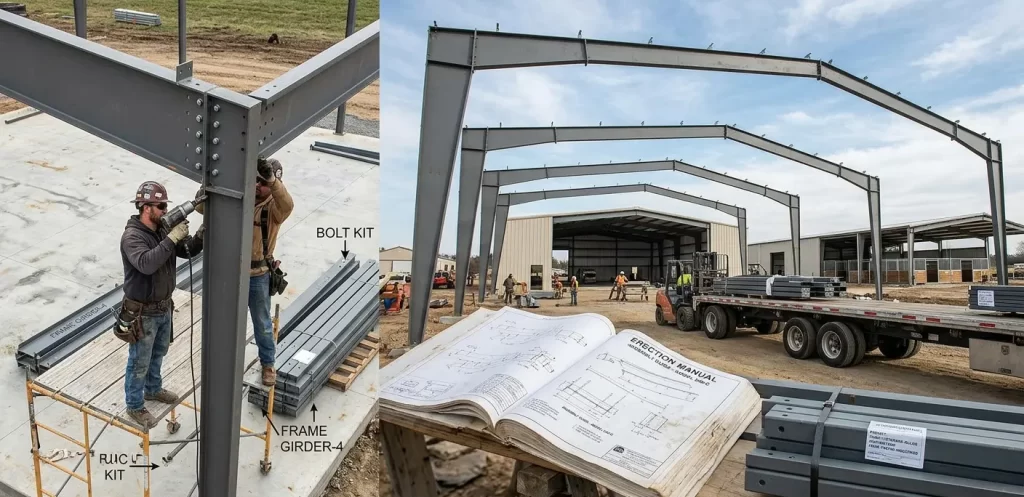
A bolt-up building is manufactured off-site in a factory. These prefabricated structures don’t require on-site welding , they’re assembled with bolts.
Components arrive with pre-drilled holes so pieces line up and bolt together perfectly. The building kit is then shipped to the job site and assembled according to an erection manual.
You’ll also hear these called pre-engineered metal buildings (PEMBs), prefab steel buildings, or rigid-frame systems. Same thing, different names.
They’re used across a wide range of applications : industrial, commercial, agricultural, aviation, dairy, and equestrian.
What Is a Weld-Up Metal Building System?
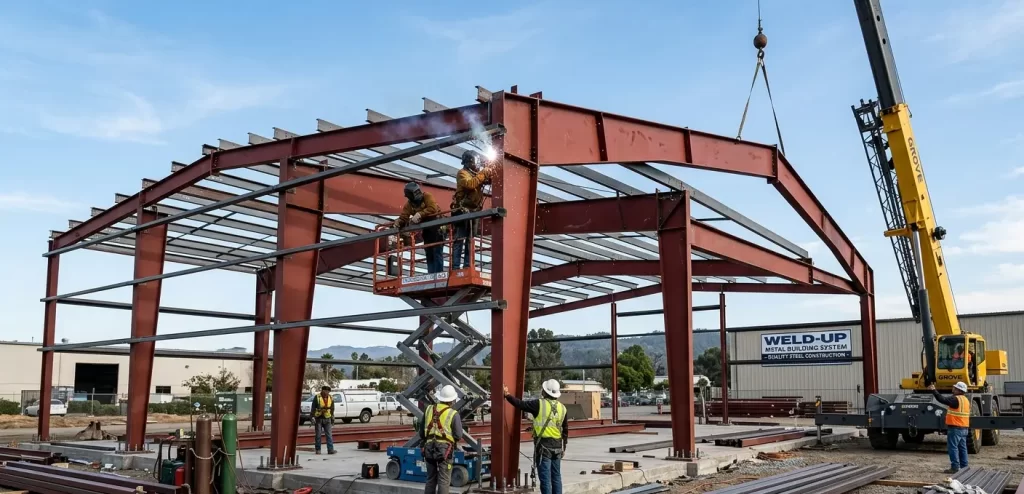
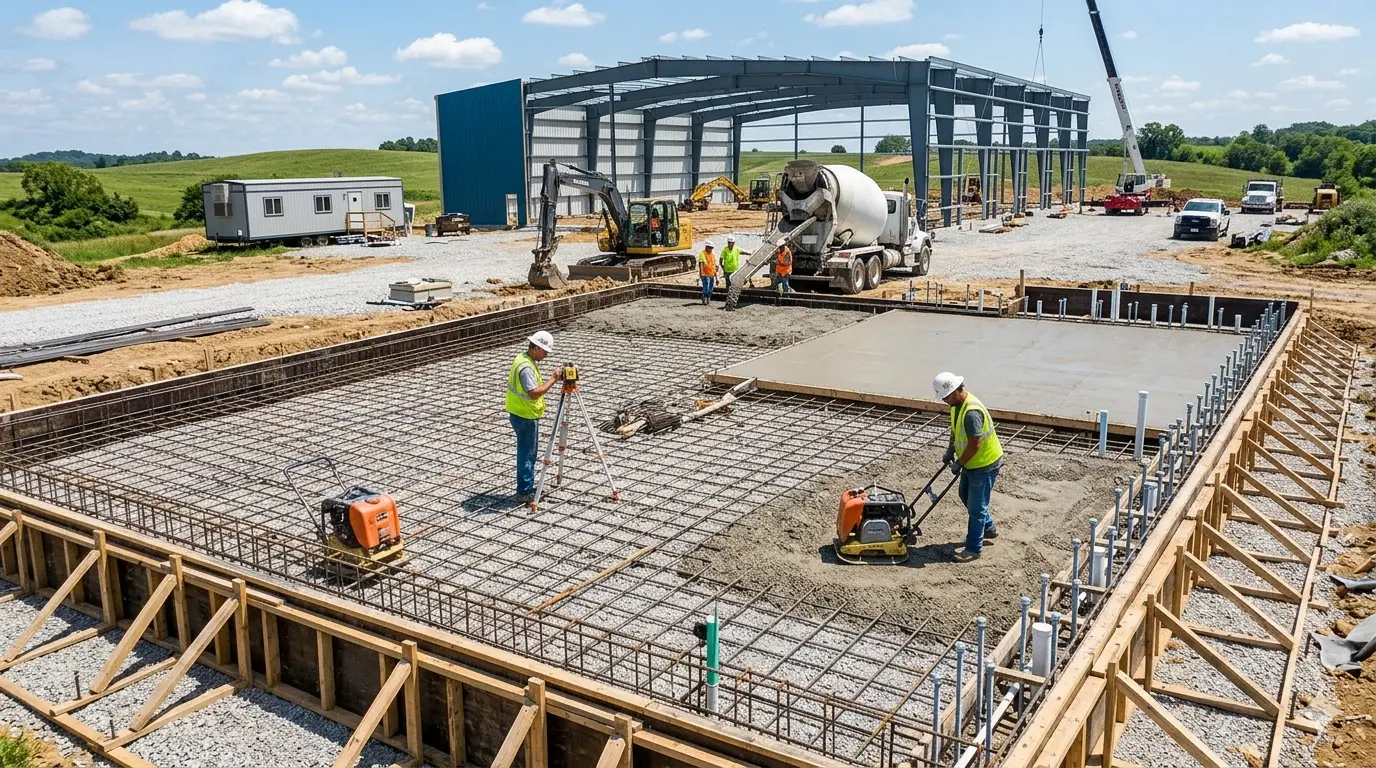
Weld-up or field-welded steel buildings are fabricated at the job site. The steel framing is usually made of steel pipe bought locally.
Construction materials are sourced locally, prepared on-site, and welded at the job site. This requires less pre-project engineering but a lengthier on-site process.
In short: weld-up buildings are custom-built in the field by your crew, from raw steel. Every cut, measurement, and joint happens on your property.
The Core Difference in One Sentence
Bolt-up systems are engineered before they arrive. Weld-up systems are engineered as they go up.
That one difference ripples into cost, timeline, quality, and permitting , which we’ll break down in the next section.
The Real-World Pros & Cons , Side by Side
Here’s where the rubber meets the road. Let’s look at both systems honestly.
Bolt-Up Metal Buildings : Pros
Speed of construction. Pre-engineered components arrive on-site ready to be bolted together. Pre-drilled holes and pre-cut parts make the process smoother and faster.
This is critical when you’re racing against a Canadian winter.
Cost predictability. Because bolt-up buildings are manufactured in a controlled environment, there is less waste, and material costs are lower. Labor expenses are also reduced since the assembly process is faster and requires fewer workers.
Quality consistency. Most factories that manufacture bolt-up steel buildings employ quality control staff and certified welding inspectors. You’re not relying on the skills of whoever shows up on-site.
Easier permitting. Because bolt-up metal buildings are pre-engineered, they can be designed to meet local regulations from the get-go. Municipalities know these systems. Approvals move faster.
Expandability. Bolt-together buildings are easily the best choice for owners who may decide to expand their building down the road. Planning ahead? This matters.
Easier repairs. If a bolt-up steel building ever sustained damage, simply unbolt and replace with a similar component from the manufacturer, no welding or cutting required .
Bolt-Up Metal Buildings : Cons
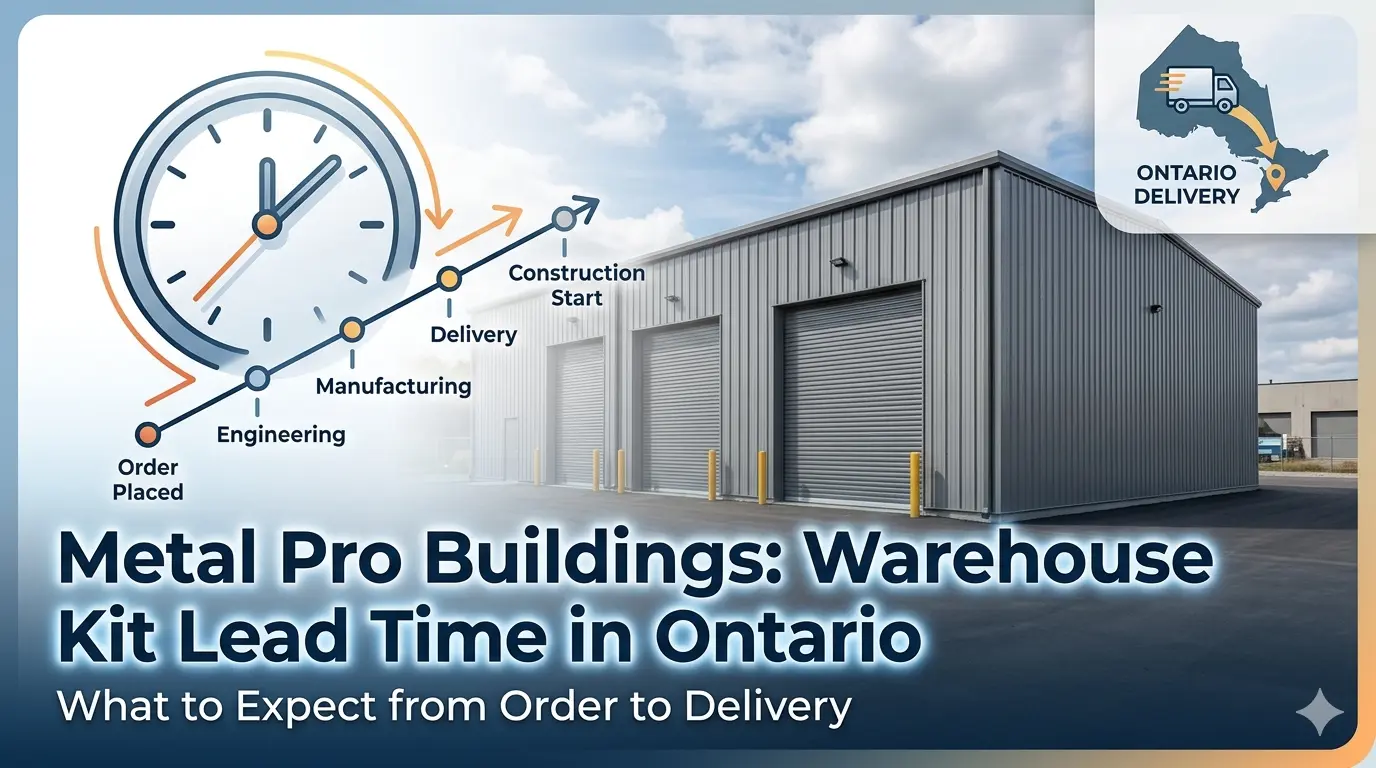
Lead times for components. Since a bolt-up building must be designed, engineered, and fabricated before delivery, the process is longer than weld-up. Plan your timeline accordingly.
Less flexibility for truly unusual shapes. While bolt-up customization may not be as extensive as welded-up construction, the available options often meet the demands of most customers. Truly unconventional designs may have limits.
Expansion complexity in some directions. Pre-engineered buildings are easy to expand in a longitudinal direction , you simply add more bays. Upward or adjacent expansions may be more difficult.
Weld-Up Metal Buildings : Pros
Maximum customization. If your project calls for a highly specific or unique design, welded-up buildings are typically the go-to solution. The on-site fabrication process allows contractors to fully customize the structure to meet unique specifications.
Faster material delivery. A contractor can usually pick up an order for a weld-up building within 24 hours. The materials arrive quickly , even if assembly takes longer.
On-the-fly adjustments. Because everything is fabricated on-site, your crew can adapt to unexpected site conditions without waiting on a factory.
Weld-Up Metal Buildings : Cons
Higher labour costs. Weld-ups require skilled labor unlike bolt-ups, which can be done without it . In Canada, certified welders are in short supply and they charge accordingly.
Quality variability. A metal building’s strength is only as good as the strength of its structural steel connections. How do you know the person you hired to field-weld your framing knows their stuff? Factory controls don’t exist on a job site.
Permitting headaches. Weld-up buildings have no engineering behind them. Permitting will be difficult to impossible in many places. Every weld must be individually inspected, tested, and approved , an arduous process .
Harder to modify later. Weld-together buildings can be exceedingly difficult to modify if you ever need to alter or expand the building. Any changes mean cutting and re-welding , disruptive and costly.
Weather dependency. Welding outdoors in a Canadian winter is slower, more expensive, and can compromise weld integrity. Cold steel and open-air conditions don’t mix well.
Quick Comparison Table
| Factor | Bolt-Up | Weld-Up |
| Construction speed | ✅ Fast | ❌ Slow |
| Upfront material cost | 🟡 Moderate | ✅ Lower |
| Total project cost | ✅ Lower | ❌ Higher |
| Labour required | ✅ General crew | ❌ Certified welders |
| Permitting | ✅ Straightforward | ❌ Complex |
| Customization | 🟡 Good | ✅ Maximum |
| Expandability | ✅ Easy | ❌ Difficult |
| Weather sensitivity | ✅ Low | ❌ High |
| Repair & maintenance | ✅ Simple | ❌ Labour-intensive |
The Factor Most People Forget: Canadian Climate Performance
Most articles about bolt-up vs weld-up skip this entirely. That’s a problem because Canada isn’t like anywhere else.
Your building doesn’t just need to look good on paper. It needs to survive -40°C in Saskatchewan, a metre of snow on the roof in Quebec, and coastal wind uplift in BC. That’s a completely different standard than what generic content addresses.
Snow Loads Vary Dramatically Across Canada
Not all roofs carry the same burden. Snow load refers to the accumulation of snow over time and the resulting downward force from the weight of snow and ice on a building’s roof.
That force varies enormously depending on where you build.
Every building in Canada must follow the National Building Code of Canada (NBCC). Engineers start by looking at the Ground Snow Load for your specific location. Rain load is also critical, because rain makes snow significantly heavier especially in Northern Quebec and the Maritimes.
A building designed for Kelowna, BC carries a very different snow load than one built in Timmins, Ontario. Depending on your location, design snow loads may range from roughly 1 kPa upward calculated for extreme one-in-fifty-year events, factoring in drift, wind, and rain.
Getting this wrong isn’t a minor detail. It’s a structural failure waiting to happen.
How Bolt-Up Systems Handle This Better
Pre-engineered steel buildings are engineered using the National Building Code of Canada, meaning the roof framing, trusses, and support systems are built to exceed regional snow-load requirements. Unlike wood, steel does not sag or weaken under heavy accumulation.
Rigid-frame designs distribute weight evenly even under crushing loads. Trusses are designed precisely to bear local snow loads, often exceeding the toughest regional codes.
Bolt-up systems are engineered to your exact postal code , before a single bolt is tightened. The calcs are done, stamped, and submitted to your municipality. There’s no guesswork on-site.
Weld-up systems, by contrast, depend on the crew to get those calculations right in the field. Field fabricated weld-up building systems can only be erected where building codes allow and where an engineer’s stamp is not required. In most Canadian municipalities, that’s becoming an increasingly short list.
Freeze-Thaw Cycles and Wind Uplift
Canada’s climate doesn’t just pile snow on your roof , it cycles through brutal freeze-thaw patterns that stress every joint and connection in your building.
Freeze-thaw protection requires reinforced slab edges and building components that don’t deteriorate when temperatures swing between extremes. Bolt-up systems use engineered fasteners and high-strength structural steel specifically designed for this. Weld quality on a cold job site, on the other hand, is highly variable and compromised welds under thermal stress are a real long-term risk.
On the Prairies and in coastal BC, wind uplift is a serious design factor. Wind load refers to the force placed on the exterior of a structure by wind. Extreme wind events including tornadoes and severe thunderstorm gusts must be considered, particularly as climate patterns shift.
Canada’s 2025 National Building Code now incorporates future climate projections for the first time adjusting design values for heat, cold, wind, and snow to reflect conditions expected over a building’s full service life. Pre-engineered bolt-up systems are updated to meet these evolving standards. A field-welded structure built without stamped engineering has no such assurance.
The Bottom Line on Climate
Your building needs to perform in -40°C, shed a metre of snow without flinching, and stand firm against Prairie gusts. This isn’t the place to rely on a welder’s best judgment on a cold January morning.
Pre-engineered steel buildings are designed to meet CSA and National Building Code standards, including province-specific load requirements with no rot, no pest damage, and no warping after the third hard winter.
That kind of certainty doesn’t happen by accident. It’s engineered in , before the first component ever leaves the factory.
Cost Comparison: What Are You Actually Paying For?
Budget is usually the first question and the most misunderstood one. The cheapest quote isn’t always the cheapest building. Here’s what the numbers actually look like.
Building Kit / Material Costs
| Cost Item | Bolt-Up | Weld-Up |
| Base material cost (CAD/sq ft) | $20–$30/sq ft starting point | $20–$45/sq ft |
| Kit package includes | Engineered components, pre-drilled, pre-cut, hardware | Raw steel cutting, shaping, welding extra |
| Material waste | Minimal , factory precision | Higher, on-site fabrication increases material wastage |
| Engineering drawings | Pre-stamped drawings included , saves $5,000–$15,000 in consultant fees | Separate engineering required , additional cost |
Labour Costs
| Cost Item | Bolt-Up | Weld-Up |
| Labour type required | General crew , no certifications needed | Certified welders only , hourly rates are high |
| Welder hourly rate | N/A | $60–$125/hr , up to $150+/hr for structural applications |
| Labour as % of total project | 30–40% of total project cost | Significantly higher , more hours, more skilled trades |
| Weather impact on labour | Low , assembly works year-round | High, cold weather slows welding, requires pre-heating steel |
| Labour shortage risk | Low | High , labour shortages across North America have increased completion times by up to 25% |
Timeline & Carrying Costs
| Cost Item | Bolt-Up | Weld-Up |
| Delivery lead time | 4–8 weeks from order | Raw materials in days , but on-site build takes far longer |
| Construction speed | Up to 40% shorter construction times, measured in weeks, not months | Weeks to months longer on-site |
| Winter construction | Bolt-up assembly works in Canadian winters , avoids 5-month project freezes | Outdoor welding in cold weather: slower, costlier, quality risk |
| Carrying cost risk | Low , faster to operational | High , every delay costs equipment rental, idle crew, lost revenue |
Permitting & Long-Term Costs
| Cost Item | Bolt-Up | Weld-Up |
| Permitting process | Straightforward , stamped drawings included | Difficult to impossible in many places ,every weld must be individually inspected, tested, and approved |
| Inspection complexity | Low | High , adds days to project timelines |
| Repair & maintenance | Simple , unbolt and replace damaged component, no cutting or welding required | More expensive and labour-intensive , cutting and re-welding required |
| Insurance premiums | Save up to 40% on premiums , engineered to withstand snow, wind, and seismic activity | Standard or higher , non-stamped systems harder to assess |
| Expandability cost | Low , bolt on new sections | High , cutting and re-welding required |
The Bottom Line
Upfront material costs for weld-up are sometimes less than bolt-up, but those savings disappear fast when you factor in the full project lifetime.
Bolt-up’s pre-fabrication process significantly reduces manufacturing expenses. Combined with reduced need for skilled labour and quicker assembly time, the overall project cost is lower.
The cheapest building isn’t the one with the lowest quote. It’s the one that goes up on time, performs for 40 years, and doesn’t surprise you with costs halfway through.
Which System Is Right for Your Project?
There’s no universal answer. But there is a right answer for your project. Use this framework to find it.
Choose Bolt-Up If You:
Need to be operational quickly. If time is of the essence, bolt-up is the best route. The pre-engineered components arrive ready to assemble , drastically cutting on-site construction time.
Want cost certainty. Bolt-up buildings cost less long-term. Construction time is shorter, and owners can build the structure themselves rather than paying a contractor.
Are building in extreme weather conditions. Bolt-up assembly works year-round in Canadian winters. You’re not waiting on a welder to pre-heat steel at -30°C.
Plan to expand later. Bolt-up buildings can be disassembled and reassembled at a new location if required , something weld-up simply cannot offer.
Want smooth permitting. Because bolt-up buildings are pre-engineered, they can be designed to meet local regulations from the get-go , with an engineer’s stamp already included.
Are a first-time builder. Most first-time builders opt for bolt-up steel buildings for the ease of assembly; any builder with ordinary tools and easy-to-read instructions can erect one.
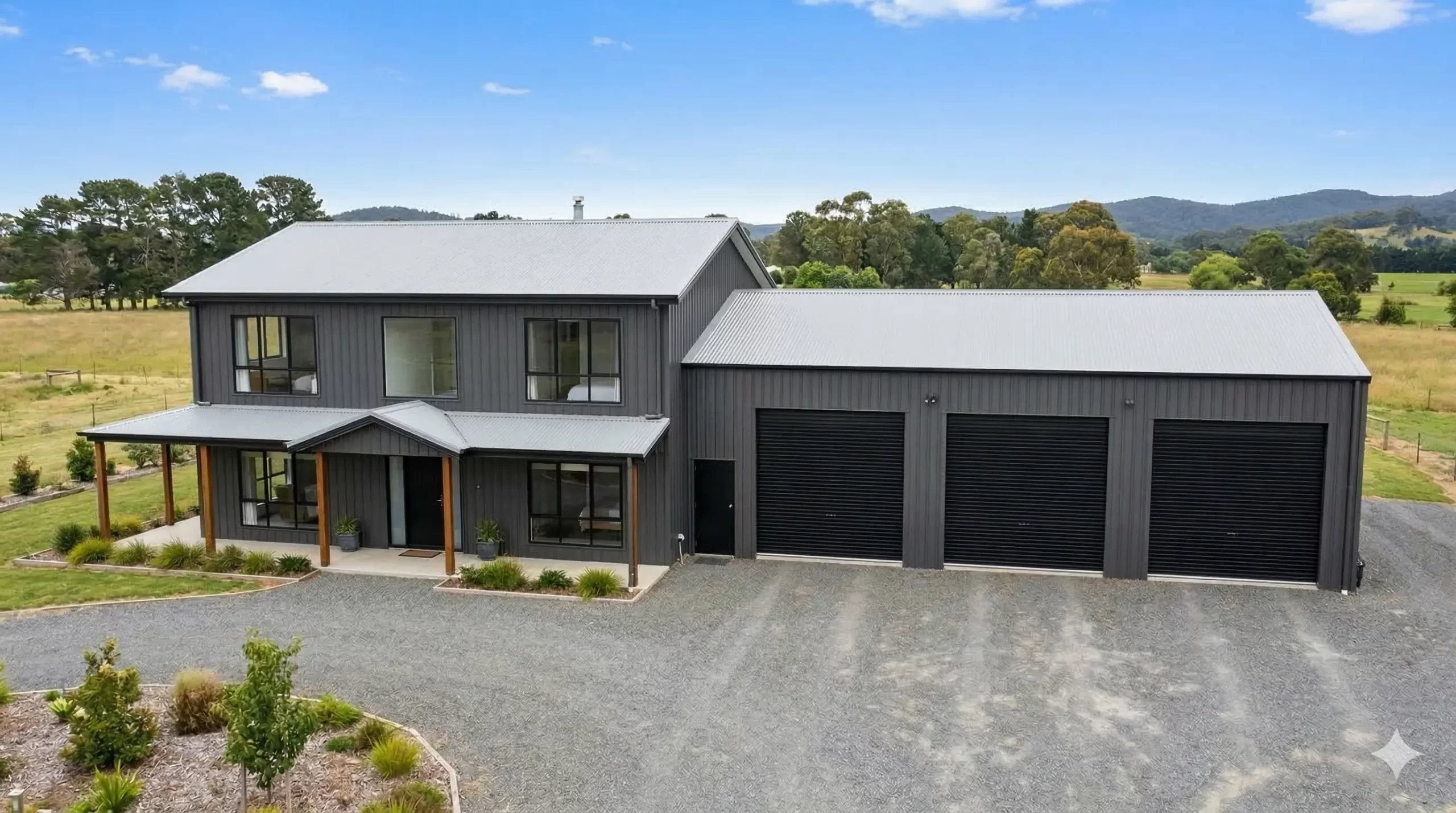
Are building for agricultural, commercial, or industrial use. Bolt-up buildings are ideal for warehouses, workshops, storage facilities, and other standard projects where efficiency and cost-effectiveness are key priorities.
Consider Weld-Up If You:
Have a genuinely unusual structural requirement. Weld-up buildings are better suited for projects that require extensive design flexibility or must meet unique environmental demands , heavy-duty industrial operations, specialized machinery storage, or custom architectural designs.
Are in a remote area with limited supply chains. A contractor can usually pick up weld-up materials within 24 hours , useful when you’re far from a bolt-up manufacturer’s delivery network.
Already have a trusted, certified welding crew engaged. If the labour is secured and the expertise is verified, weld-up can work , but the conditions need to be right.
Metal Pro’s Honest Take
In our experience working with clients from BC to Nova Scotia, the vast majority of agricultural, commercial, and industrial projects are better served by a bolt-up system on cost, timeline, quality control, and long-term performance.
Bolt-up steel buildings are more durable, flexible, and cost-effective than weld-up buildings. For builders interested in ease of construction, quality, and safety , the choice is straightforward.
That said, every project is different. We’ll always tell you if yours is the exception.
Quick Decision Checklist
| our Situation | Best Fit |
| Tight deadline harvest, business launch, lease expiry | ✅ Bolt-Up |
| Need cost certainty and a fixed budget | ✅ Bolt-Up |
| Building in extreme Canadian climate | ✅ Bolt-Up |
| Plan to expand or modify in the future | ✅ Bolt-Up |
| First-time builder or general crew | ✅ Bolt-Up |
| Agricultural, commercial, or industrial use | ✅ Bolt-Up |
| Highly unusual structural or architectural design | 🟡 Consider Weld-Up |
| Remote location with supply chain constraints | 🟡 Consider Weld-Up |
| Experienced certified welding crew already on-site | 🟡 Consider Weld-Up |
Questions to Ask Any Metal Building Supplier Before You Sign
A great supplier will welcome these questions. A bad one will dodge them. Either way, you’ll learn everything you need to know.
- Is your system pre-engineered and stamped for the NBC and my provincial code?
Some suppliers use misleading terms to make their buildings sound stronger than they really are. If a supplier can’t name your local code or won’t confirm the building has been engineered for your site , that’s a red flag. Walk away.
- What are the lead times from order to delivery and what’s locked in writing?
Lead times vary depending on workload and the complexity of your order. Make sure the timeline aligns with your project schedule , especially if you’re racing a Canadian winter or a business launch date. Be wary of vague answers like “probably 6–8 weeks.” That’s a red flag.
- What snow and wind loads is this designed for and can you show me the calculations?
The load drives the cost. Make sure the price you were quoted has the necessary loads factored in. A building that meets minimum standards for light storage may not perform safely under heavy equipment, drifting snow, or livestock environments. Always ask for the calcs ,not just a verbal assurance.
- What does expansion look like if I need to grow in 5 years?
Ask if expansions are possible and economical with this system. If your project has specific needs down the road, make sure your ideal building isn’t beyond the capabilities of their framing system. Future-proof your investment now.
- Who handles permitting support , you or me?
A reliable metal building manufacturer should know your local building codes and be able to pull necessary building permits. If the supplier tells you to “figure it out with your local city,” that’s a red flag. You shouldn’t be navigating permits alone.
- What’s included in this quote and what isn’t?
Quotes can be intentionally vague, hiding exclusions that later appear as expensive change orders. Ask what’s NOT included. Honest suppliers will tell you. Shady ones won’t.
Don’t just ask the question , make sure it’s written in the agreement before you sign. The more you have in black and white, the less you have in grey.
- What is your warranty on components and the building system?
Our steel buildings are durable, functional, and long-lasting with warranties of 30+ years. That’s the benchmark. If a supplier can’t match it or won’t commit in writing, keep looking.
- Are all components manufactured in the same facility?
Every piece of your pre-engineered steel building should be manufactured in the same facility. Issues can arise during construction if building components don’t match and delivery trucks carrying necessary components arriving days apart can stall progress and become expensive.
The right supplier answers every one of these confidently and clearly. At Metal Pro, we encourage every client to ask all of them because a building that performs for 40 years starts with the right conversation before a single component is ordered.
Why Metal Pro?
This isn’t a pitch. It’s a positioning statement and there’s a difference.
We’re not here to sell you a building. We’re here to help you make the right call for your land, your budget, and your timeline and then build it right.
Here’s what that looks like in practice.
Built for Canada Not Adapted for It
Every steel building Metal Pro offers is 100% Canadian CSA A660 Certified, manufactured using exclusively Canadian steel from ArcelorMittal Dofasco at their Mississauga facility. These aren’t imported kits retrofitted for Canadian conditions. They’re engineered here, for here.
Every structure is engineered for Canadian building codes, energy efficiency, and long-term performance backed by a 50-year rust perforation warranty .
In-House Engineering No Outsourcing, No Guesswork
Every Metal Pro building is engineer-stamped and designed to meet or exceed the National Building Code of Canada with snow and wind load calculations that municipalities across Canada require already included.
Our in-house engineering team accounts for your specific location, your province’s adopted code version, and any local amendments your municipality layers on top. No generic drawings. No surprises at the permit office.
Transparent Permitting Support
Most suppliers hand you drawings and disappear. When you reach out to Metal Pro, we listen to your project, walk you through what your municipality will require, and tell you exactly what to expect, timelines, drawings, potential challenges, all of it.
You didn’t get into this to become a permitting expert. We handle what’s in the way.
Decades of Real Experience
Established by industry veteran Herbert Broderick, Metal Pro Buildings is backed by over 30 years of personal experience and a leadership team with decades of combined expertise.
We’ve been supplying customized pre-engineered steel building kits across Canada since 1980 , from storage buildings and garages to agricultural facilities and complex commercial structures .
When you call Metal Pro, you talk to someone who’s been on job sites not a call centre .
The Metal Pro Promise
We’ll always tell you if a weld-up system is genuinely the better fit for your project. That honesty is what keeps clients coming back and referring their neighbours .
What clients describe on the other side isn’t just a building. It’s the shop they’ve been planning for three years. The barn expansion that finally happened. The commercial space that let them grow.
That’s what getting it right actually feels like.