
You’ve got land, a budget, and a plan but you’re stuck on the first move.
A self storage building and a steel warehouse might look similar, but choosing the wrong one isn’t a small mistake. It can lock you into the wrong business model, waste serious money, and cost you months fixing it.
Here’s the reality:
- You don’t want to overbuild and burn cash
- You don’t want to underbuild and regret it later
- You need this investment to actually pay off
This isn’t about picking a structure. It’s about choosing the right path for what you’re trying to build.
By the end of this, you’ll know exactly which one makes sense and which one doesn’t.
What Is a Self Storage Building?
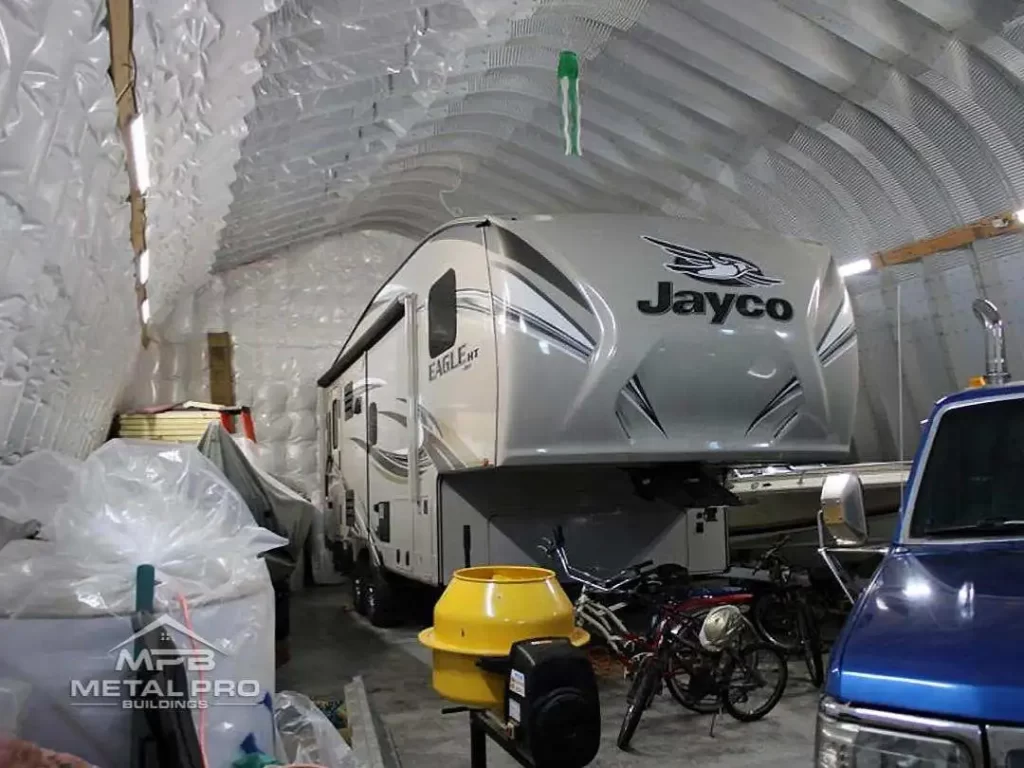
A self storage building is not just a steel structure it’s a system designed to generate revenue from segmented space.
At a basic level, it’s a facility made up of multiple rentable units, each leased individually to customers who need storage. That could be individuals, small businesses, or contractors. The entire design is built around maximizing rentable square footage and minimizing operational friction.
Key structural characteristics:
- Segmented layout: Dozens to hundreds of individual units separated by partition walls
- Access design: Either interior corridors (often climate-controlled) or exterior drive-up units
- Roll-up doors: Each unit has its own secure access point
- High density: Every square meter is optimized for revenue, not open space
- Scalable design: Typically 1–3 storeys, with modular expansion options
What it’s actually built for:
- High tenant turnover
- Efficient management (often automated with minimal staff)
- Consistent, recurring rental income
Who this makes sense for:
- Investors looking for long-term, relatively stable returns
- Entrepreneurs entering the self storage market
- People who want an asset that can operate without daily involvement
The part most people underestimate:
This isn’t “passive income” by default. It becomes passive only if the design is right from day one.
Wrong unit mix? You’ll have empty space.
Poor layout? You’ll lose customers.
No climate control in the wrong market? You’ve just limited your pricing power.
A self storage building is a business model disguised as real estate. If you treat it like just another steel structure, your returns will reflect that mistake.
What Is a Steel Warehouse?
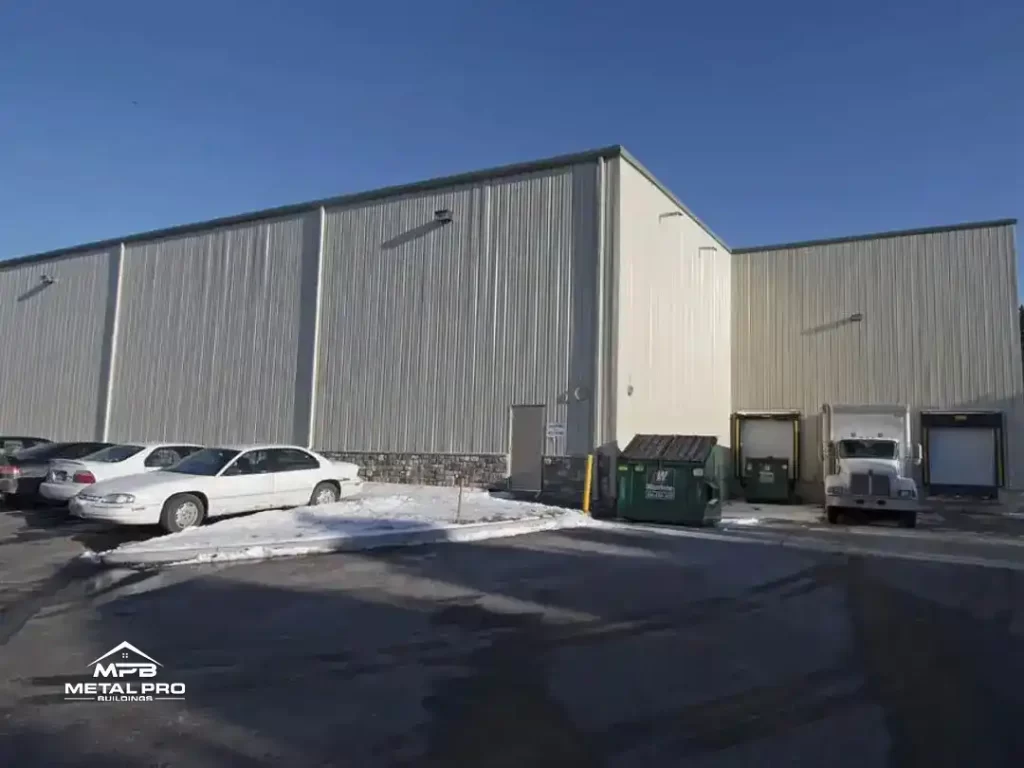
A steel warehouse is a large-span commercial or industrial building designed to store goods, support material handling, and keep operations moving efficiently. It is not built around small rentable units like self storage. It is built around workflow: receiving, storing, moving, loading, and sometimes light manufacturing or assembly. Warehouses are generally planned to handle stored-material loads, shipping and receiving activity, trucking access, and the operational needs of staff using the space.
Key structural features:
- Open interior space: Warehouses are commonly designed with wide column spacing or clear-span layouts so the floor can be used for racking, forklifts, equipment, and flexible traffic flow.
- Loading access: Many warehouse designs include loading docks, loading bays, or large overhead doors because receiving and shipping are core warehouse functions, not optional extras.
- Higher clear height: Ceiling height matters because vertical space directly affects pallet storage, racking capacity, and operational efficiency. In industrial real estate, this is typically discussed as clear height.
- Operational customization: Steel warehouse buildings are often configured around the business itself, with options for mezzanines, insulation, office space, equipment zones, and access points tailored to the workflow.
Who this is for:
A steel warehouse makes sense for:
- distributors and logistics operators
- contractors storing materials and equipment
- manufacturers needing functional floor area
- agricultural operators
- business owners who want control over their space instead of paying rent for a layout they can’t change
What it’s actually built for:
This kind of building is about operational control. You use it when your business needs space to function, not just space to rent out.
That distinction matters. A warehouse is not inherently an investment vehicle in the same way self storage is. It can support business growth and reduce long-term occupancy costs, but its value usually comes from improving operations, inventory handling, and scalability rather than maximizing tenant density. That last point is an inference based on how warehouses are designed around logistics and handling functions, while self storage is designed around many small rentable units.
A warehouse isn’t overhead, it’s the backbone of a business that wants space on its own terms.
Side-by-Side Comparison
Here’s the clean comparison that actually matters:
| Feature | Self Storage Building | Steel Warehouse |
| Primary Use | Renting individual storage units to multiple tenants | Supporting one business’s operations, storage, distribution, or production |
| Interior Layout | Segmented into many enclosed units with partition walls, roll-up doors, and often hallway systems | Mostly open floor area with wider spans for racking, equipment, forklifts, and workflow |
| Ceiling Height | Usually lower and driven by unit design rather than high-clear racking needs | Usually higher clear height because vertical storage and handling efficiency matter |
| Revenue Model | Rental income from many units and tenants | Operational value for the owner-user; may support logistics, manufacturing, or inventory rather than tenant rent |
| Customization Level | More standardized around unit mix, access flow, security, and climate control | More customizable around docks, bays, office buildouts, mezzanines, equipment, and process flow |
| Climate Control Option | Common, especially for interior-corridor facilities | Possible, but typically designed around operational needs rather than tenant-sensitive stored goods |
| Zoning Requirements | Often needs specific approval for self-storage use depending on municipality | Often fits industrial or employment-type uses, but exact permissions still depend on local zoning |
| Canadian Climate Suitability | Works well in Canada when engineered properly for snow, wind, insulation, drainage, and frost conditions | Same basic reality: performance depends on proper site-specific engineering to Canadian climatic loads and local code requirements |
| Typical Build Timeline | Often longer once you account for interior partitions, many doors, corridors, security systems, and possibly climate control | Often simpler structurally if it is mostly open-span space, but timeline still depends heavily on site work, permitting, and customization |
| Best For | Investors chasing long-term storage income | Businesses that need functional space they control |
The difference is not just structural. It’s economic.
A self storage building is built for rentable density, more units, more tenants, more recurring income. A warehouse is built for operational efficiency, open space, better movement, and smoother loading. Different goals, different designs. Confusing them is how you end up with the wrong building.
Two realities you can’t ignore: zoning in Canada is local, not universal, and both building types must meet site-specific climate and code requirements (snow load, wind, etc.). No shortcuts there.
As for ceiling height, warehouses usually need more of it because vertical storage and equipment demand it. Self storage doesn’t; its design is driven by unit count and access, not high-bay racking.
The Real Question: What Are You Actually Trying to Build?
Stop thinking in terms of buildings. That’s the mistake.
The structure is just a tool. The real decision is: what outcome are you trying to create?
Option A: You Want Passive Income & a Long-Term Asset
Then you’re not building a structure, you’re building a cash-flowing asset.
Self storage works because it spreads risk across dozens (or hundreds) of tenants. One vacancy doesn’t kill you. Done right, it’s one of the more stable real estate plays because demand is tied to life events moving, downsizing, business overflow not just economic booms.
But here’s the part people ignore:
- Bad unit mix = empty space
- Poor access = lower occupancy
- No climate control in the wrong market = capped pricing
If you want this to feel “passive,” it has to be engineered for performance from day one. Otherwise, you’ve just built a mediocre facility that underperforms for years.
Bottom line: If your goal is income, self storage makes sense but only if you treat it like a business, not a side project.
Option B: You Need Space to Run and Grow Your Business
Then a warehouse is the obvious choice but don’t oversimplify it.
A warehouse gives you control:
- You’re not paying rent to someone else
- You design the space around your workflow
- You scale operations without relocating every few years
But here’s the reality check:
Owning a warehouse doesn’t automatically make financial sense. If your business isn’t stable or growing, you’re locking capital into a fixed asset that doesn’t generate income on its own.
This only works if:
- You actually need the space long-term
- Your operations benefit from ownership (logistics, storage, equipment, etc.)
- You’re solving a real bottleneck not just chasing the idea of “owning property”
Bottom line: A warehouse is a tool for business growth not an investment vehicle by default.
Option C: You’re Not Sure Yet
Then you’re in the most dangerous position and most people don’t admit it.
Because if you guess wrong:
- You can’t easily convert a warehouse into efficient self storage
- You can’t magically turn a storage facility into a functional industrial space
- Fixing it later means redesign, permits, and serious money
This is where experience matters. Not opinions real planning based on your land, your market, and your numbers.
Bottom line: If you don’t know what you’re building yet, you’re not ready to build.
Canadian-Specific Considerations
This is where a lot of projects quietly go wrong not because of the building type, but because people underestimate the Canadian context.
Climate Isn’t Optional , It’s Structural
In Canada, your building isn’t just designed for use , it’s designed to survive:
- Snow loads: Roof systems must handle heavy, region-specific accumulation
- Wind loads: Vary significantly by location and exposure
- Thermal performance: Insulation and condensation control matter, especially for storage with sensitive contents
- Freeze/thaw cycles: Affect foundations, slabs, and drainage planning
These aren’t upgrades. They’re baseline requirements under the National Building Code of Canada, which sets structural and environmental design standards across the country.
Zoning and Permits Are Local , Not National
There is no “Canada-wide approval.”
- Self storage and warehouse uses are often classified differently
- Municipal zoning bylaws determine what you can build on your land
- Fire safety, accessibility, and parking requirements vary by use
Tools like BizPaL exist for a reason because requirements change depending on the exact location.
If you assume your land works without checking, you’re gambling.
Site Conditions Will Dictate Your Costs
Two identical buildings on paper can have completely different costs depending on the site:
- Soil quality → foundation design
- Frost depth → excavation and footing requirements
- Drainage → grading and water management systems
Ignore this, and your “budget” becomes meaningless halfway through the project.
Cost Reality: Getting It Right the First Time
Steel construction in Canada comes with real material and labour costs. But the bigger risk isn’t the upfront price , it’s building the wrong thing.
- Retrofitting a warehouse into storage = expensive and inefficient
- Fixing a poorly designed storage layout = lost revenue long-term
- Reworking structural elements after permitting = delays + cost overruns
Getting the right building from the start can easily save 15–30% compared to fixing mistakes later.
The Bottom Line
In Canada, you’re not just choosing between two building types you’re working within:
- strict building codes
- location-specific climate demands
- municipality-driven zoning rules
If your builder doesn’t understand that at a deep level, you’re not planning a project, you’re taking a risk.
Why the Building Partner Matters More Than the Building Type
The blunt truth: the wrong builder can ruin the right project.
You can choose the correct building type and still end up with budget overruns, permit issues, structural compromises, or a layout that works badly in the real world. That happens when the supplier is just selling a kit instead of helping you solve the actual problem.
A qualified steel building partner should do a few things from the start:
- Engineer for your site, not for a template. In Canada, steel building systems supplied into the market must meet CSA A660 requirements, and site-specific loads still matter. If your supplier is vague about engineering, that’s a red flag.
- Build Canadian code compliance into the process. Snow, wind, and local permit conditions are not details to “figure out later.” They change the building.
- Understand both business models. A company that only thinks in generic steel shells is not enough if you’re comparing self storage economics against warehouse functionality. The partner should understand both operational flow and revenue-driven layout. This is partly an inference from the different use cases, but it is exactly where bad recommendations usually start.
- Be transparent about pricing before surprises show up. Hidden structural upgrades, changes for code compliance, or late design revisions are where projects get uglier and more expensive. That last point is a practical industry risk inference, but it follows directly from the fact that compliance and site requirements materially affect design.
At Metal Pro Buildings, we specialize in prefab and pre-engineered steel buildings for commercial, industrial, agricultural, and self storage applications across Canada. As an authorized dealer of Pioneer Steel, all of our buildings are engineered for Canadian climate conditions and are 100% CSA A660 certified.
But this isn’t just about supplying steel.
It’s about helping you make the right decision before you invest. Whether you’re building for rental income, business operations, or still figuring that out, our role is to guide you toward the option that actually makes sense, not just sell you a structure.
Because when you’re putting this kind of capital into the ground, you don’t need a salesperson.
Conclusion
There’s no “better” option, only the one that fits your goal.
- Want income? Go self storage
- Need operational space? Go warehouse
- Not sure? Don’t build yet
The real mistake isn’t the choice , it’s making it without clarity.
At Metal Pro Buildings, we help you figure that out before anything gets built based on your land, your budget, and your actual goals.
Next step: Get a free consultation and talk to a steel building expert, no guesswork, no wasted money.