
Canadian farmers saw net farm income fall 26% in 2024, and a growing share are responding by replacing wood-frame construction with pre-engineered steel buildings that cost less to maintain and go up faster during the narrow windows between planting and harvest.
Statistics Canada’s 2021 Census of Agriculture counted nearly 190,000 farms operating across Canada, including more than 65,000 grain and oilseed operations. With total farmland, buildings, and fixed-equipment values reaching $420.9 billion in 2021 a 19.1% increase from 2016 producers are making infrastructure decisions under mounting financial pressure, and steel is increasingly winning that calculation.
“On a working farm, you can’t afford a building that rots, warps, or fails under a heavy snow load,” said Herbert Broderick, CEO of Metal Pro Buildings . “Farmers are asking for structures they won’t have to touch for 20 or 25 years that durability is factored into every quote we prepare.”
Pre-engineered steel farm buildings offer column-free, clear-span interiors that allow operators to store large combines, grain augers, and hay bales without interior posts interrupting floor space. Industry analysis from Canadian Buildings indicates steel structures cost 15% to 35% less to own and maintain over a 30-year period compared with wood-frame alternatives, even when initial per-square-foot costs run slightly higher.
Pricing data from multiple Canadian steel building suppliers puts basic agricultural storage packages at $20 to $30 CAD per square metre, with fully installed turnkey buildings running higher depending on site conditions, frost depth, and regional snow load engineering requirements. Farms in northern Ontario, Alberta’s Peace Country, or the Prairies where ground frost extends well below grade typically see foundation costs rise 10% to 30% compared with southern Ontario builds.
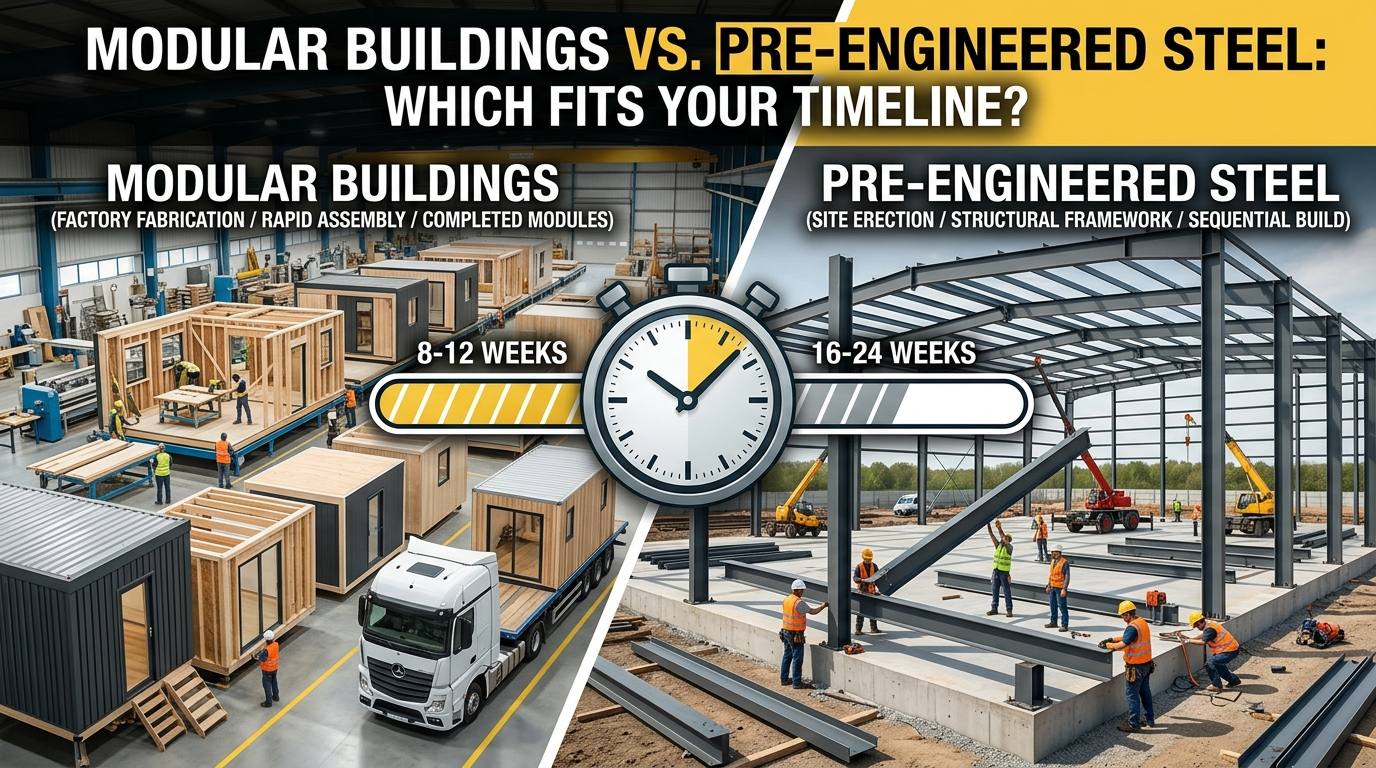
Labour savings also factor heavily. For a 930-square-metre agricultural building in Ontario, steel construction typically runs $50,000 to $70,000 CAD in labour, compared with $75,000 to $95,000 CAD for wood-frame methods, according to analysis published by National Steel Buildings Corp. Pre-engineered kits arrive cut to specification, reducing on-site trade time during periods when farm crews are already stretched.
“When we evaluate farm loan applications, a pre-engineered steel structure with a 25-year warranty carries more weight on the asset side of the ledger than an aging wood barn,” said Jennifer Kowalchuk, an agricultural lending officer based in Saskatoon.
Steel farm buildings in Canada must meet the National Building Code of Canada and applicable provincial codes, including regional wind and snow load provisions. Manufacturers certified under CSA A660 standards for cold-formed steel framing produce components engineered to withstand extreme temperature swings, ice loading, and high-wind events common across the Prairies, British Columbia’s interior, and Atlantic Canada.
“The shift toward larger farm operations has made column-free interior space non-negotiable,” Broderick said. “A modern combine won’t fit inside a building designed 30 years ago. Steel lets producers engineer the footprint they actually need.”
As lumber prices remain volatile and skilled trades capacity stays tight across rural Canada in 2026, agricultural producers reviewing their building plans should confirm that any steel package is engineered to local load requirements, carries explicit warranties on both paint finish and structural performance, and complies with local municipal permit requirements before breaking ground.