
A 3.0-percent spike in structural steel fabrication costs recorded by Statistics Canada in the third quarter of 2025 , the steepest single-quarter increase of any construction division tracked , is accelerating a shift already underway: Canadian builders, contractors, and developers are turning to pre-engineered metal building kits in growing numbers, citing faster assembly, reduced labour requirements, and long-term durability suited to Canada’s demanding climate.
The Q3 2025 figure, driven partly by reciprocal Canada-U.S. tariffs on steel and aluminum products, has added urgency to a conversation that was already gaining ground across the country’s agricultural, commercial, and industrial sectors.
“When conventional material costs jump that sharply in a single quarter, buyers start doing the math on alternatives very quickly,” said Herbert Broderick, a CEO at Metal Pro Buildings in Thornhill, Ontario. “Pre-engineered kits sourced from domestic Canadian steel insulate buyers from that cross-border tariff volatility, and the assembly economics speak for themselves.”
1. Faster Assembly Cuts Timelines Dramatically
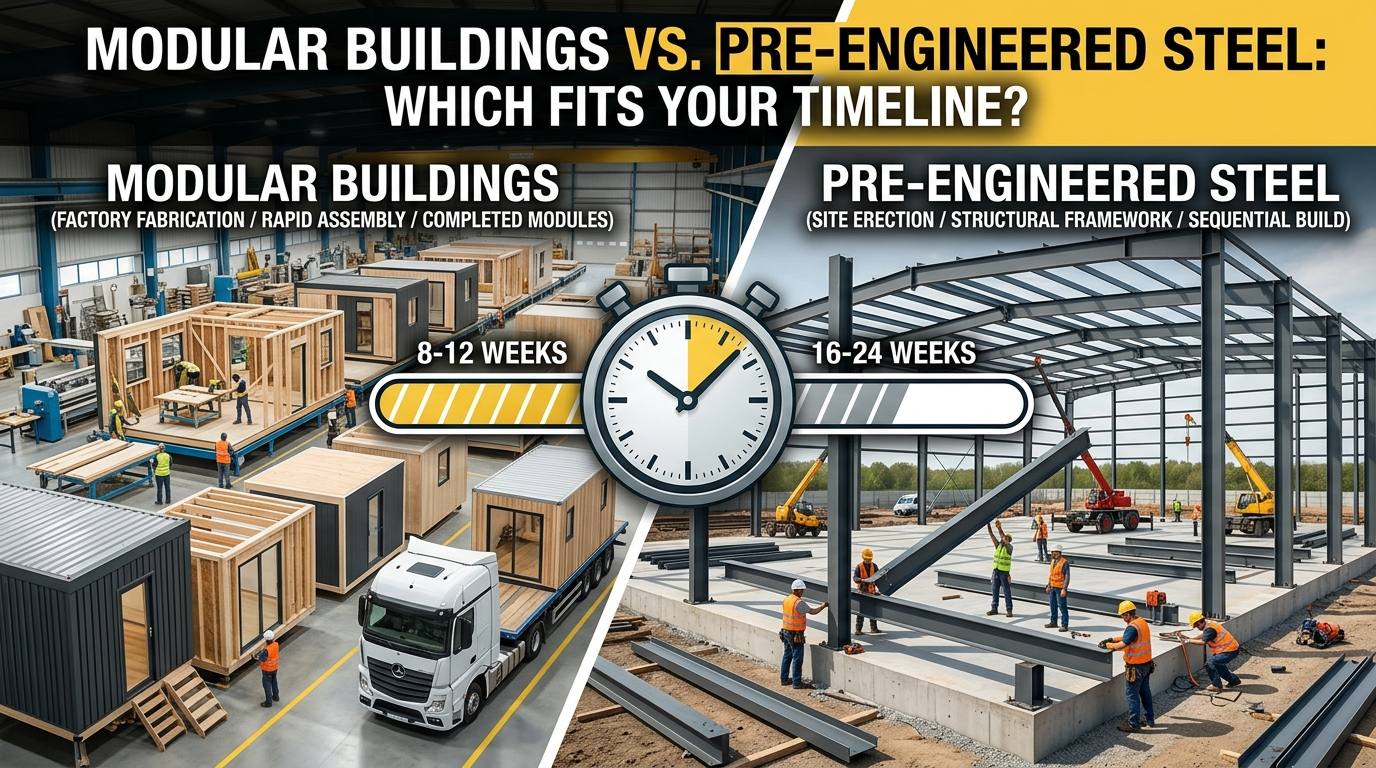
Metal building kits arrive on-site pre-cut, pre-drilled, and engineered for precise fit, with the bulk of fabrication completed in a controlled factory environment. Commercial structures as large as 900 square metres are routinely completed in under three months , a timeline conventional wood-frame or concrete construction rarely matches. For agricultural operations in Saskatchewan or new industrial facilities in northern Ontario, where winter can close a work site without warning, that compressed schedule carries direct financial value: businesses reach occupancy sooner and weather-related delays shrink considerably.
2. Lower Labour Costs Address the Skilled-Trades Shortage
Canada’s construction sector faces a mounting workforce gap. A 2025 industry forecast projected that Canada could require more than 500,000 additional construction workers before 2030 simply to meet housing and infrastructure targets, with skilled-trade shortages already causing delays across rural and remote regions.
Because metal kit components are designed to interlock with minimal customization, the skill level required for assembly is substantially lower than that demanded by conventional builds. Some arch-style steel kit manufacturers report that more than 75 percent of their customers erect structures without a hired crew. In British Columbia and Alberta, where journeyman carpenter and ironworker wages continue to climb, reducing on-site hours can save tens of thousands of dollars CAD on a mid-sized agricultural or light-commercial structure.
“The labour savings alone are enough to move the needle for most of our clients,” Broderick said. “Combine that with the reduced need for on-site design professionals on smaller builds, and the total project budget looks very different from a conventional frame.”
3. Durability and Low Maintenance Over Canada’s Climate
Canadian structures must endure conditions ranging from temperatures below −40°C on the Prairies to relentless coastal moisture in British Columbia to heavy snow loads in northern Quebec. Metal building kits are engineered to meet or exceed provincial requirements under the National Building Code of Canada (NBC), with snow-load and wind-resistance ratings calculated for the specific site and region.
Steel does not rot, warp, or attract the mould and pest infestations that compromise wood-frame construction over time. The Altus Group’s 2025 Cost Guide placed metal industrial buildings in Canada at an average of $160 to $440 per square foot , a range that, offset against minimal maintenance costs and a service life routinely exceeding 50 years, represents strong lifecycle value against most competing construction methods.
Background
Canada’s structural steel market generated approximately US$1.07 billion in revenue in 2024 and is projected to reach US$1.24 billion by 2030, reflecting a compound annual growth rate of 2.7 percent, according to Horizon Databook. Steel fabrication is forecast to grow at roughly 3.0 percent annually through 2035, driven largely by construction and infrastructure demand.
Pre-engineered metal buildings have been used commercially in Canada since the 1960s. Over the past decade, digital design tools and automated fabrication have extended their competitiveness well beyond the grain bins and rural storage sheds that originally defined the category, into residential, commercial, and industrial applications coast to coast.
As the National Building Code of Canada moves toward its next review cycle, observers are monitoring whether updated snow-load and energy-efficiency provisions will further shift the economics of steel kit construction relative to wood-frame alternatives , particularly in provinces with aggressive housing-supply targets still to be met.