
Live Where You Work. Build What You Love. The Shouse Revolution Is Here.
It’s 6 AM in rural Alberta. -22°C outside. Instead of warming up a truck for a long commute, you walk 20 steps from your kitchen to your workshop.
No traffic. No contractor drama. Just your land, your tools, and a coffee going cold on the workbench.
This is the shouse part shop, part house, entirely yours.
Traditional homes weren’t designed for this life. And traditional Canadian construction wasn’t built for rural realities. Lumber costs are up. Trades are scarce. Timelines drag on for years.
Rural Canadians are solving this differently now. They’re building smarter, building once, and building for the life they actually live.
This article shows you exactly how.
What Is a Shouse?
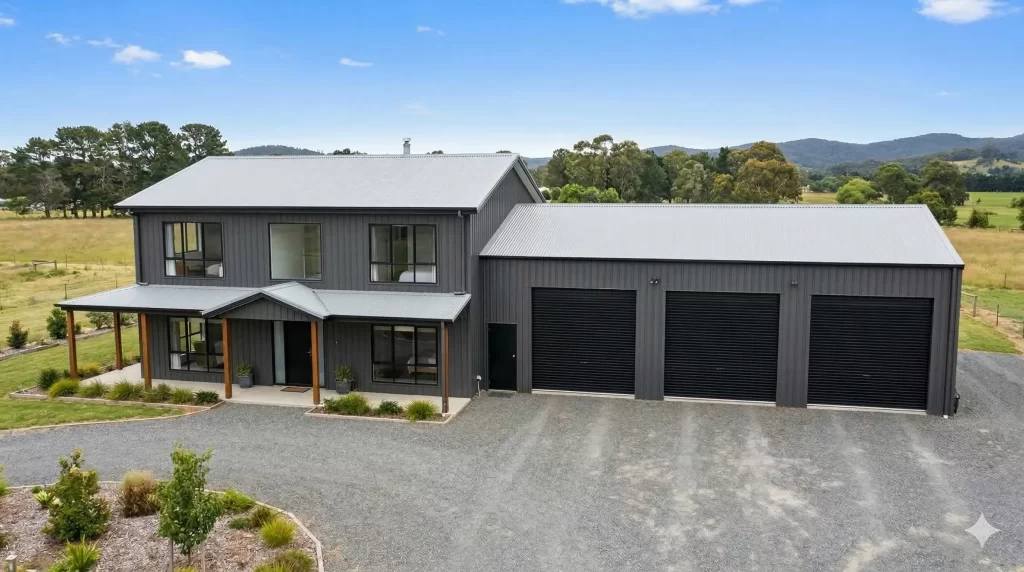
A shouse is a combined shop-house, a single structure where your living space and workspace share one roof.
Think of it as a home and a workshop built together, by design. Not an afterthought. Not a garage conversion. A purpose-built structure where both functions get equal respect.
Where Did the Shouse Come From?
The concept started in the American Midwest, where farmers needed practical, affordable structures that did double duty. It didn’t take long for rural Canadians to catch on.
Today, shouses are popping up across Ontario, Alberta, BC, Saskatchewan, and beyond. The lifestyle appeal is simple: stop splitting your life between a house on one lot and a shop on another.
Who Is Building Shouses?
The shouse isn’t a one-size-fits-all solution but it fits a surprisingly wide range of people:
- Farmers and hobby farmers who need equipment storage alongside a comfortable home
- Tradespeople who want a professional workspace steps from their front door
- Remote workers and homesteaders leaving cities for land-based living
- Retirees downsizing from a large home but refusing to give up their workshop
- Artists and makers who need serious studio space without a separate lease
How Is a Shouse Different From a House With a Garage?
A garage is an add-on. A shouse is a philosophy. The shop space in a shouse is designed for real work: tall ceilings, oversized doors, serious floor loads, proper ventilation.
The living quarters aren’t squeezed in as an afterthought either. They’re planned, comfortable, and fully functional.
A shouse doesn’t ask you to compromise. That’s the whole point.
Why Traditional Construction Is Failing Rural Canadians
If you’ve priced out a custom home build recently, you already know the feeling. That sinking moment when the quote lands and the number makes no sense.
You’re not imagining it. Rural construction in Canada is genuinely broken right now.
The Cost Problem
Lumber prices have swung wildly since 2020 and haven’t fully recovered. Labour shortages are driving up trade costs across every province. Supply chains are still unpredictable.
Rural builds carry an extra hidden premium on top of all that. Remote access fees, limited local contractors, and longer material delivery windows all add up fast.
The average stick-frame custom home in rural Canada can run $250–$400+ per square foot depending on region and finish level. For a modest 2,000 sq ft home, that’s half a million dollars before you’ve built a single place to store your equipment.
The Timeline Problem
Traditional rural builds routinely stretch 18 to 36 months from breaking ground to move-in.
Weather delays. Contractor no-shows. Permit backlogs at understaffed municipal offices. Material back-orders.
Every month that passes is another month you’re paying rent or a mortgage somewhere else — while sitting on land you already own and can’t use. That emotional cost is real, and nobody talks about it enough.
The “It Doesn’t Fit My Life” Problem
Standard home designs were drawn up for suburban lots.
They assume you need a two-car garage, a dining room you’ll use twice a year, and a backyard patio. They don’t account for a tractor, a welding setup, a woodshop, an RV, or a season’s worth of equipment storage.
Rural Canadians are constantly forced into an impossible choice: build a house or build a shop. The budget rarely covers both. The shouse refuses that choice entirely.
The Durability Problem
Wood is a beautiful building material. It’s also vulnerable to everything rural Canada throws at it.
Freeze-thaw cycles cause warping and cracking. Moisture finds its way in. Pests follow. Heavy snow loads stress roof systems not engineered for them. Wildfire risk is climbing across BC, Alberta, and Northern Ontario.
The result? Higher insurance premiums, more maintenance, and a building that quietly loses value while the land beneath it gains it.
Rural Canada deserves structures built to match its conditions not borrowed from a suburban playbook.
The Turn Why Steel Is the Shouse Material of Choice
Why Steel Is the Natural Choice for the Canadian Shouse
Once you understand the problem, the solution becomes obvious. Steel doesn’t rot, warp, or lose to a hard Canadian winter. And when it’s pre-engineered to your spec, it goes up faster than anything built from wood ever could. For rural Canadians building a shouse, steel isn’t just a material choice, it’s the logical one.
Built for Canadian Extremes
Canada is not a gentle climate. Any building material that can’t handle that reality has no business being your primary structure.
Steel handles it, all heavy snow loads, high winds, dramatic temperature swings, and wildfire-prone zones. Pre-engineered steel buildings are designed to meet CSA and National Building Code (NBC) standards, including province-specific load requirements.
No rot. No pest damage. No warping after the third hard winter. What you build in year one still performs the same in year twenty.
Faster to Build
Time is money. Especially when you’re paying to live somewhere else while your build drags on.
Pre-engineered steel shouse kits arrive with components ready to assemble. The engineering is done. The guesswork is removed. Where a conventional rural build might take 18–36 months, a steel shouse can be weather-tight in a matter of weeks. That’s not a small difference that’s an entire season back in your pocket.
Truly Customizable
One of the biggest misconceptions about steel buildings is that they’re rigid, boxy, and generic. The opposite is true.
Pre-engineered steel uses clear-span construction , no interior load-bearing walls interrupting your floor plan. Your shop floor stays open. Your living space flows the way you want it to. Mezzanines, loft bedrooms, oversized roll-up doors, custom window placements all engineered to your specification.
You’re not picking from a catalogue. You’re designing around your life.
The Sustainability Story
Steel is the most recycled material on the planet. Most structural steel contains significant recycled content, and at the end of its life, it’s fully recyclable again. For rural Canadians who care about the land they’ve chosen to live on, that matters.
A well-insulated steel shouse also performs exceptionally in cold climates. Reflective roofing reduces summer heat gain. Modern insulation systems keep heating costs manageable through brutal winters.
But the biggest sustainability argument is simple: build it once, build it right. A steel shouse built today can last 50–80 years with minimal maintenance. That’s one build not three generations of renovations, repairs, and replacements. That’s not just smart construction. That’s responsible land stewardship.
Designing Your Steel Shouse – What’s Possible
This is where most people’s eyes light up.
Once you understand that steel gives you clear-span interiors, full customization, and no structural compromises, the design possibilities open up fast. A steel shouse isn’t a box you fit your life into it’s a canvas you build your life around.
Here’s what that can actually look like.
Layout Possibilities
No two shouses are the same, but a few layouts have become popular among Canadian builders.
The most common approach places the shop on one end and the living quarters on the other, sharing a common wall and entry. It’s clean, practical, and keeps work and living clearly defined while keeping them steps apart.
Others prefer a loft-style design living space built above the shop floor on a full mezzanine level. You get sweeping views of your workspace below, natural light from high industrial windows, and a surprisingly dramatic interior for a rural build.
Some owners go further, creating fully separated zones with a shared covered entry almost like two buildings under one roofline, each with its own identity.
Features Worth Planning For
The best shouse designs aren’t just about square footage. They’re about the details that make daily life genuinely better.
A few worth building in from the start:
- Oversized roll-up doors for equipment, vehicles, and machinery access
- In-floor radiant heating for both the shop and living areas a game changer in Canadian winters
- Spray foam insulation for airtight, year-round comfort
- Large industrial windows that flood the living space with natural light
- Wrap-around covered porches on the residential side for outdoor living
- Mezzanine living areas with open sightlines to the shop below
These aren’t luxury upgrades. For a rural working property, most of them are just good planning.
Who Is This Build For? Three Shouse Profiles
The Hobby Farmer. He runs 80 acres in rural Saskatchewan. He needs covered equipment storage, a heated workshop for winter maintenance, and a comfortable home base all without the cost of building two separate structures. The shouse solves all three problems at once.
The Remote Tradesperson. She relocated from Calgary to a 10-acre property outside of Kelowna. She runs her electrical contracting business from home and needs a proper workspace not a converted spare bedroom. Her shouse has a fully equipped shop on the ground floor and a modern open-concept living area above.
The Off-Grid Family. They left suburban Ontario with a plan: land, self-sufficiency, and a structure built to last. Their shouse is designed for passive solar gain, spray foam insulation, a wood stove backup, and enough storage to live comfortably through a Canadian winter without a trip to town.
Your truck, your tools, and your morning coffee all within the same four walls. A space that finally matches the scale of your ambitions. Built for the life you actually live, not the one a real estate listing imagined for you.
Building a Shouse in Canada – What You Need to Know
The dream is clear. Now comes the part where most people slow down and start asking the hard questions.
Zoning. Permits. Financing. Foundations. These aren’t exciting topics, but getting them right early saves enormous headaches later. The good news is that none of them are deal-breakers, especially when you go in informed and work with the right people.
Zoning and Permits
In most rural municipalities across Canada, shouses fall under agricultural or mixed-use zoning which can actually work in your favour. Rural zoning is often more flexible than urban or suburban classifications, and combined live-work structures are increasingly recognized by local planning offices.
That said, zoning rules vary significantly by province and municipality. What’s straightforward in rural Alberta may require more navigation in southern Ontario. The key is doing your homework before you buy land or commit to a design.
Working with a supplier who understands Canadian building codes including the National Building Code (NBC) and its provincial variants makes this process far less intimidating. The right partner has been through this process hundreds of times. They know what municipalities need and how to present a build that gets approved cleanly.
Financing a Shouse
This is where some buyers hit a speed bump. Traditional mortgage lenders aren’t always sure what to do with a non-standard structure like a shouse. Some will classify it as residential. Others lean agricultural. The answer depends on your province, your lender, and how the building is permitted.
The options worth exploring include:
- Agricultural loans through Farm Credit Canada or provincial programs
- Construction loans that convert to a standard mortgage on completion
- Owner-builder financing for those taking a hands-on role in the build
- Phased builds , starting with the shop and adding living quarters in a planned second phase
The lower per-square-foot cost of a steel shouse compared to traditional construction often offsets the extra legwork involved in financing. You may be borrowing less than you think.
Site Preparation and Foundation
A solid shouse starts well below ground level.
In most of rural Canada, you’ll be choosing between a concrete slab foundation or an engineered frost-wall foundation. The right choice depends on your region, your soil conditions, your planned use of the space, and whether you want in-floor heating which requires specific slab preparation.
Beyond the foundation, rural site prep involves a checklist that suburban builds rarely deal with:
- Site access and grading for heavy equipment delivery
- Well and septic system placement relative to the building footprint
- Utility connections or off-grid power planning
- Setback requirements from property lines, water sources, and roadways
Getting a site assessment done early before you finalize your building design prevents costly surprises mid-project.
Working With the Right Builder and Supplier
Not all steel building suppliers are created equal. This distinction matters more for a shouse than for a simple storage building.
A shouse is a hybrid structure: part residential, part commercial, part agricultural. It needs a supplier who understands all three worlds and can deliver engineer-stamped drawings that satisfy your local building department.
Before you commit to any supplier, ask these questions:
- Are your drawings engineer-stamped for my province?
- Is the building fully compliant with the NBC and local code requirements?
- Do you have experience with hybrid live-work structures specifically?
- What exactly is included in delivery and what isn’t?
- What support do you provide after the kit arrives on site?
The answers will tell you quickly whether you’re dealing with a genuine partner or just a kit vendor. For a build this significant, the difference is everything.
Why Canadian Shouse Builders Choose Metal Pro
This isn’t a pivot to a sales pitch. It’s a natural next step.
You now understand what a shouse is, why steel makes sense in Canada, and what it takes to plan a build that actually works. The last piece of the puzzle is finding a partner who can bring all of that together from the first design conversation to the day your building stands finished on your land.
That’s where Metal Pro comes in.
Built for Canada. Built for This Life.
Metal Pro isn’t a generic steel building catalogue. It’s a Canadian company focused entirely on helping people build structures that match the realities of Canadian land, Canadian weather, and Canadian life.
The team at Metal Pro understands that a shouse isn’t just a building project. It’s a lifestyle decision. And that means the process needs to feel different from the start, more collaborative, more personal, and more focused on what you actually need than on what’s easiest to manufacture.
“At Metal Pro, we didn’t get into steel buildings to sell metal. We got into it because we believe Canadians who choose rural life deserve structures built to match that choice.”
What Sets Metal Pro Apart
There are steel building suppliers across Canada. Here’s what makes Metal Pro the right choice for a shouse specifically:
- Canadian-based engineering and design : every build is designed with Canadian climate loads, provincial code requirements, and rural realities in mind
- Engineer-stamped drawings included : no chasing third-party engineers or paying extra for code compliance documentation
- Full custom design process : you’re not choosing from a preset catalogue; your build starts with your land, your needs, and your vision
- Hybrid structure experience : Metal Pro has specific experience with shouses, barndominiums, and combined agricultural-residential builds
- End-to-end customer support : from your first quote through design, delivery, and build completion, you have a dedicated point of contact
- Canada-wide delivery : including remote and rural regions that other suppliers won’t service
A Track Record Built Across Canada
From British Columbia to New Brunswick, Metal Pro has helped hundreds of rural Canadians turn raw land into something that lasts.
The builds vary , hobby farms, working trades properties, off-grid homesteads, retirement retreats. But the common thread is consistent: people who wanted a structure built for their life, not borrowed from someone else’s blueprint.
That experience shows up in every conversation, every design, and every delivery.
The Conversation Starts Here
You don’t need to have everything figured out before reaching out. Most Metal Pro customers come in with a piece of land, a rough idea, and a list of questions.
That’s exactly the right starting point. Bring your land details, your lifestyle needs, and your budget range. Metal Pro will show you what’s possible honestly, specifically, and without pressure.
Building Something That Lasts The Shouse as a Legacy Investment
Step back from the floor plans for a moment. Step back from the cost-per-square-foot comparisons and the foundation options and the zoning checklists.
Think about why you wanted land in the first place.
This Is More Than a Building Decision
For most rural Canadians, the decision to build a shouse isn’t purely practical. It’s a declaration.
I am staying. I am building. This land means something.
That’s a different kind of decision than picking a floor plan from a catalogue. It carries weight. And the structure you build should carry that weight too literally and figuratively.
A well-built steel shouse doesn’t just serve your needs today. It anchors your property for generations. Steel structures built to modern engineering standards routinely last 50 to 80 years with minimal, seasonal maintenance . That’s a building that can outlast your mortgage, outlive the builder, and still be standing strong when the next generation decides what to do with the land.
The Environmental Case for Building Once
Rural Canadians tend to have a direct relationship with the environment. You live close to it. You depend on it. You notice when it changes.
Building a shouse from steel is consistent with that relationship.
Steel is the most recycled material on the planet. It arrives with significant recycled content already built in and returns to the recycling stream at the end of its life leaving no landfill legacy behind. A steel shouse built right produces far less long-term construction waste than a wood-frame structure that needs major renovation every 20–30 years.
Building once, building right, and building with materials that can be fully reclaimed that’s not a marketing angle. That’s just responsible stewardship of the land you’ve chosen to call home.
Part of a Bigger Shift
Rural Canada is experiencing something real right now.
Remote work has untethered people from cities. Land prices in rural regions are attracting buyers who want space, self-sufficiency, and a slower pace. A growing number of Canadians are questioning whether the suburban default, the subdivision house, the HOA, the 45-minute commute was ever the right answer for them.
The shouse is part of that cultural shift. It’s a structure designed for people who have chosen a different kind of life and want their built environment to reflect that choice.
It’s practical. It’s sustainable. It’s personal.
And unlike a house that was never meant for your life in the first place, a shouse is the kind of building your kids inherit not demolish.
Ready to Build Your Shouse? Let’s Talk.
You’ve done the reading. You understand what a shouse is, why steel makes sense in Canada, and what a build like this can mean for your land and your life.
The next step is simpler than you might think.
Start With a Conversation
Most Metal Pro customers don’t arrive with a fully formed plan. They arrive with a piece of land, a lifestyle in mind, and a handful of questions they haven’t been able to get straight answers on.
That’s the perfect starting point.
Bring your land details, your rough square footage ideas, your must-haves, and your budget range. Metal Pro will give you an honest picture of what’s possible: no hard sell, no generic catalogue, no pressure to decide before you’re ready.
Just a real conversation about your land, your needs, and what we can build together.
Get Your Free Custom Quote
Ready to see what your shouse could look like?
Get a free custom quote from Metal Pro. Tell us what you’re envisioning: the shop size, the living space, the features that matter most and we’ll show you exactly what’s possible for your property and your budget.
👉 Get Your Free Custom Quote Today