
Canadian developers, farmers and contractors are choosing between permanent steel buildings and tension-fabric structures at an accelerating pace as non-residential construction investment reached a record quarterly high of $20.6 billion CAD in the fourth quarter of 2025, Statistics Canada reported. The surge is forcing project owners to move beyond upfront price comparisons and evaluate structures on lifecycle cost, energy performance and durability under Canada’s increasingly extreme weather conditions.
The shift comes as Canada’s non-residential construction sector grapples with labour shortages, volatile material prices and tightening performance standards under the National Building Code of Canada. Statistics Canada data also show that investment in non-residential construction reached $6.8 billion CAD in March 2025, up 1.3 per cent year over year despite broader market uncertainty.
“Canadian buyers are increasingly prioritizing long-term durability and lower maintenance costs as weather extremes become more common,” said Herbert Broderick, CEO of Metal Pro Buildings, a Thornhill, Ontario-based company. “Steel structures are being chosen more often for projects where lifespan and structural reliability matter most.”
Steel buildings continue to dominate permanent commercial and industrial construction in Canada because of their structural strength, snow-load capacity and long service life in harsh climates. Industry engineers say pre-engineered steel systems remain the preferred option for warehouses, manufacturing plants, aviation hangars and agricultural storage facilities in provinces that experience heavy snow accumulation and wide temperature swings.
Fabric buildings, however, continue to gain traction in agricultural and temporary industrial applications because they can typically be installed faster and at lower initial cost. Contractors across the Prairie provinces report growing demand for tension-fabric structures used for livestock shelters, equipment storage, bulk salt storage and temporary workspaces tied to mining and resource-sector activity.
Industry analysts say the most significant distinction in the metal-versus-fabric debate remains long-term performance in Canadian weather. Steel buildings are engineered to meet high wind and snow-load standards under the NBC, while fabric-covered structures may require membrane replacement and additional maintenance over time, particularly in regions exposed to prolonged ultraviolet radiation, freezing rain and heavy ice buildup.
“Fabric structures can serve short-term operational needs, but permanent steel systems remain the preferred choice for many industrial and agricultural projects across Canada,” Broderick said. “The decision often comes down to lifecycle value rather than only upfront price.”
Insurance and financing requirements are also shaping buyer decisions. Canadian commercial lenders and insurers generally favour permanent steel structures for industrial occupancy because of their fire resistance and expected service life. Construction consultants say some municipalities and insurers classify fabric-covered buildings differently from permanent steel facilities, affecting financing terms, permit approvals and long-term operating costs.
The NBC requires all commercial and industrial structures to meet engineering standards for snow loads, seismic resistance and wind exposure. Municipal permitting rules vary significantly by province and municipality, however, particularly for temporary structures and agricultural applications, a distinction that can materially affect project timelines and approval costs.
Price remains a primary driver of fabric-building demand. Industry contractors estimate that smaller tension-fabric storage systems can cost 15 to 30 per cent less upfront than comparable pre-engineered steel buildings, depending on insulation, foundation and heating requirements. Long-term maintenance costs, however, can shift the overall cost equation across a building’s lifespan.
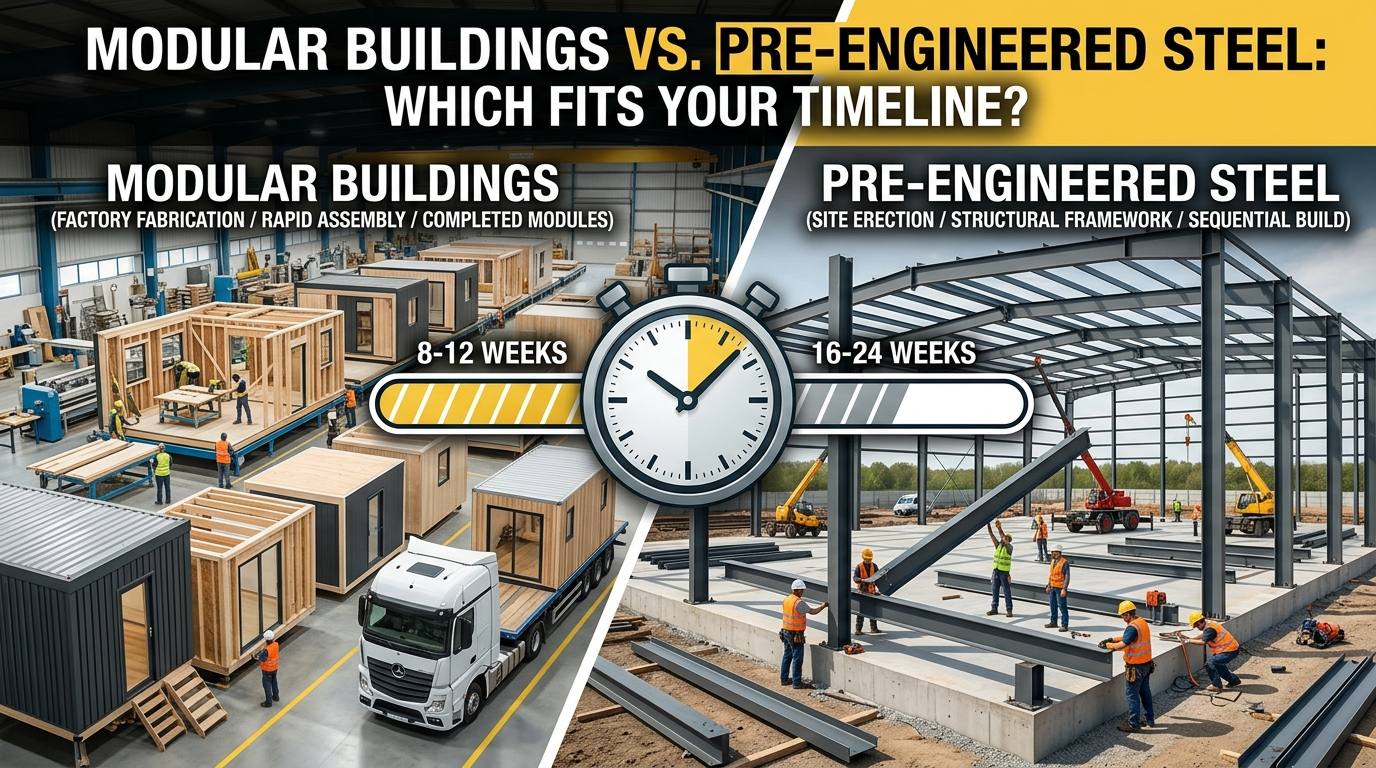
Steel buildings have also benefited from advances in prefabrication and manufacturing automation. Pre-engineered steel systems are now delivered to Canadian job sites with precision-engineered components that reduce on-site labour requirements and shorten construction timelines, a competitive advantage as Canada continues to face shortages in skilled construction trades.
Construction industry observers note fluctuating industrial activity in early 2026, as developers respond to economic uncertainty and changing material costs. Some structural steel contractors reported slower project pipelines in the first quarter even as governments continue promoting infrastructure investment nationwide. Industry experts say future demand will likely depend on how developers balance speed, durability, energy performance and lifecycle costs as industrial and agricultural construction activity shifts across Canada.