
Two weeks into construction, a county inspector shuts your project down. Your blueprints don’t meet local code. Work stops, redesigns cost thousands, and your contractor is still billing.
It happens more often than you’d think and it almost always starts with the blueprints.
If you’re here, you’re already doing the right thing. You’re researching before you build, not after something goes wrong.
This guide walks you through everything you need to know about steel building blueprints, what they include, what can go wrong, and how to get a permit-ready package that protects your project from day one.
Metal Pro has helped hundreds of clients navigate this exact process. What follows is everything we’ve learned along the way.
What Are Steel Building Blueprints (And Why They’re Not All the Same)?
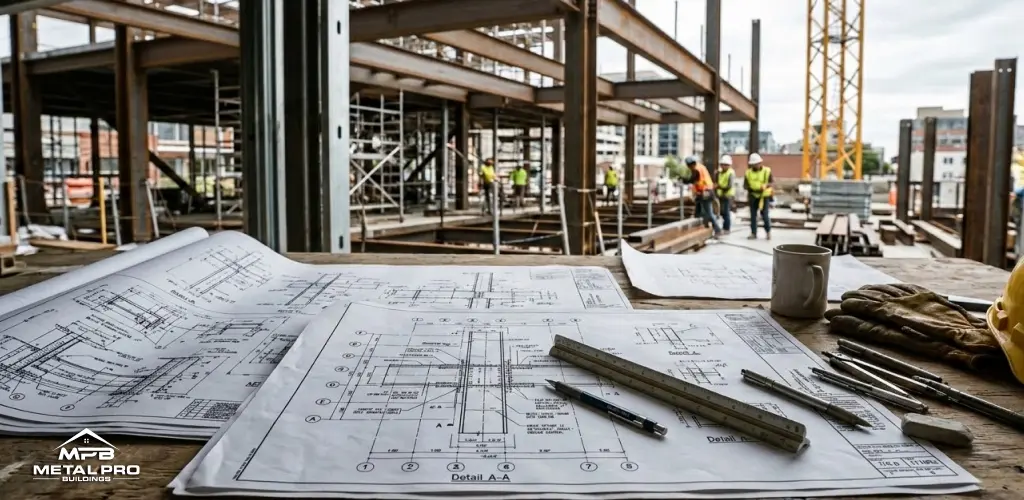
A steel building blueprint is more than a simple drawing. It’s a complete technical package that tells engineers, contractors, and permit reviewers exactly what you’re building and how it will hold up.
A full blueprint package typically includes a cover page with building specifications, elevation drawings of all four sides, a roof plan, and an anchor bolt plan, the last of which is where construction actually begins.
The main principle of any steel building blueprint is to show exactly what is going to be built, how the project is conceptualized visually, what materials will be used, and certain specifications. Depending on the complexity of your project, you should expect anywhere from 12 to 20 pages of drawings in a standard package.
But here’s where many buyers get tripped up; not all blueprints are built the same way.
Generic or stock blueprints are pre-made plans sold cheaply online. They’re not designed for your site, your soil conditions, or your local building codes. They might look complete on the surface, but they often fail permit review.
Custom engineered blueprints, on the other hand, are designed specifically for your project. They account for building codes along with snow, wind, seismic, and collateral loads all of which vary based on your location .These are the drawings your local authority actually wants to see.
Many buyers assume all blueprints are created equal until their permit gets rejected.
The difference isn’t just technical. It’s the peace of mind that comes from knowing your plans were built for your project, not pulled off a shelf and handed to you.
At Metal Pro, every blueprint we produce is engineered to your specific site, use case, and local requirements. No templates. No shortcuts.
The Hidden Risks of Getting Your Blueprints Wrong
Bad blueprints don’t just cause headaches. They can stop your project entirely and cost you far more than fixing them would have.
Here’s what’s actually at stake.
Permit rejections and redesign costs. When building departments reject permits, the financial impact extends well beyond resubmission fees. Contractors may charge storage fees for materials, workers get reassigned to other projects, and construction loans accrue interest during delays. All because the drawings weren’t right from the start.
Zoning and setback violations. Many people assume their land is fine for the building they want only to learn later that zoning flags it for height or setback issues. These problems need to be identified before design begins, not after concrete is poured.
Structural safety risks. If a structure is not built to meet local building codes and load requirements, it could collapse or become unstable in the first moderate storm. That’s not a risk worth taking to save money on plans.
Voided warranties and insurance complications. Many warranties are written with the expectation that the building follows approved engineering drawings. If a third-party installer deviates from those plans, some or all warranty coverage can be reduced or voided.
Contractor disputes. When your blueprints are vague or incomplete, your contractor fills in the gaps often differently than you imagined. That gap between expectation and execution leads to disputes, extra costs, and delays.
Property and resale problems. Building without adequate documentation can make it challenging to sell your property in the future, and lenders may refuse to approve loan applications for potential buyers.
Nothing is more frustrating than watching your project sit in permit limbo for weeks or worse, discovering a structural issue after the build is complete.
This is why Metal Pro doesn’t offer off-the-shelf plans. Every blueprint we produce is engineered to your site, your use case, and your local authority’s requirements before a single shovel hits the ground.
What Should Be Included in a Complete Steel Building Blueprint Package?
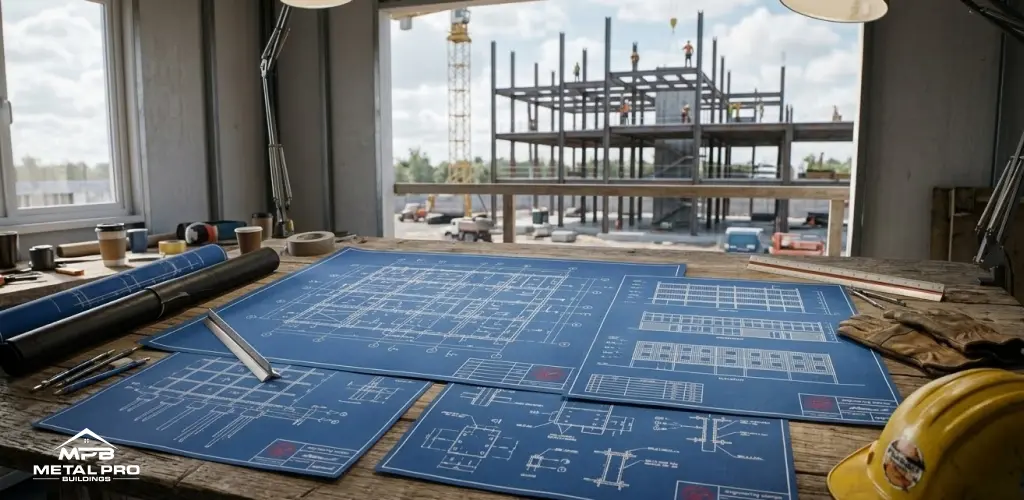
A lot of suppliers hand over a partial set of drawings and call it a blueprint package. Then you show up to the permit office and find out half of what you need is missing.
Here’s what a truly complete steel building blueprint package should include.
Architectural Drawings
These are the visual foundation of your project. Architectural drawings reflect the overall appearance of the structure, how it’s oriented on the building site, and the layout of its interior spaces.
Expect to see floor plans, all four exterior elevations, door and window placements, roof pitch, and drainage design. This is where your vision takes shape on paper.
Structural and Engineering Drawings
While architectural drawings show how a building is supposed to look, structural drawings show how to actually construct it covering everything that keeps the walls standing and the floors from sagging.
For steel buildings specifically, this means primary and secondary framing details, column base plates, anchor bolt plans, and full load calculations for wind, snow, and seismic forces based on your location.
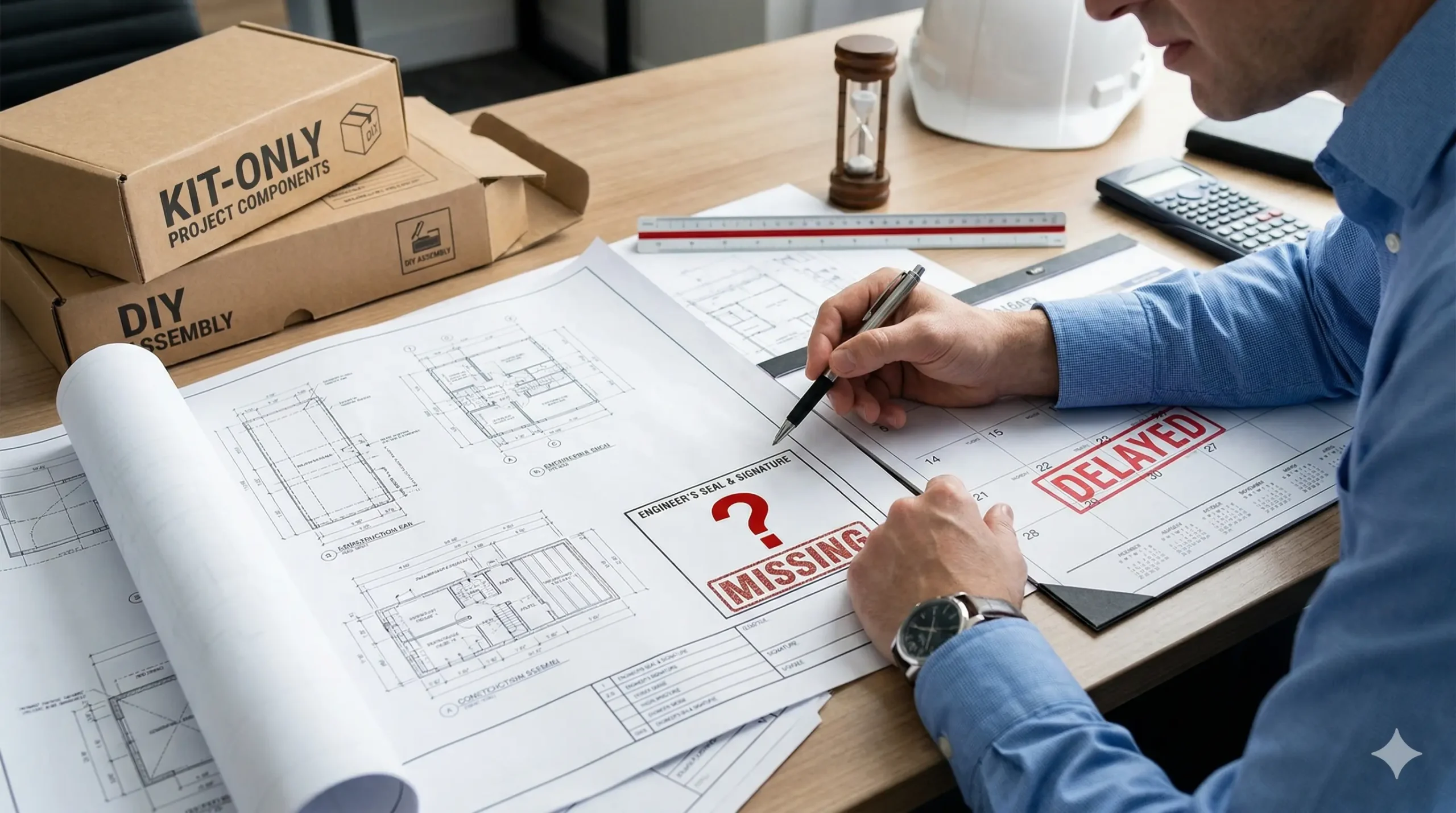
A structural plan is only valid if it’s prepared, signed, and stamped by a licensed engineer. Without that stamp, most permit offices won’t look twice at your application.
Foundation Plans
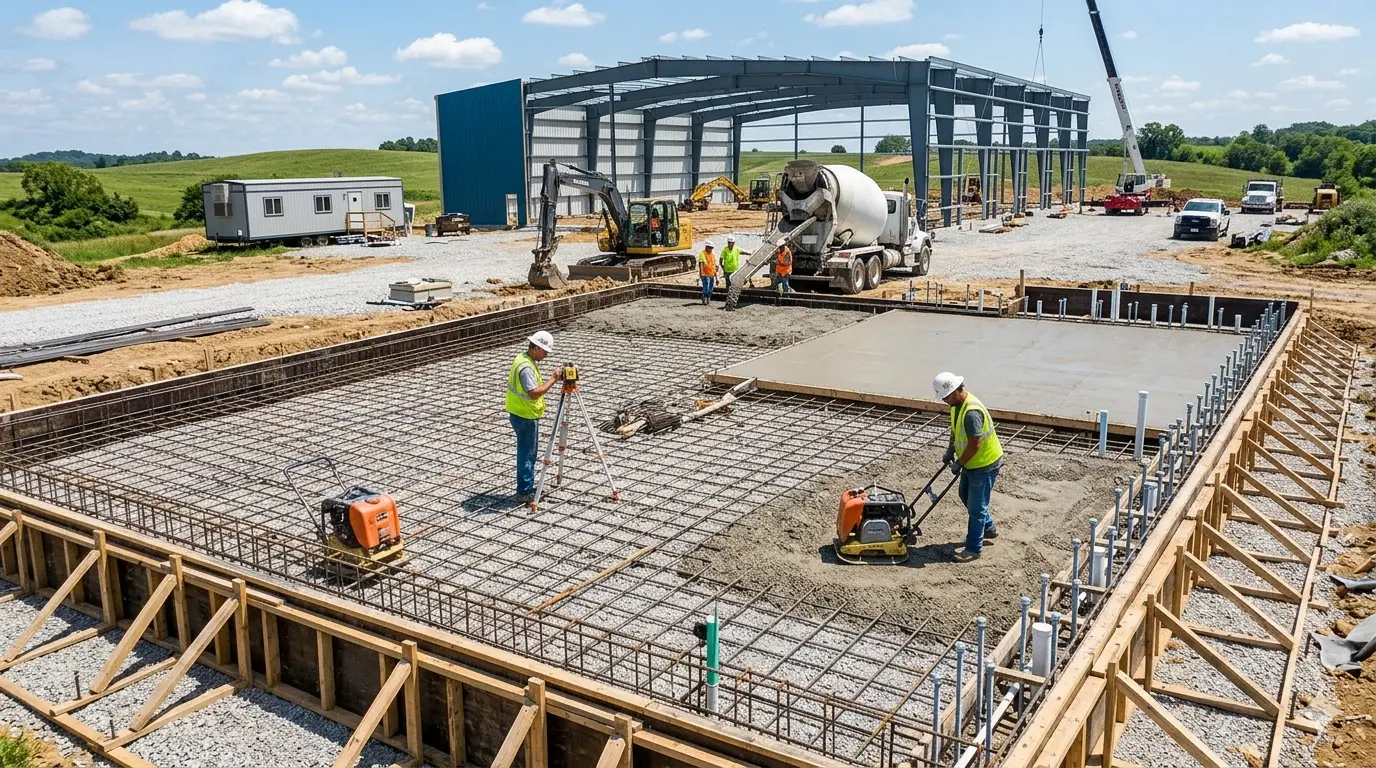
Foundation plans outline the type, size, and location of the foundation structure necessary to distribute structural loads to the ground including footings, piers, slabs, and other support structures critical for the stability and longevity of your building.
This is also where anchor bolt placement is confirmed, a detail that has to be exactly right before a single pour of concrete begins.
Connection Details
These drawings zoom in on the critical joints, how steel frames connect, how purlins and girts attach, how bracing systems work. Detail drawings bridge the gap between design intent and real-world construction, ensuring that every component aligns with structural and aesthetic standards.
Miss these, and your contractor is guessing. That’s where costly on-site errors happen.
Erection and Assembly Drawings
These are the step-by-step visual guides your construction crew will use on site. They include component labeling, sequencing, and assembly instructions so nothing gets built out of order or in the wrong place.
Many suppliers skip one or more of these sections entirely, especially the stamped engineering drawings and foundation plans. That leaves clients scrambling before construction even begins.
At Metal Pro, every blueprint package we deliver is complete. Nothing missing. Nothing left for you to chase down separately.
How Steel Building Blueprints Are Customised to Your Project
No two building sites are the same. And no two blueprints should be either.
Your location alone determines a significant portion of your building’s design. Engineers assess how a structure must respond to forces like wind, snow, seismic activity, dead loads, and live loads all of which vary based on where you’re building and how you plan to use the space.
A building in a heavy snow region requires thicker, stronger steel and more robust framing. A structure near the coast needs to stand up to intense wind pressures. These aren’t optional upgrades, they’re engineering requirements that have to be baked into your blueprints from the very beginning.
Beyond location, your use case shapes everything about the design.
Agricultural buildings need wide clear spans to accommodate equipment, oversized door openings for machinery access, and ventilation systems suited to livestock or grain storage.
Commercial and industrial buildings often require mezzanine levels, specific bay spacing, and utility access that has to be planned before a single frame goes up.
Workshops and garages benefit from insulation packages, natural lighting placement, and pedestrian door positioning details that feel minor on paper but make a real difference day to day.
Equestrian facilities and riding arenas demand generous span widths, sufficient ceiling clearance for horse movement, and careful footing considerations around drainage and surface load.
Custom design eliminates unnecessary materials, reduces construction waste, and shortens build timelines offering superior long-term value compared to standard designs.
Getting this right in the blueprint phase means fewer surprises, fewer change orders, and a building that actually works the way your life works.
At Metal Pro, the process starts with a discovery conversation understanding your site, your goals, and how you’ll use the space every day. From there, we move through site review, custom design, engineering stamping, and a permit-ready package that’s built specifically for your project.
Your building should fit your life. Not the other way around.
Navigating Permits and Building Codes with Steel Building Blueprints
Your blueprints don’t just tell your contractor what to build. They tell your local authority that what you’re building is safe, legal, and structurally sound. Getting this part wrong can stall your entire project.
Why local codes matter more than you think.
The International Building Code (IBC) serves as the standard in most regions, with localized amendments to address specific conditions such as wind resistance for hurricane-prone areas or seismic safety measures in earthquake zones.
That means your blueprints need to reflect not just the IBC baseline, but the specific requirements of your county or municipality.
Building codes set the bar for safety, structural integrity, fire protection, and accessibility. Chapter 22 of the 2024 IBC provides detailed coverage of steel and references AISC and AISI standards for design and construction this is the exact framework permit reviewers use when reading a metal building submittal.
What permit offices actually want to see.
You will need detailed information about the project, stamped engineering drawings, and structural calculations to apply for the permit. Beyond that, the building department will assess your project for code, load, zoning, safety, size, aesthetics, and local regulations and ensure your structure’s placement doesn’t conflict with easements, watersheds, setbacks, or sewage lines. For a deeper look at exactly what’s required, read our full guide on permits and zoning for metal buildings in Canada.
The engineer stamp isn’t optional.
Engineered drawings must be stamped by a licensed Professional Engineer in your state and designed for your specific location’s wind, snow, and seismic loads.Without that stamp, most permit offices won’t proceed with your application.
Expect the process to take time.
Permit approval typically takes one to twelve weeks depending on the complexity of your jurisdiction. Many areas require two to four weeks for plan review alone, and revisions can add another one to two weeks to the timeline.
Nothing is more frustrating than watching your project sit in permit limbo for months especially when incomplete or non-compliant drawings are the reason why.
If the permit office does not approve your drawings, you will have to get them redrawn with the necessary changes made . That costs time, money, and momentum.
At Metal Pro, we produce permit-ready blueprint packages designed to reduce that back-and-forth. Every set of drawings is engineered to your location’s specific code requirements before submission , so you’re not scrambling to fix problems after the fact.
The Steel Building Blueprint Process What to Expect Step by Step
One of the biggest sources of stress in any building project is simply not knowing what comes next. Here’s exactly what the blueprint process looks like from first conversation to build-ready package.
- Initial Consultation
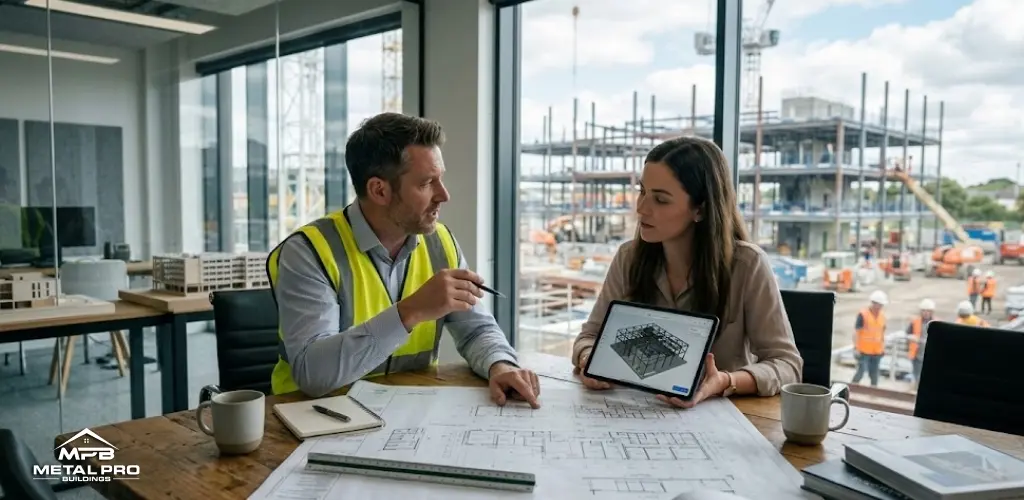
The process begins with an in-depth consultation to discuss your project’s goals, requirements, and scope. This is where your site conditions, intended use, budget, and timeline all come into focus. Nothing moves forward until this picture is clear.
- Site Assessment and Data Gathering
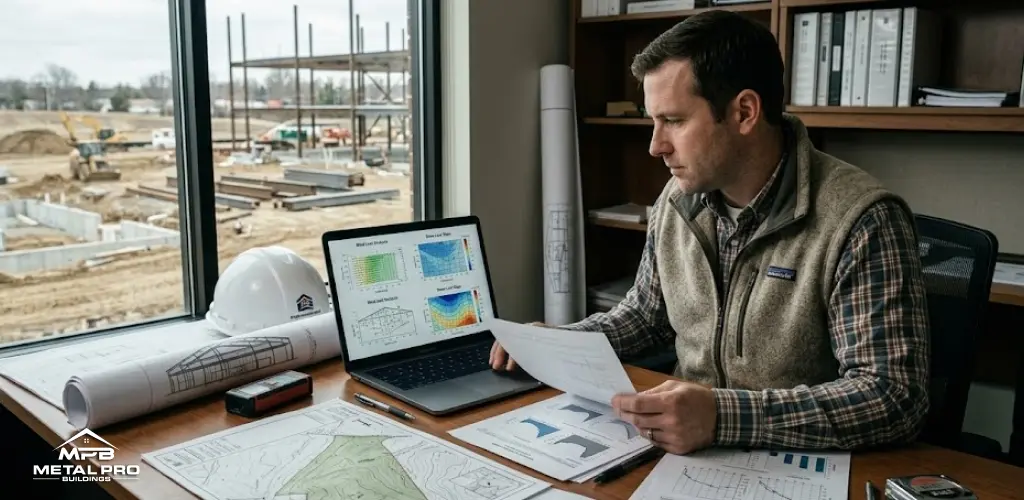
Your location shapes your entire design. Wind zones, snow loads, soil conditions, and seismic ratings all factor into what gets built and how. Local zoning and setback requirements are also confirmed at this stage before a single line is drawn.
- Preliminary Design
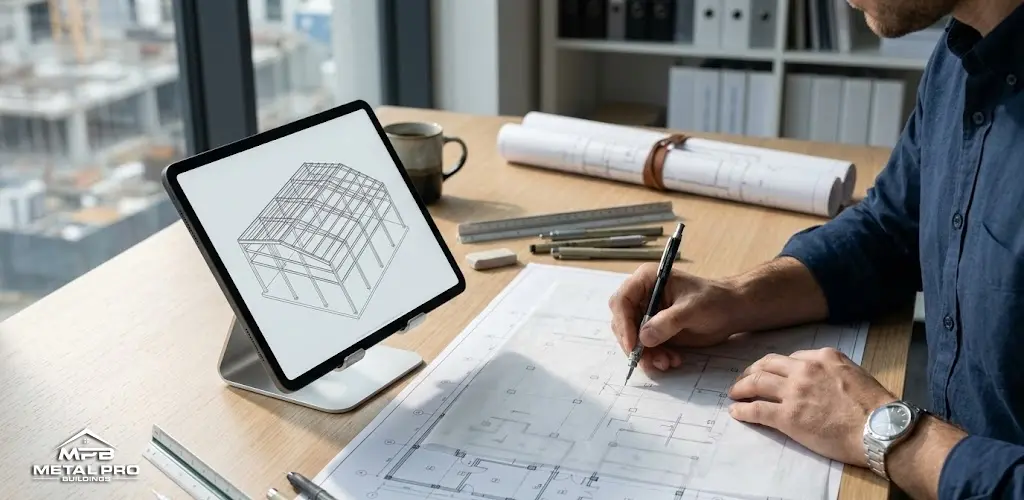
A draft layout and structural concept is prepared for your review. This is the right moment to ask questions: are the doors and windows where you want them? Can you move easily from one area to another? Walk yourself through the day-to-day use of your building and flag any changes now. Adjustments at this stage cost nothing. Adjustments during construction cost plenty.
- Engineering and Load Calculations
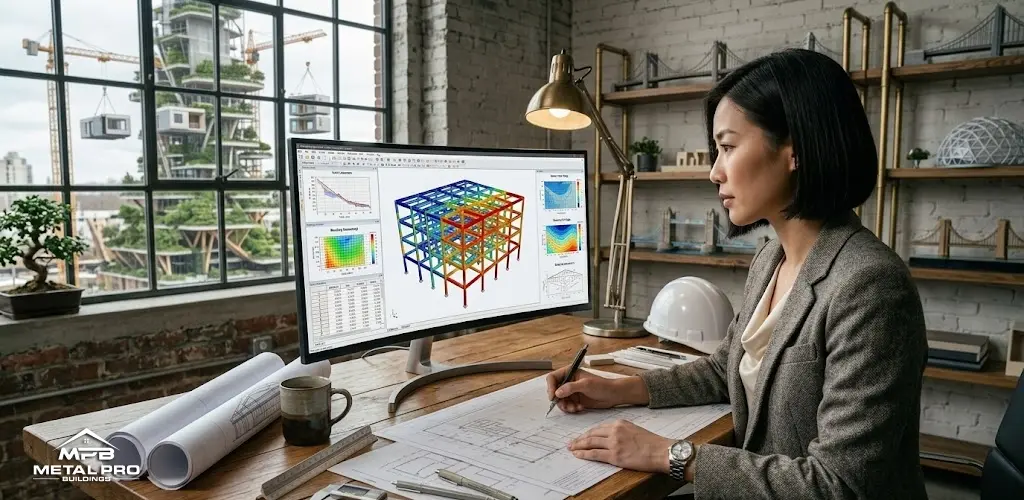
This is where the structural work happens. Engineers size every member, calculate loads, and design the foundation to match your specific site. Structural plans cover connections and anchorage, beams, columns, slabs, and full structural calculations that support every drawing in the package.
- Full Drawing Production
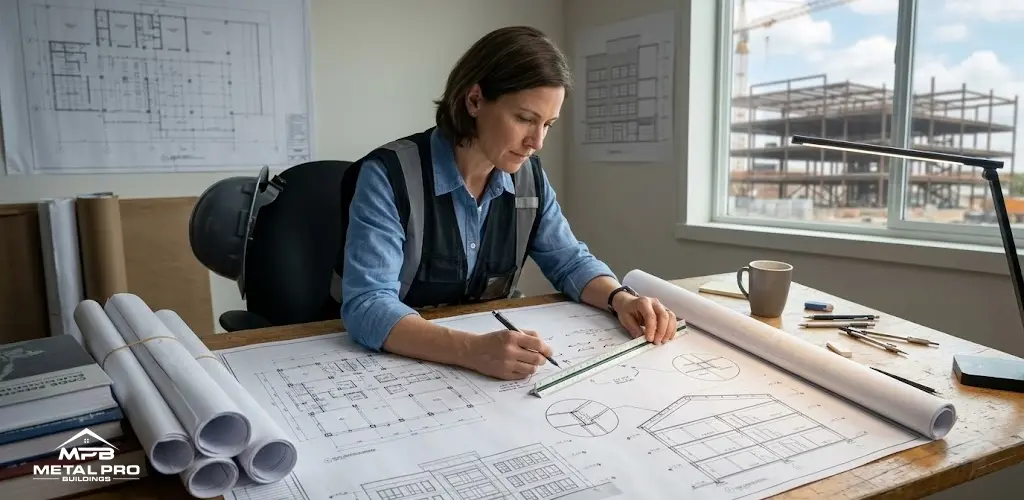
The complete blueprint package is produced : architectural drawings, structural drawings, foundation plans, connection details, and erection guides. Permit drawings must include site plans, floor layouts, exterior elevations, cross-sectional views, and detailed structural components. Everything permit reviewers need is in one place.
- Review and Revisions
You review the full package. Changes are made. Simple revisions may take a few additional weeks, complex changes can take longer depending on engineering requirements. This back-and-forth happens with your supplier, not with the permit office.
- Engineer Stamp and Sign-Off
Your permit drawings arrive with an engineer’s seal and dated signature, a certification that your structure has been designed to meet all applicable load and code requirements. Without this, most authorities won’t review your application.
- Permit Submission Support
Engaging with the permitting authority early for informal feedback helps avoid surprises at submission. A good supplier doesn’t just hand you drawings, they help you navigate the submission process and respond to any reviewer comments.
- Build-Ready Package Delivered
Everything your contractor needs arrives in one complete, organized package. No missing pages. No chasing down separate documents. Just a clear set of drawings that takes your project from approved permit to breaking ground.
By the end of this process, you won’t just have drawings. You’ll have total confidence in what you’re building and exactly what it will take to build it.
How Much Do Steel Building Blueprints Cost in Canada?
Blueprint costs are one of the most searched and least transparent parts of the steel building process in Canada. Here’s what actually drives the price.
Building size and complexity. A basic pre-engineered steel kit generally starts around $18–$29 CAD per square foot for the shell alone. But your blueprint package is a separate investment and complexity matters. A simple agricultural storage building requires far fewer drawings than a commercial facility with mezzanines, crane systems, or skylights. More complexity means more engineering time, and more engineering time means higher costs.
Your location in Canada. This is one of the biggest cost drivers that many buyers overlook. A building in northern Ontario requires different load calculations than one in southern British Columbia due to snow accumulation. Coastal regions may need additional resistance against high winds or seismic activity and these regional differences directly impact engineering costs.
Engineering requirements. In Canada, hiring architects or engineers typically ranges from $100 to $250 per hour. For steel buildings that require stamped drawings which most Canadian municipalities require a structural engineer isn’t optional. That cost is built into any legitimate blueprint package.
Regional labour and material pressures. Construction costs in Canada rose 3.4% year-over-year in early 2025, with labour and finishing costs continuing to climb. Expect 10–15% higher labour and material costs in Western Canada due to tariffs and shortages.
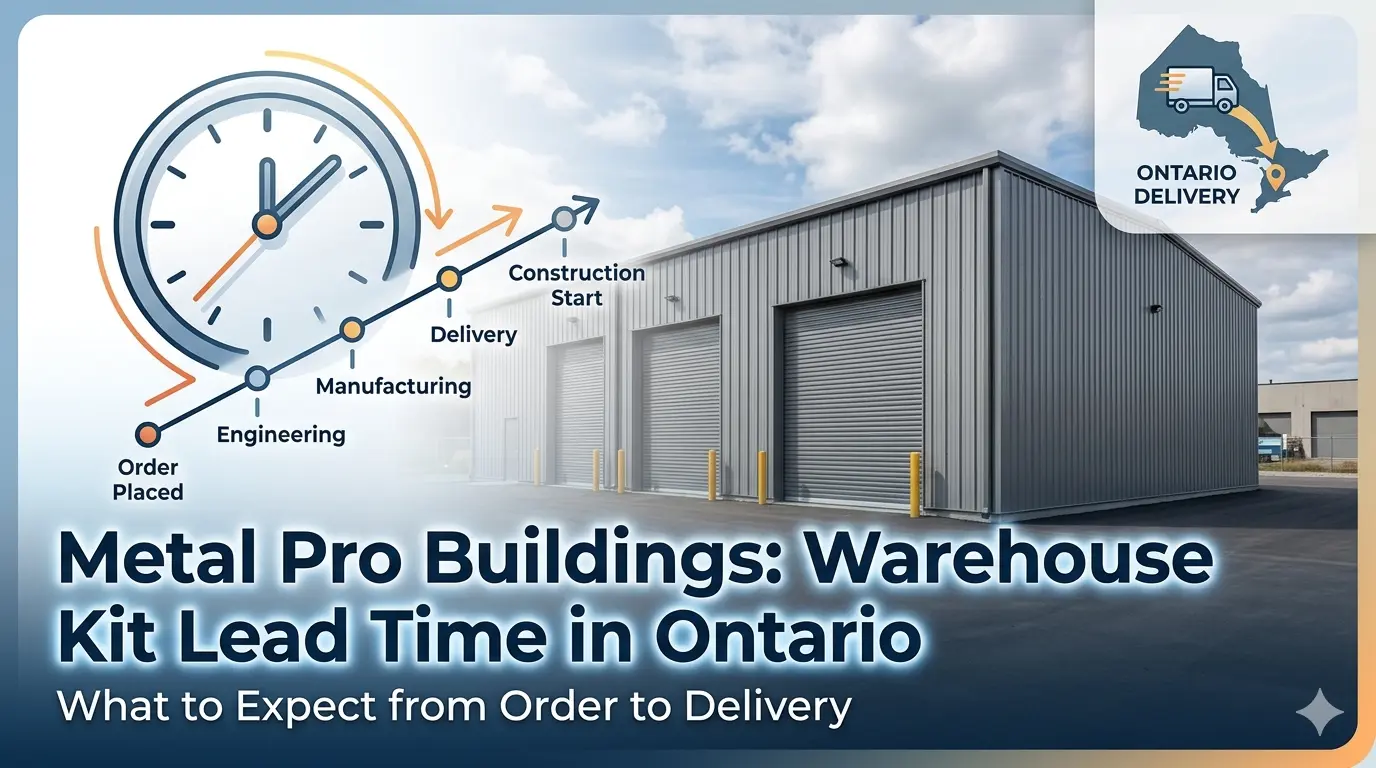
Lead times and turnaround. Fabrication cannot begin until engineered drawings are fully approved and rushing that process introduces risks. Accelerated schedules that bypass normal engineering review often result in erection delays, rework, or missing components that cost far more than the time saved
Here’s the reframe that matters: blueprint costs are not an expense, they’re an investment. If your priority is budget certainty, getting your engineering locked in early is one of the most effective ways to protect your total project cost. A failed permit, a structural revision, or a contractor dispute will cost you far more than a properly engineered blueprint package ever would.
The right drawings protect your budget at every stage that follows.
Want to know what your specific project would cost? Reach out to Metal Pro for a no-obligation quote and get clarity on exactly what your blueprint package would include.
Common Mistakes to Avoid When Getting Steel Building Blueprints
Most blueprint mistakes don’t come from bad intentions. They come from trying to save money in the wrong places or simply not knowing what to watch out for. Here are the ones that cost people the most.
Buying stock plans from an online marketplace. It’s tempting. They’re cheap, they look complete, and they’re available immediately. But stock plans are not stamped or sealed by an engineer. Many jurisdictions require a licensed engineer’s stamp before a permit will be issued and that stamp must come from a professional certified in the province or state where you’re building.
A cheap plan can quickly become an expensive problem.
Skipping the engineer stamp to save money. Unstamped plans lack professional accountability and often require additional site-specific engineering. In many cases, suppliers provide preliminary layouts or shop drawings that illustrate components but these do not replace stamped engineering documents. Without that stamp, your permit application goes nowhere.
Using the wrong load calculations for your location. Two buildings that look identical on the outside can be completely different in weight and structural complexity because one is built in a high snow zone and the other isn’t.Load calculations aren’t a formality. They’re what keeps your building standing in the first major storm.
Not planning for future expansion. There are things that can be engineered into a building today for future use. If they’re not included in the original design, there’s no way to add them later without significant cost.Think about your five and ten year plans before your blueprints are finalised.
Working from outdated or misread drawings. Blueprints evolve during construction. Working off outdated plans can cause major errors. Always check the revision history and cross-reference structural, site, and architectural plans to catch conflicts early.
Choosing a supplier who outsources their engineering. When your blueprints are handed off to an unknown third party, accountability disappears. You don’t know who reviewed them, what they’re qualified for, or whether they’ve ever set foot near a site like yours.
Each of these mistakes is avoidable but only if you know to look for them before you sign anything.
At Metal Pro, our engineering is done in-house. Every set of drawings is produced and stamped by our own certified team, designed specifically for your site and your local code requirements. No outsourcing. No shortcuts.
Why Metal Pro for Your Steel Building Blueprints?
You’ve done the research. You understand what a complete blueprint package looks like, what can go wrong, and what separates a reliable supplier from a risky one. So here’s why Metal Pro belongs in that conversation.
In-house engineering not outsourced. Every blueprint Metal Pro produces is handled by our own certified team. You get drawings that your local Authority Having Jurisdiction will recognise and you save time because much of the engineering work is already built into the supply process. No unknown third parties. No accountability gaps.
Custom blueprints for every project. In Canada, steel buildings are made-to-order and engineered for a specific address.A building designed for Victoria’s mild climate will not hold up under Ottawa’s snow loads. Metal Pro doesn’t offer cookie-cutter templates; every design is built around your site, your use case, and your local requirements.
Full Canadian code compliance. Metal Pro delivers fully engineered, permit-ready steel structures that meet all Canadian building codes from coast to coast.
That includes NBCC standards, provincial amendments, and the regional load calculations your municipality will require before issuing a permit.
CSA A660 certification matters and we have it. The National Building Code of Canada requires that all steel building systems be manufactured by a CSA A660-certified company. Without this certification, your permit will be denied and your insurance coverage may be voided.Metal Pro carries this certification so your project is protected before a single piece of steel leaves our facility.
Complete permit-ready packages. You’ll hedge against non-compliance risk, avoid delays, and have a supplier who is familiar with Canadian permitting and building code differences across every province.Nothing missing. Nothing to chase down separately.
Transparent process with no hidden costs. Metal Pro emphasises no hidden cost quotes and includes a 50-year rust-perforation warranty on many kits.You know what you’re getting and what it costs before anything is committed to paper.
You’ve worked hard to get this project to this point. You deserve blueprints and a team you can actually trust.
Your Blueprint Starts With a Conversation
You’ve covered a lot of ground in this guide. And that matters.
The blueprint phase is where steel building projects are either protected or put at risk. It’s where permits are won or lost, where budgets hold or spiral, and where a building’s long-term performance is decided long before a single beam is erected.
Readiness is less about urgency and more about clarity and preparation. The fact that you’ve taken the time to understand this process puts you in a far stronger position than most buyers who dive in without doing the work first.
Now it’s time to take the next step.
Tell us about your project, your site, your goals, how you plan to use the space and we’ll walk you through exactly what your blueprint package would include. No obligation. No pressure. Just a straightforward conversation with a team that’s done this hundreds of times across Canada.
We’ll create preliminary drawings, explain your municipality’s requirements, and provide a fixed-price quote so you know exactly what you’re getting before anything is committed.
Your building deserves to be built right. And it starts here. Get Your Custom Blueprint Quote →