
Ontario property owners are filing permits for steel prefabricated garages at record rates as the province’s sweeping 2024 Building Code the largest overhaul in decades took full effect January 1, 2025, raising structural load thresholds for garages and outbuildings across the province and making factory-engineered steel the most straightforward path to compliance for many homeowners and farmers.
The code update introduced revised requirements that make coordinating building use, site conditions, structural design, and approvals more critical than ever before. Provincial construction intentions grew by $1.2 billion, a 25 per cent increase to $5.9 billion in September 2024 alone, leading all Canadian provinces in both residential and non-residential permit gains, according to Statistics Canada. Industry observers say demand for faster, code-compliant structures is a primary driver behind the surge in steel prefab enquiries across Ontario.
“The updated code essentially raises the floor on what a compliant garage must be able to handle structurally,” said Herbert Broderick, CEO of Metal Pro Buildings. “Steel’s advantage is that the engineering is done at the factory level; buyers aren’t paying their contractor to figure out the load calculations on-site.”
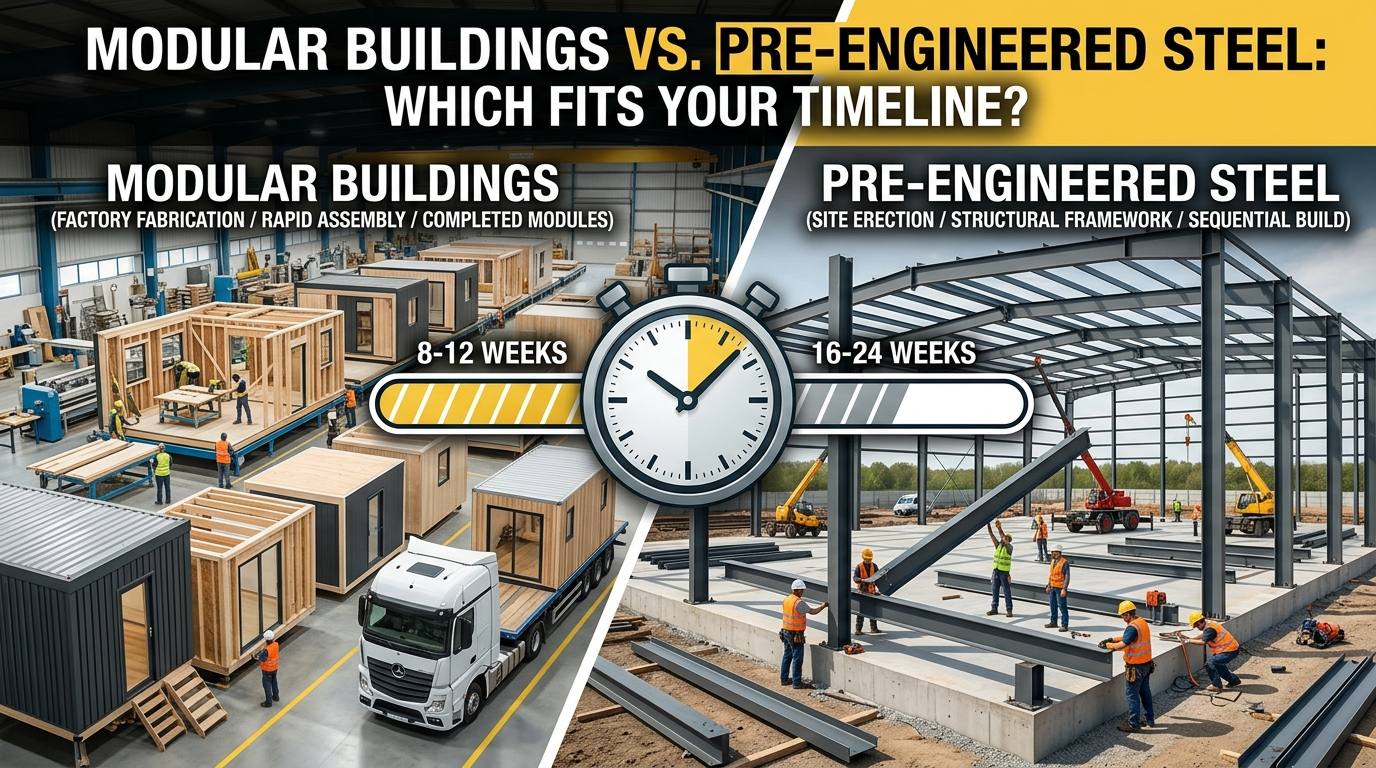
A steel prefab garage arrives on-site as a precision-engineered kit, with components pre-cut and pre-drilled to exact specifications. Prefabricated steel buildings can be erected 30 to 50 per cent faster than traditional construction, reducing on-site labour demands and limiting weather exposure during Ontario’s compressed build seasons. That speed advantage carries increasing weight in a province where certified trades remain scarce: construction vacancies declined roughly 24 per cent in 2024 versus 2023, according to Statistics Canada, yet labour costs continue to climb.
The 2025 code changes carry direct implications for garage builders province-wide. Revised anchorage requirements now apply to high-wind and seismic zones, steel beams must be primed, and ventilation is now required for storage garages housing more than four vehicles, reduced from the previous threshold of five. Buyers choosing engineered steel kits receive engineer-stamped drawings calibrated to local load conditions, which streamlines municipal permit review and reduces the risk of costly design revisions.
Climate engineering is a core structural advantage of factory-built steel garages in Ontario. Ground snow loads range from 1.3 to 1.7 kilopascals in Southern Ontario to as high as 2.8 to 3.4 kilopascals in Northern Ontario cities such as Sudbury and Thunder Bay, based on calculations under OBC 2024 Sections 4.1.6.2 and 9.4.2.2. Pre-engineered steel frames are designed to meet those regional specifications from the outset, unlike wood-frame builds that often require costly engineering retrofits after permit submission.
Pricing has also emerged as a decisive factor. Steel prefab garages typically run $24 to $43 per square metre fully installed, while permit fees in Ontario municipalities range from roughly $550 to $2,000 depending on structure size and location. Wood-frame custom builds carry higher labour costs and greater exposure to material price volatility.
“In the current market, the combination of labour shortages, tighter code requirements, and steel’s resilience in Canadian weather conditions makes prefabricated steel a very practical choice for anyone building in Ontario,” Broderick said. “Buyers who moved forward with engineered steel designs under the 2025 code are already ahead of the curve as the 2026 threshold increases come into effect.”
Under the Ontario Building Code, a building permit is required for any structure exceeding 108 square feet, and zoning bylaws governing setbacks, height, and lot coverage vary by municipality. Buyers are advised to confirm local regulations with their municipal building department before placing a kit order, as permit processing timelines differ across Ontario’s 444 municipalities.
Ontario’s industrial construction sector grew at an average annual rate of 3.1 per cent from 2020 to 2025, with the Greater Toronto Area accounting for roughly 37.3 per cent of provincial industrial construction revenue, according to industry data. The residential and agricultural garage segment now mirrors that momentum, with buyers from Chatham-Kent to Kenora filing permits for steel accessory structures at rising rates.
Further structural load changes are being introduced under the 2026 Ontario Building Code revision, with new calculations for snow loads, wind loads, and dead loads tailored to the province’s specific weather patterns. Structures permitted under 2025 requirements may need to meet a higher engineering standard going forward, making current engineered steel designs an increasingly sound long-term investment.