
Have you ever walked into a room and immediately felt like the walls were closing in? Or worse, have you ever bought a brand-new building only to realize your tallest piece of equipment won’t fit through the door?
Many property owners choose “standard” heights to save a few dollars upfront. However, this small saving often turns into a massive “growth trap.” You find yourself unable to add a car lift, stack taller pallets, or even breathe easy in a cramped workspace.
In this guide, you will learn how to look beyond the floor plan. We will break down why vertical space is your best investment. You will gain actionable insights on engineering, zoning, and future-proofing your build. By the end, you’ll know exactly how to choose a height that serves you for decades, not just months.
1. Understanding the Anatomy of Height: Eave vs. Peak
When planning a build, many people focus on the “peak” height. They think a tall roof automatically means a lot of room. However, there is a big difference between the highest point and the space you can actually use.
Defining the Terms
To get the most out of your building, you need to know these two terms:
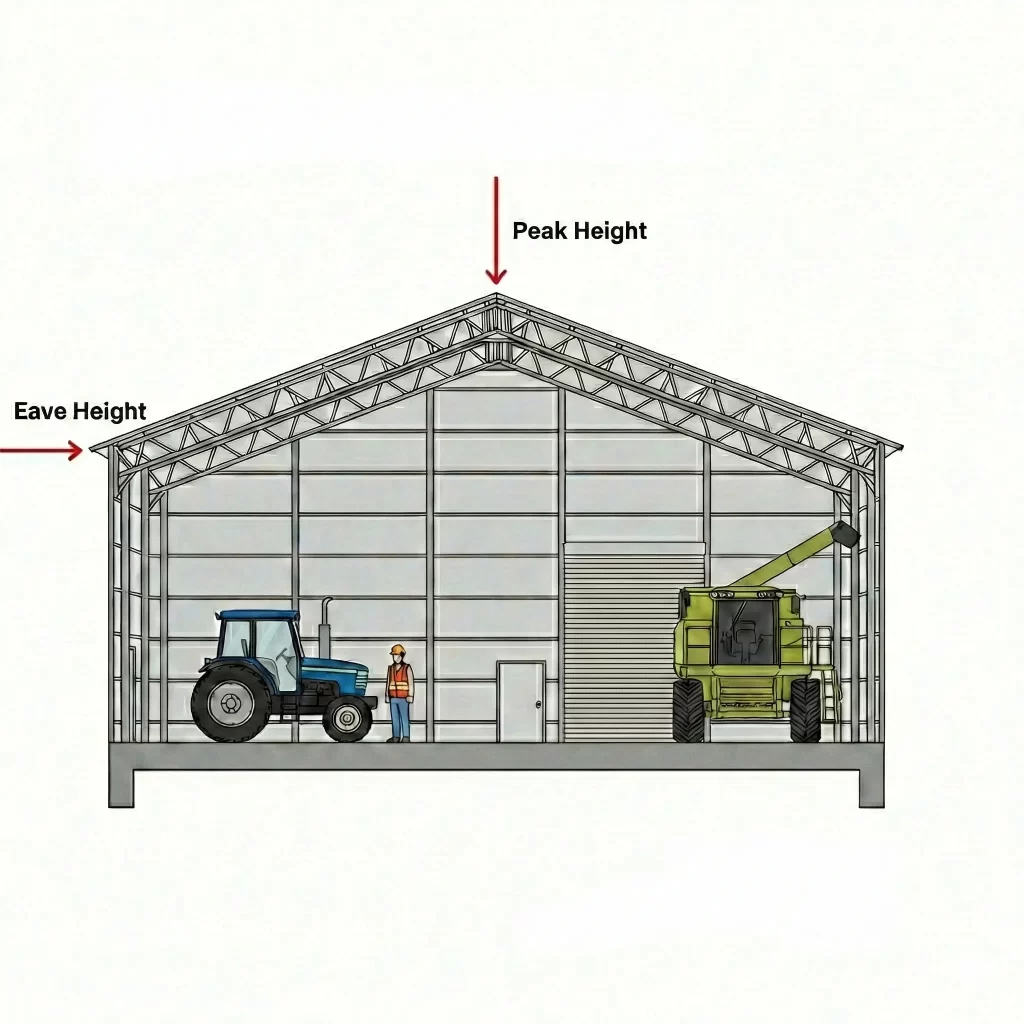
- Eave Height: This is the measurement from the floor to the top of the sidewall, where it meets the roof. It determines your door height and how close to the wall you can park tall equipment.
- Peak Height: This is the absolute highest point of the interior. While it looks impressive, it is often much higher than the walls where you do most of your work.
The “Usable Volume” Myth
Imagine a tent. It has a high peak in the middle, but the sides are very low. You can only stand up straight in the center. If your building has a low eave height, you lose “usable volume.” You might have a 20-foot peak, but if your eaves are only 10 feet, you can’t put a tall shelf or a car lift near the walls. You end up with “dead space” that you paid for but can’t use.
The Metal Pro Advantage
At Metal Pro, we focus on Clear-Span engineering. Traditional buildings often use thick trusses or center columns that “steal” your overhead room. Our designs maximize the space from wall to wall. This means you get a wide-open interior without low-hanging beams blocking your path. Every inch of that vertical space becomes an asset, not an obstacle.
2. Designing for Your Ambition: Specific Use-Cases
The right ceiling height depends on what you plan to do inside. Thinking about your “tallest dream” now prevents expensive mistakes later. Here are three common ways people use vertical space to their advantage.
The Workshop/Garage Dream
If you are a car lover or a DIY expert, “standard” 8-foot or 10-foot ceilings are often too low.
- Car Lifts: Most two-post and four-post lifts require a minimum of 11 to 12 feet of clearance to work safely.
- Oversized RVs: If you own a motorhome or a large boat, you need at least a 14-foot eave height to clear the garage door and still have room for roof-mounted AC units.
- Storage: Extra height allows for overhead shelving. You can keep your tools and seasonal gear off the floor, leaving more room for your projects.
The Commercial Powerhouse
In business, space is money. If you only look at your floor’s square footage, you are missing half the value of your building.
- Pallet Racking: With a taller building, you can use “High-Pile” storage. By going from 12 feet to 20 feet, you can nearly double your inventory capacity without paying for a larger foundation.
- Equipment Clearance: Forklifts and heavy machinery need “headroom” to operate at full speed. Taller ceilings mean fewer accidents and faster workflows.
The Creative Barndominium
Modern “barndos” are famous for their open, airy feel. Height is the secret ingredient to that “grand-room” aesthetic.
- Loft Spaces: A building with a 16-foot or taller eave allows you to add a beautiful second-floor loft. This creates a cozy bedroom or office that overlooks your main living area.
- Natural Light: Tall walls allow for larger windows. This floods your home with light, making the space feel even bigger and more welcoming.
3. Engineering the “Vertical Advantage”
Building high isn’t just about longer beams. It is about smart engineering. The way your roof and walls are designed changes how much space you actually get.
Roof Pitch Matters
The “pitch” is the angle of your roof. It is usually written as a ratio, like 1:12 or 4:12.
- Low Pitch (1:12): This is flatter. It uses less steel and is cheaper. However, it doesn’t give you much extra height in the middle.
- Steep Pitch (4:12): This creates a tall, dramatic peak. It is excellent for “shedding” heavy snow. If you live in a place with cold winters, a steeper pitch keeps your roof from collapsing under the weight.
Tapered Member vs. Straight Column
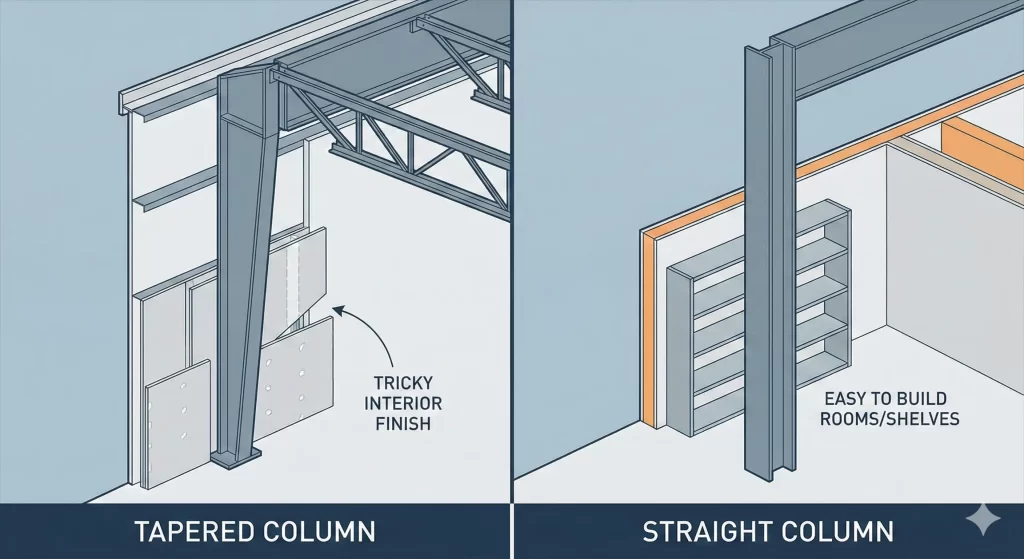
The “bones” of your building matter for your layout.
- Tapered Columns: These are wider at the top than at the bottom. They are very strong and save money because they use less steel. But, if you want to finish the interior walls with drywall, the “taper” can make it tricky.
- Straight Columns: These are the same width from floor to ceiling. They take up slightly more floor space, but they make it much easier to build rooms or install shelves against the wall.
Integration of Mezzanines
Planning for a “mezzanine” (a partial second floor) is a smart way to grow. If you think you might need an office or a storage loft later, you need height now.
- To have a comfortable space both above and below, you usually need at least 14 to 15 feet of clearance.
- This allows for 7 feet of “headroom” on the ground floor and another 7 feet in the loft.
- Planning for this today means your foundation and columns will be strong enough to support the extra weight tomorrow.
4. Navigating the “Red Tape” Without the Headache
Building tall can sometimes feel like a game of rules and regulations. Local governments and safety experts have a say in how high you can go. Understanding these rules early saves you time and money.
Zoning and Building Codes
Every town has “zoning laws” that act like a rulebook for land.
- Residential Zones: These often have strict height limits (sometimes 15–20 feet) to keep buildings from blocking a neighbor’s view.
- Commercial/Industrial Zones: These allow much more height, sometimes up to 40 feet or more.
- The Permit Process: To get a permit, you need detailed plans showing your building’s height and its distance from the property line (setbacks). Metal Pro assists by providing engineer-stamped drawings that prove your building is safe and meets local codes.
Fire Suppression Logistics
The height of your ceiling changes how fire sprinklers must work. This is governed by a set of rules called NFPA 13.
- High-Piled Storage: If you plan to stack items higher than 12 feet, fire codes often require more powerful sprinkler systems.
- The 30-Foot Rule: Once a ceiling passes 30 feet, the type of sprinkler heads and the water pressure needed may change.
- Planning Ahead: By choosing the right height and layout now, you can avoid having to install an expensive fire pump later.
The Insurance and Valuation Bonus
A well-engineered, high-clearance building is a “premium asset.”
- Resale Value: Future buyers love flexibility. A building that can fit a large truck or a second floor is worth much more than a “standard” shed.
- Lower Risk: Steel is non-combustible. Insurance companies often give better rates for steel buildings because they are harder to damage by fire or wind compared to wood-frame structures.
- Longevity: A building that meets modern codes today will be easier (and cheaper) to insure for the next 30 years.
5. Why Metal Pro Buildings is the Architect of Your Space
Choosing a building is about more than just buying a kit. It is about finding a partner who understands your goals. At Metal Pro, we don’t just sell you a box; we help you design a space that grows with you.
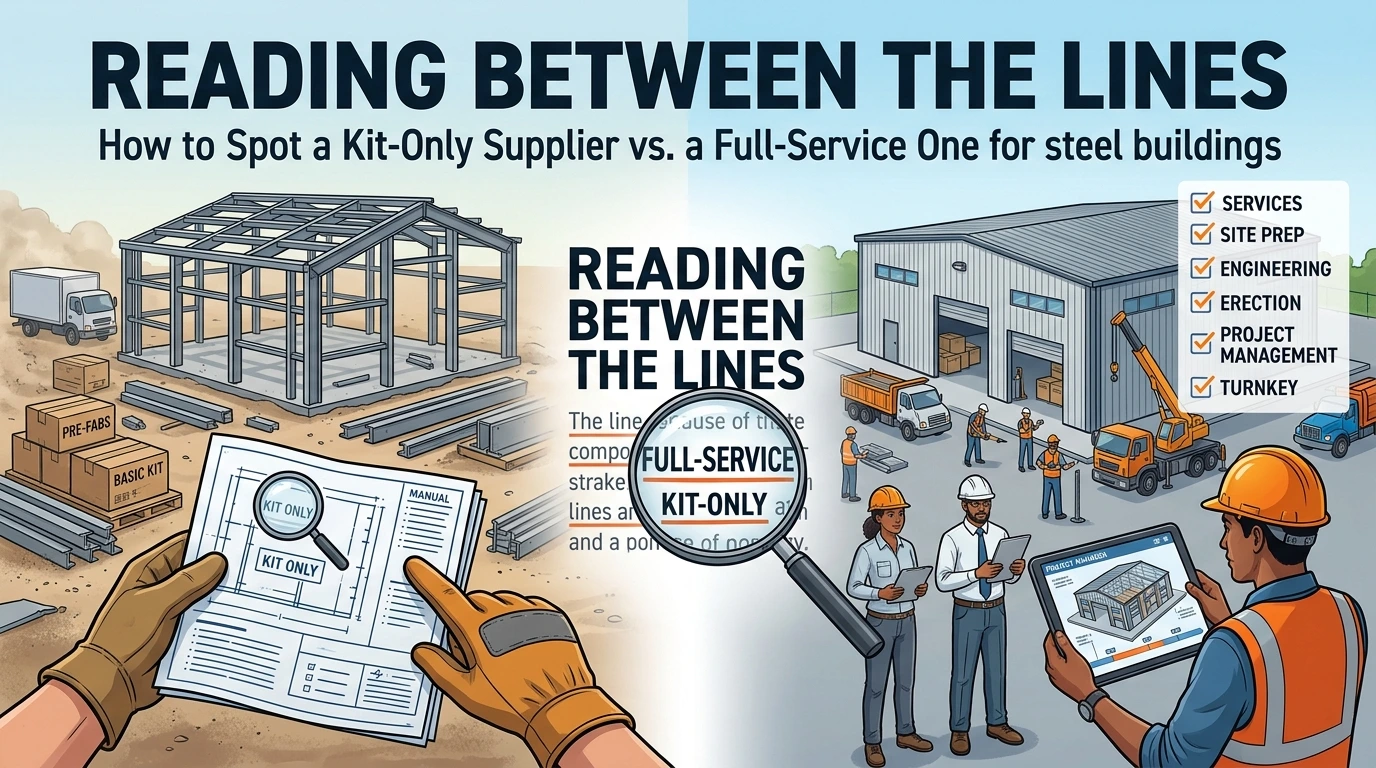
Customization Over “Kits”
Many companies sell pre-made “kits” with fixed sizes. This often forces you to compromise on your height or layout. Metal Pro offers Clear-Span engineering that can reach up to 200 feet wide without a single interior column. This gives you total freedom to move equipment, stack inventory, or design an open-concept home without hitting a post.
The Strength of Quality Steel
We use high-tensile steel that is much stronger than standard materials.
- Thinner Profiles: Because our steel is so strong, the beams can be thinner. This means you get more interior “void” and less structural “bulk.”
- Durability: Our steel doesn’t warp, rot, or attract pests. It stays perfectly straight for decades, ensuring your tall garage doors always open smoothly.
Expert Guidance
Our team doesn’t just take an order. We consult on your workflow.
- We ask how you will use the space in 5, 10, or even 20 years.
- We help you plan for mezzanine floors or specialized equipment today so you don’t have to renovate tomorrow.
- We guide you through the technical details of engineering and local codes to make the process stress-free.
Conclusion: Don’t Settle for a Low Ceiling
Space is the ultimate luxury in any build. It is the one thing you cannot easily add later. While “standard” might seem like the safe choice today, it often becomes a wall that stops your business or hobby from growing.
The Final Word
Vertical space gives you the flexibility to pivot. Maybe today you need a storage shed, but in five years, you might want a home office or a full-scale workshop. High-clearance steel ensures you never have to say “no” to an upgrade because your ceiling is too low. It is an investment in your future productivity and your property’s long-term value.
Take the Next Step
Don’t guess on your dimensions and risk a “cramped” future. Whether you are lifting a truck, stacking inventory, or building your dream home, the height you choose matters.
Are you ready to design a space that truly reaches its full potential? Contact us Today