
You found the perfect steel building. The price is right, the specs fit then someone mentions permits.
Suddenly, a simple purchase feels like it could unravel.
This happens to buyers across Canada every day. Most assume the approval process will be straightforward. Many find out too late that it isn’t.
Urban or rural, every province plays by different rules. Zoning laws, load requirements, and permit timelines vary dramatically depending on where you build. What flies in rural Saskatchewan can hit a wall in suburban Ontario.
This guide gives you a clear, honest look at the urban vs. rural approval landscape across Canada ,so you walk in informed, not blindsided.
At Metal Pro, we’ve helped hundreds of Canadians navigate this process from coast to coast. Here’s what we wish every buyer knew before they called us.
Why Approval Rules Differ So Drastically Across Canada
Canada has no single national building code enforcement body.
The National Building Code (NBC) sets the baseline. But each province and municipality interprets and enforces it differently. For steel buildings specifically, this means structural load requirements, fire ratings, and use classifications can change dramatically from one region to the next.
Key provinces with distinct dynamics include Ontario, Alberta, BC, Saskatchewan, and Manitoba. Knowing which rules apply to your location is the first step and one many buyers skip.
Urban Municipalities: More Layers, More Scrutiny
Cities and towns have dedicated zoning officers, development permit queues, and design review processes. That means more steps, more documentation, and longer wait times.
Several factors can trigger additional review in urban zones. These include commercial use, building height, proximity to residential properties, and heritage designations.
The biggest hidden risk? Timeline. Urban approvals can take weeks to months. That directly affects your build schedule and your financing.
Rural & Agricultural Land: More Freedom, But Not No Rules
Here’s one of the most expensive misconceptions in the industry: “It’s my land , I can build whatever I want.”
Some provinces do offer agricultural zoning exemptions. But they’re conditional, narrower than most buyers assume, and easy to misread without local knowledge.
It also matters whether your property falls within an organized municipality or an unorganized territory. Unorganized territories common in northern Ontario, northern BC, and parts of Manitoba are governed provincially, not locally. The rules are different, and inspections can be harder to arrange and more costly to complete.
Development Permit vs. Building Permit: Know the Difference
These two permits are not the same and confusing them is a costly mistake.
A development permit asks: can you build here? It covers land use and zoning. A building permit asks: how will you build it? It covers structural safety and code compliance.
Many buyers budget for one and get surprised by both. In most urban municipalities across Canada, you need both before breaking ground.
What Urban Reviewers Are Looking For in Steel Buildings
Urban reviewers don’t just check if your building is structurally sound. They look at the bigger picture.
Expect scrutiny around setback requirements from property lines, roads, and neighbouring structures. Some cities also enforce architectural compatibility standards. Yes, that means they care what your metal building looks like from the street.
Beyond aesthetics, reviewers will examine stormwater management and drainage impact. Commercial and industrial builds must also meet accessibility compliance requirements under provincial codes.
Province-Specific Urban Nuances
The rules shift depending on where in Canada you’re building. Here’s a quick breakdown of key provincial differences:
- Ontario: Conservation authority overlap affects many areas near water. Strong municipal tree bylaws can also complicate site preparation.
- British Columbia: Seismic load requirements make thorough engineering documentation especially critical.
- Alberta: Calgary and Edmonton have multi-step approval processes. Rural municipalities in Alberta are generally more streamlined.
- Saskatchewan & Manitoba: Municipal timelines tend to be faster, but rezoning agricultural land to commercial use can still be a slow process.
The Real Timeline: Urban Approval Benchmarks
Timelines vary by project type and location. Here’s a realistic range to plan around:
- Simple residential accessory structure: 3–8 weeks
- Commercial or industrial build in an urban zone: 6–16+ weeks
Delays are almost always caused by the same issues: incomplete drawings, missing engineer stamps, or an incorrect use classification on the application. Getting these right from the start is the single best way to protect your schedule.
Rural Approvals : The Freedom AND the Surprises
Rural builds can genuinely be more straightforward. Many municipalities and counties in Alberta, Saskatchewan, and Manitoba have streamlined permit processes for agricultural buildings.
Some provinces allow certain farm structures under a specified square footage to proceed without a full building permit. Shorter queues, less bureaucracy, and more direct communication with local offices are real advantages rural buyers enjoy. If you’re unsure where the permit threshold falls for smaller structures, see what homeowners need to know about shed permits for a detailed size-by-size breakdown.
But simpler doesn’t mean effortless. And it definitely doesn’t mean no rules.
The Rural Landmines Most Buyers Don’t See Coming
This is where rural buyers get caught off guard. These are the most common surprises:
- Agricultural zoning doesn’t equal commercial permission. Want to run a business from that shop? You may need rezoning first and that process can be slow and uncertain.
- Covenants and easements on title can override municipal permitting entirely. Always do a full title search before you buy a building.
- Provincial highway setbacks are strict. Rural properties on numbered highways face firm distance requirements from the road that many buyers don’t discover until it’s too late.
- Water and septic proximity rules apply if your build includes any livable or washroom space, even a basic bathroom.
- Flood plain and environmental overlays are increasingly enforced across prairie and coastal regions. These can limit what you build, where you build, and how.
Missing any one of these can stop your project cold or force an expensive redesign.
Unorganized Territories: The True Wild Card
Unorganized territories are found primarily in northern Ontario, northern BC, and parts of Manitoba. There’s no local municipal authority in these areas; governance falls to the province directly.
That doesn’t mean you’re free to build anything. Provincial building standards still apply. And inspections in remote areas can be logistically complicated and significantly more costly to arrange.
If your property sits in an unorganized territory, build extra time and budget into your planning. The process is manageable but it rewards preparation.
The Snow Load and Wind Load Factor A Canadian-Specific Must-Know
Canada’s weather is not uniform and your building’s engineering needs to reflect that.
The National Building Code of Canada (NBCC) assigns specific ground snow loads and wind pressures by location. A building engineered for southern Ontario may not meet approval requirements in northern Alberta or coastal BC. The numbers are simply different.
This is where prefab or imported buildings frequently fail permit review. They weren’t engineered to your specific site’s conditions. A generic package built for one region won’t automatically satisfy a reviewer in another.
How Metal Pro Company Handles This
Most permit delays and rejections come down to documentation not the building itself.
Every Metal Pro building comes with Canadian-engineered drawings stamped for your specific province. We don’t hand you a generic package and wish you luck. Our team coordinates directly with your local Authority Having Jurisdiction (AHJ) to pre-answer the questions that most commonly cause delays.
We ask where you’re building before we talk about what you’re building. That one step makes a significant difference in how smoothly your approval goes.
The Buyer’s Pre-Purchase Approval Checklist
This checklist won’t replace a conversation with your local authority. But it will make sure you’re asking the right questions before you commit to a purchase.
Use it before you sign anything.
On Your Property
- What is the current zoning designation and what uses does it permit?
- Are there any agricultural exemptions that apply, and what are their size or use limits?
- Has a title search been completed to check for covenants, easements, or caveats?
- Are there any flood plain, environmental reserve, or overlay designations on the land?
- What are the setback requirements from all property boundaries, roads, and highways?
From Your Local Authority
- Is a development permit required before a building permit can be issued?
- What are the current permit processing timelines?
- Are there any architectural or design standards that apply to your zone?
- What are the inspection requirements and stages for your project type?
From Your Building Supplier
- Are the drawings stamped by a Canadian P.Eng. licensed in your specific province?
- Are snow and wind loads calculated for your exact location not just a generic region?
- Will the supplier support the permit process, or will you be left to manage it alone?
- What happens if the permit is rejected will the supplier help revise the documentation?
That last section is worth paying close attention to. Many buyers don’t think to ask it until they’re already in trouble.
A supplier who has navigated Canadian approvals hundreds of times will answer those questions confidently. One who hasn’t may struggle to answer them at all.
Urban or Rural , How Metal Pro Makes the Approval Process Less Stressful
Permits don’t have to be the part of your project that keeps you up at night. With the right supplier beside you, the process becomes a series of manageable steps not a maze with no exit. Here’s how Metal Pro helps make that happen.
Why the Permit Process Breaks Down (And How We Help Prevent It)
Most permit rejections aren’t caused by the building itself. They come from incomplete or non-site-specific documentation.
Wrong load calculations. Missing engineer stamps. Drawings that weren’t prepared for the right province. These are fixable problems but they’re costly when they surface after you’ve already submitted.
Metal Pro’s process starts with your location, not the catalogue. Before we talk about what you’re building, we ask where you’re building. That single shift changes everything about how your documentation gets prepared.
What We Bring to the Process
Every Metal Pro building comes with a package designed to satisfy Canadian AHJs from the start:
- Province-stamped engineering drawings prepared by a licensed Canadian P.Eng.
- Site-specific snow and wind load calculations for your exact location
- Foundation design matched to your local frost depth
- Direct coordination with your local Authority Having Jurisdiction when needed
We’ve supplied buildings across every major province. That experience means we already know the questions your local reviewer is likely to ask and we prepare your package to answer them.
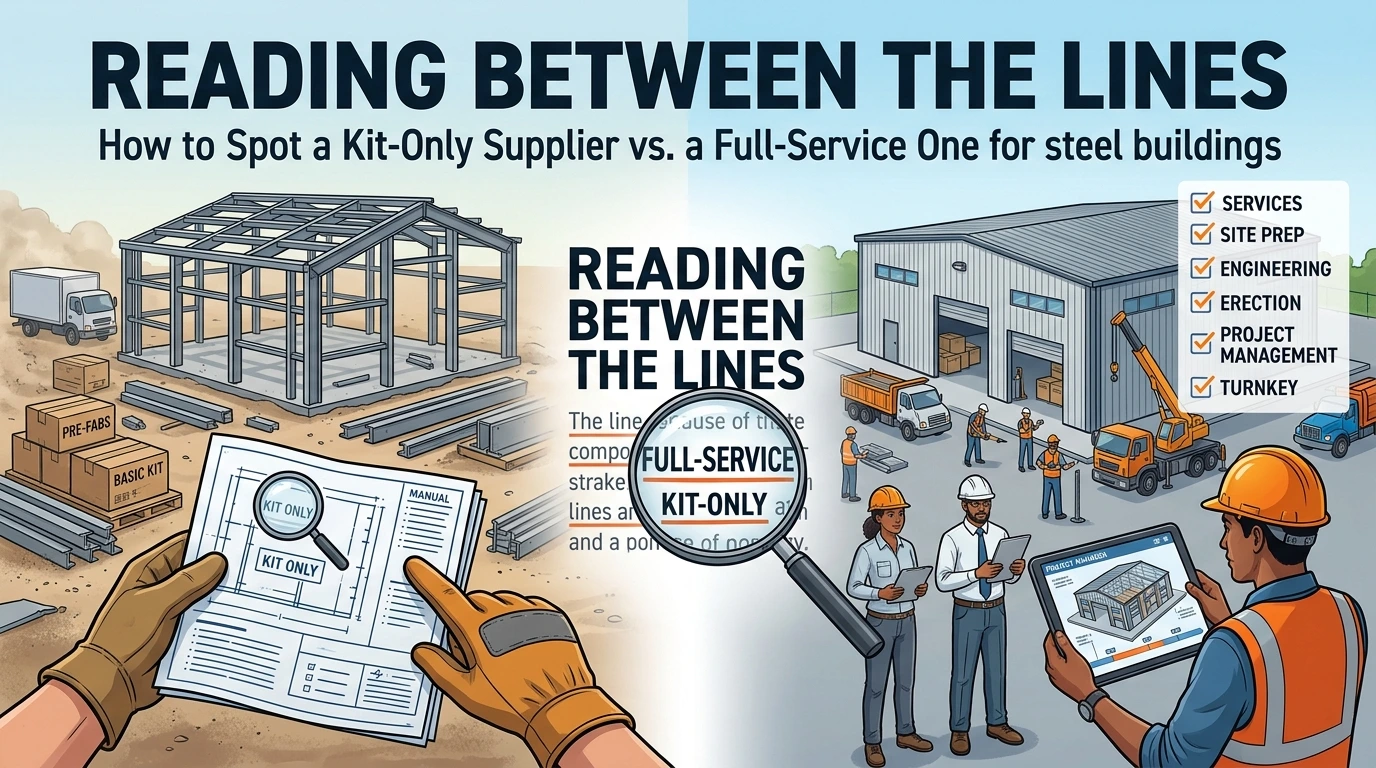
What to Ask Any Steel Building Supplier Before You Buy
Not all suppliers are equal when it comes to Canadian approvals. These three questions will tell you a lot:
- Do you provide Canadian P.Eng.-stamped drawings for my specific province?
- Have you supplied buildings in my municipality or county before?
- If my permit is rejected, do you help revise the documentation or is that my problem?
A supplier with real Canadian experience will answer all three without hesitation. If they can’t, that’s important information before you commit.
CONCLUSION: Know Before You Buy Then Buy With Confidence
The permit process is navigable; it just requires the right knowledge and the right partner.
Going in prepared makes all the difference. Understanding urban vs. rural requirements, knowing what reviewers expect, and asking the right questions before you purchase puts you ahead of most buyers.
The costliest mistake isn’t a zoning issue or a missed setback. It’s buying from a supplier who doesn’t understand Canada’s regulatory landscape and leaving you to figure it out alone.
At Metal Pro, we’ve helped buyers from coastal BC to rural Ontario navigate every type of approval scenario. We know the questions your local reviewer will ask and we prepare your documentation to answer them.
Before you commit to a building, let’s talk about where you’re building. A 15-minute conversation with our team can tell you more than weeks of research on your own.
Get a Free Site-Specific Consultation → Contact Metal Pro Today