
British Columbia’s full mandatory enforcement of the 2024 BC Building Code, which took effect March 10, 2025, has raised structural and engineering requirements for every prefabricated steel garage permitted in the province a shift that industry observers say continues to reshape how buyers, contractors, and suppliers approach the market more than a year into the new regime.
The updated code, which incorporates the National Building Code of Canada 2020 with BC-specific amendments, introduced reinforced seismic design standards and zero-carbon reporting requirements that apply to accessory buildings including detached garages. Regional building authorities in Metro Vancouver, the Fraser Valley, and the Kootenays have confirmed that snow, wind, and seismic loading in their jurisdictions routinely generate complex engineering requirements even for comparatively modest structures.
“Any prefab steel building sold into British Columbia today needs to arrive with stamped, site-specific engineering drawings from a Professional Engineer registered in BC,” said Herbert Broderick, CEO at Metal Pro Buildings, CSA-certified steel building supplier. “Generic kit packages without that documentation cannot be permitted under BCBC 2024, and buyers who discover that after ordering face expensive delays.”
Seismic Design Now Site-Specific
BC sits atop the most seismically active region in Canada. The threat comes from several sources , most notably the Cascadia subduction zone off Vancouver Island, which experts estimate has a 30 percent chance of producing a major earthquake in the next 50 years. Because PEMBs are engineered under Part 4 of the National Building Code, seismic safety is baked into the building’s design from day one. The engineer responsible for the structure calculates exactly how it will perform under earthquake loads specific to your site , not a rough regional estimate, but values tied to your actual location and soil conditions. Canada’s 2020 building code raised the bar here, updating its earthquake models to better reflect the true risk along the BC coast. In many parts of the province, that means higher design requirements than older codes required. For a buyer, this translates to straightforward confidence: the engineering that comes with a PEMB already accounts for where you’re building and what the ground beneath it might do.
Steel Well-Suited to BC’s Climate Range
Pre-engineered steel buildings remain a practical fit for British Columbia’s varied conditions, from wet coastal valleys to snow-heavy interior plateaus. The BCBC 2024 requires roof systems to support the greatest snow accumulation likely within a one-in-50-year return period, a threshold that varies substantially across the province.
Steel’s inherent strength-to-weight ratio allows structures to meet multi-directional load requirements without the mass that wood-framed construction demands. A clear-span steel frame eliminates interior load-bearing columns, delivering open floor plans suited to vehicle storage, workshops, and agricultural equipment , configurations in growing demand as labour costs continue to pressure buyers away from site-built alternatives.
Costs Rising, Documentation Critical
Material and labour cost pressures have reshaped the prefab garage market across Western Canada. Statistics Canada’s Q2 2025 data showed structural steel framing costs rose 3.4 per cent year-over-year in non-residential segments. British Columbia leads the country in construction cost growth, with the province forecast to see a four-to-six per cent increase in 2026 compared to Eastern provinces.
A fully installed steel garage in BC including materials, foundation, and labour is currently quoted in the range of $24 to $43 per square foot CAD, with BC trending toward the upper end of that range. A standard 56-square-metre two-car garage could realistically cost between $45,000 and $80,000 CAD on a turnkey basis. Prefabricated options can save 10 to 15 per cent over site-built alternatives during peak labour seasons, but only when the structure arrives with complete engineering documentation.
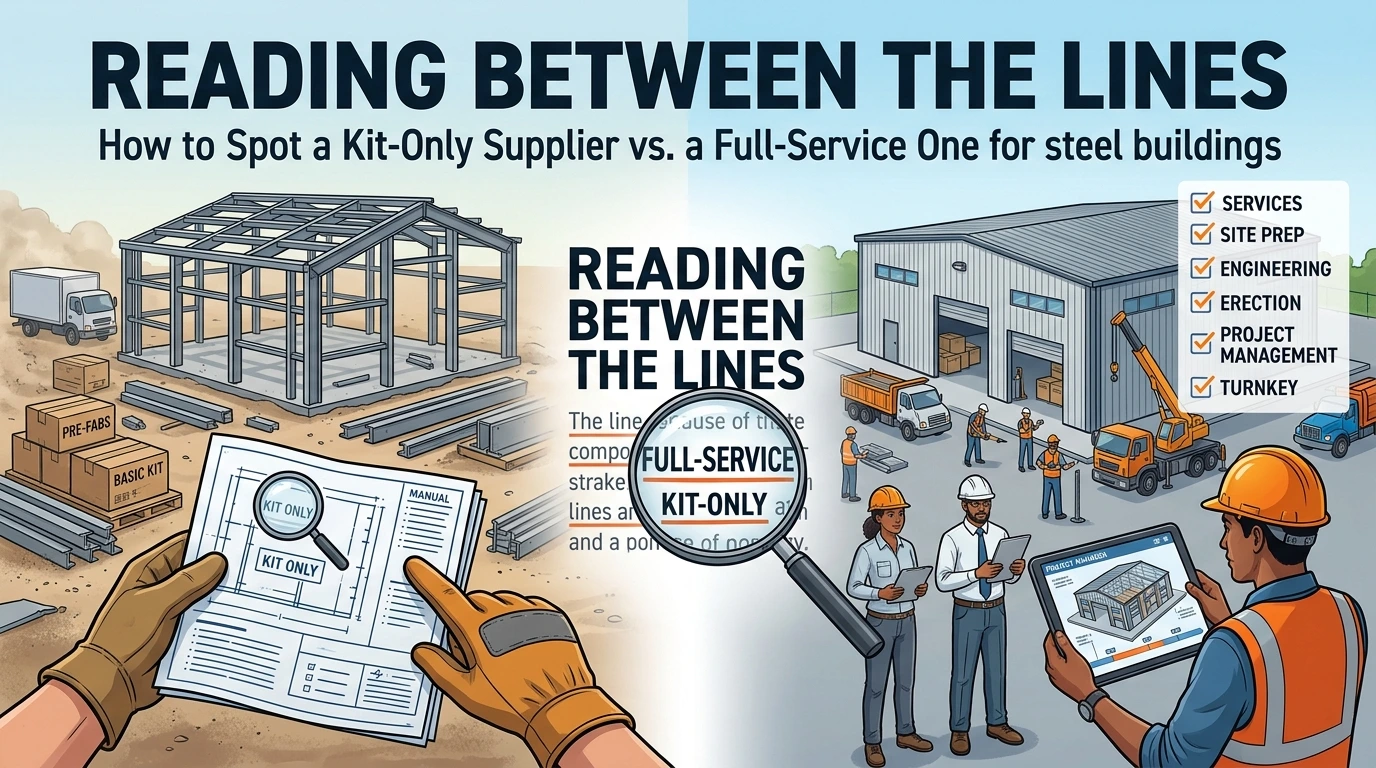
“The buyers who run into trouble are the ones who price only the kit,” Broderick said. “Permits, engineered foundations, site preparation in BC those aren’t line items you can ignore, especially in a high-seismic or high-snow-load municipality.”
Permit Timelines and Municipal Variations
Permit requirements for detached garages vary significantly across BC municipalities. In Prince George, applications must include an energy model prepared by a qualified third-party energy advisor for structures that cross Part 9 thresholds. Victoria has adopted additional emissions requirements beyond the provincial baseline for certain building types, reflecting a broader trend toward more stringent local standards.
Setback rules, lot coverage maximums, and height restrictions differ by municipality and zoning district. Buyers in unincorporated areas should contact their Regional District building department early; some jurisdictions have reported permit processing delays of six to 12 weeks due to staffing constraints.
One important distinction: BCBC 2024 does not apply within the City of Vancouver, which maintains its own building bylaw. Buyers in Vancouver must verify compliance with Vancouver’s separate regulatory framework before ordering any prefabricated structure.
Industry Activity Remains Robust
The prefabricated building manufacturing industry in BC holds the largest revenue share among Canadian provinces, according to IBISWorld Canada’s March 2026 industry report, with employment in the sector growing on an annualized basis. Statistics Canada’s Building Permits data show the total value of permits issued in BC trended upward through 2024 and into 2025 despite broader economic headwinds.
The Canadian Institute of Steel Construction recommends that buyers of pre-engineered steel buildings confirm all structural steel conforms to applicable CSA standards and that stamped engineering drawings are included with the package.
Now more than a year into mandatory BCBC 2024 enforcement, contractors and buyers who prioritize site-specific engineering, early permitting engagement, and full documentation remain best positioned to avoid costly delays in one of Canada’s most seismically and climatically demanding jurisdictions.