
That inspection notice just landed on your desk.
Maybe it’s a routine audit. Maybe it’s a follow-up from a near-miss last quarter. Either way, your hazmat storage situation needs to be resolved now.
The wrong choice here isn’t just expensive. It can mean fines, shutdowns, or worse someone gets hurt.
Most people frame this as a cost question. It’s not. The real question is: which option gets you compliant, fast, without blowing your budget or your timeline?
This article breaks down exactly that : real costs, compliance requirements, and a clear decision framework so you can stop guessing and start acting.
What Is a Prefab Steel Hazmat Building (And What Makes It “Hazmat-Rated”)?
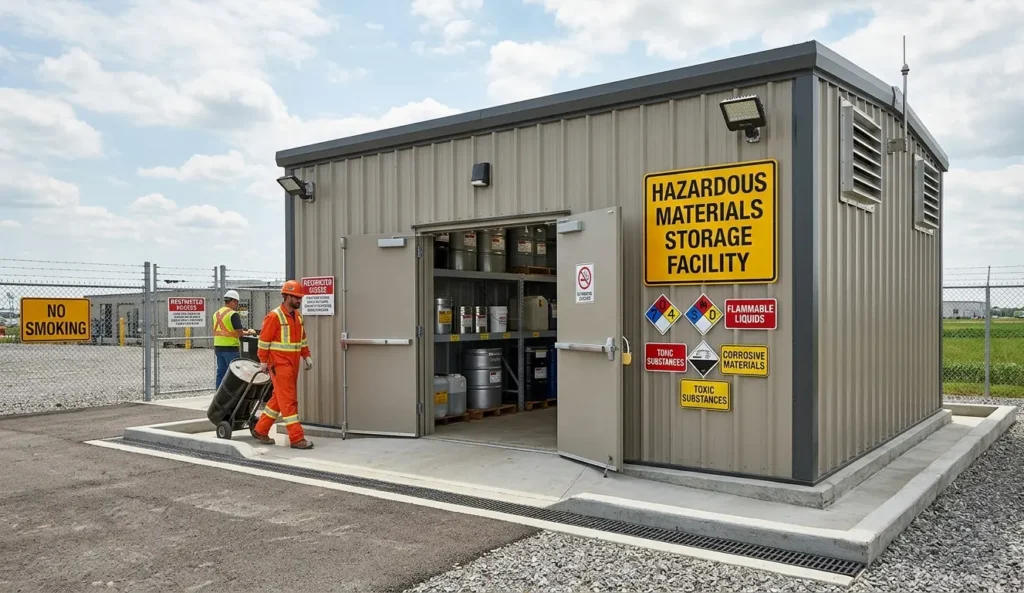
A prefab steel hazmat building is factory-engineered from the ground up. It’s designed specifically to store flammable, corrosive, or toxic materials safely and legally.
These aren’t modified shipping containers or repurposed sheds. Every component is purpose-built for hazardous material storage.
Key features typically include:`
- Ventilation systems : natural or powered, engineered to code
- Fire ratings : 2-hour and 4-hour options depending on your materials
- Spill containment : integrated into the floor, not added as an afterthought
- Grounding and bonding : critical for static-sensitive or flammable materials
- Explosion-proof electrical options : for the highest-risk storage environments
The biggest operational advantage? They ship to your site and install in days , not months.
Metal Pro builds these units to Canadian standards. Every build is purpose-engineered for compliance , not retrofitted after the fact.
What Is a Custom-Built Hazmat Facility?
A custom-built hazmat facility is designed by an engineer and constructed on-site. It’s typically built using wood frame, concrete block, or structural steel tailored to a specific footprint or use case.
Custom builds make sense in specific situations. Large-scale operations integrating hazmat storage into a new facility build, for example, or sites with unusual structural constraints.
But here’s the reality most contractors won’t tell you upfront.
For small to mid-size operations, custom is almost always overkill. The permitting process alone can take months. Engineering fees, inspections, and contractor change orders add up fast and none of that is usually in the initial quote.
Custom sounds like control. For most operations, it means more waiting, more risk, and a bill that keeps growing.
How Much Does a Prefab Steel Hazmat Building Cost in Canada?
Prefab steel hazmat buildings vary in price based on size and specs. Here’s a general range:
- Small lockers and cabinets : $2,000–$8,000 CAD
- Mid-size units : $10,000–$40,000 CAD
- Large multi-bay buildings : $50,000–$150,000+ CAD
Most units include the structure, ventilation, shelving, fire rating, and compliance documentation. That last piece matters more than most buyers realize.
Several factors affect your final price:
- Size and fire rating class : 2-hour vs. 4-hour ratings carry different material and engineering costs
- Electrical specifications : explosion-proof wiring adds cost but may be non-negotiable for your materials
- Foundation requirements : some sites need a concrete pad, others don’t
- Delivery region : shipping to remote sites in Northern Alberta or rural BC costs more than urban Ontario
The hidden value people miss? Compliance documentation is built into the price. That means fewer delays at permitting, fewer surprises during inspection, and a faster return on your investment through avoided fines.
One call, one quote, one delivery date and your team stops improvising storage in a corner of the warehouse.
How Much Does a Custom-Built Hazmat Facility Cost in Canada?
Custom-built hazmat facilities carry a completely different cost structure. You’re not buying a product, you’re funding a project.
Typical cost components include:
- Engineering and design fees : $5,000–$25,000+ CAD depending on complexity
- Permits and inspections : $2,000–$10,000+ CAD, varying by province and municipality
- Construction costs : $50,000–$300,000+ CAD for most small to mid-size builds
- Re-inspection fees : common when first submissions don’t pass
Timeline is its own hidden cost. Most custom builds take 6–18 months from design to occupancy. Every week your team is working around non-compliant storage is a week of liability exposure.
Then there’s the question nobody asks at the start: who re-certifies your facility when codes change? With a custom build, that responsibility lands entirely on you.
Custom sounds like control. But for most operations, it means more risk, more waiting, and a bill that grows every week.
Side-by-Side Cost Comparison
| Factor | Prefab Steel Hazmat Building | Custom-Built Facility |
| Typical Cost Range (CAD) | $2,000 – $150,000+ | $60,000 – $300,000+ |
| Lead Time | Days to weeks | 6–18 months |
| Compliance Documentation | Included | Requires separate engineering |
| Permitting Complexity | Low–Medium | High |
| Scalability | Modular and expandable | Difficult to modify |
| Long-Term Code Updates | Manufacturer support | Owner’s responsibility |
| Best For | Most Canadian operations | Large, site-integrated builds |
For most Canadian operations, the numbers aren’t close. Prefab delivers compliant storage faster, cheaper, and with far less administrative burden.
Canadian Hazmat Storage Compliance: What You’re Actually Required to Meet
Compliance isn’t one standard. It’s a layered web of federal, provincial, and municipal requirements and missing any single layer can get your facility flagged.
Here’s what governs hazmat storage in Canada:
- NFPA 30 : covers flammable and combustible liquid storage
- NFPA 45 : applies to laboratory environments
- Canadian Fire Code / Provincial Fire Codes : Alberta, BC, Ontario, and other provinces each have their own enforcement layer
- WHMIS 2015 / GHS alignment : governs how hazardous materials are identified and handled on-site
- Transport Canada : applies if materials move on or off your site
- Municipal zoning and occupancy requirements : vary significantly by location
Most operations are subject to at least three or four of these simultaneously. A structure that satisfies federal minimums can still fail a provincial fire inspection or a municipal zoning review.
Miss one layer, and the whole structure gets flagged , regardless of how much you spent building it.
How Prefab Steel Hazmat Buildings Are Engineered for Canadian Compliance
Prefab steel hazmat buildings aren’t just built to look compliant. They’re engineered to the specific standards Canadian fire marshals and insurers actually check.
Here’s what that looks like in practice:
- UL, ULC, or FM-approved construction : these certifications carry weight with inspectors and insurers
- Built-in fire ratings : 2-hour and 4-hour options available depending on your hazard class
- Ventilation engineered to code : natural or powered systems sized to your materials and volume
- Integrated spill containment : designed into the floor structure, not bolted on afterward
- Grounding and bonding : standard on units storing static-sensitive or flammable materials
- Full documentation package : ready to submit with your permit application on day one
That last point is where prefab pulls ahead most clearly. The compliance paperwork isn’t something you chase after purchase. Metal Pro includes it with every unit so your permit application has everything it needs before you even break ground.
The Compliance Risk of Custom-Built Hazmat Rooms
Custom-built facilities carry compliance risks that rarely come up during the sales conversation with a contractor.
- The first is engineer-of-record liability. Someone has to certify that your custom structure meets code. That person takes on legal responsibility and their fees reflect it.
- The second risk is code evolution. NFPA standards update on a regular cycle. Provincial fire codes get amended. When that happens, a prefab manufacturer pushes updated specs. With a custom build, the retrofit cost falls entirely on you.
- The third risk is inspection failure. Custom hazmat rooms fail inspections most often due to ventilation miscalculations, inadequate spill containment volume, and missing or incorrect documentation. Each failure means re-inspection fees, more delays, and continued liability exposure.
Finally, there’s the insurance question. Non-certified structures or structures without clear documentation can complicate your coverage. Some insurers will deny claims tied to non-compliant hazmat storage outright.
A failed inspection doesn’t just cost money. It shuts you down, damages your reputation, and puts your team’s safety on the line.
When Prefab Steel Is the Right Choice
Prefab steel hazmat buildings are the right call for most Canadian operations. Here’s how to know if that includes yours.
Prefab makes sense when:
- You need storage in weeks, not months , an audit or inspection is coming and you can’t wait on a construction timeline
- Your operation is small to mid-size , typically 1–10 employees regularly working near the storage area
- You store Class I–III flammable liquids, corrosives, oxidizers, or pesticides , the most common hazmat categories in Canadian industry
- You want documented, certifiable compliance out of the box : no engineering fees, no permit chasing, no guesswork
- You’re in a regulated industry : oil and gas, agriculture, municipal operations, and construction all face frequent compliance scrutiny
- You’ve had a compliance incident or near-miss , and need a fast, defensible solution before the next inspection
Prefab gives you your weekends back. The compliance homework is already done.
When Custom-Built Might Make Sense
Custom-built facilities aren’t always the wrong answer. There are specific scenarios where they make sense.
Consider custom when:
- You’re integrating hazmat storage into a large new facility build , where the storage area needs to tie into the building’s existing structure and systems
- You have highly unusual chemical compatibility requirements , materials that require non-standard wall linings, specialized HVAC, or unique containment volumes
- You have a multi-year project timeline , and a dedicated project management team to manage design, permitting, and construction
- Your storage volumes exceed standard prefab sizing , large-scale operations that require genuinely custom square footage
One honest note: even when custom is warranted, prefab modules are frequently used inside larger structures. Metal Pro can support both paths , standalone prefab units or modules integrated into a larger facility design.
The Questions to Ask Before You Decide
Before committing to either path, work through these six questions. Your answers will point you in the right direction.
- What hazard class are my materials? This determines your required fire rating and ventilation specifications. Class I flammables have different requirements than corrosives or oxidizers.
- What’s my realistic timeline before my next inspection or audit? If the answer is weeks, custom-built is off the table. Prefab is your only viable path.
- Does my provincial fire code require a certified or listed structure? Some provinces require ULC or FM listing for hazmat storage. Know your local requirements before you build anything.
- What’s my total cost ceiling ( including permits, installation, and documentation)? Get the full number, not just the construction quote. Custom builds routinely exceed initial budgets by 20–40%.
- Who is responsible for compliance if codes change in two years? With prefab, the manufacturer tracks and supports updates. With custom, that responsibility is yours alone.
- Do I need to scale or relocate this storage in the future? Prefab units are modular and relocatable. Custom builds are neither.
How Metal Pro Helps Canadian Operations Get Compliant Storage Fast
Most hazmat storage problems don’t start with a bad product. They start with a company that didn’t understand Canadian compliance requirements or didn’t ask the right questions before the sale.
Metal Pro was built specifically to close that gap.
Metal Pro serves industrial, municipal, agricultural, construction, and oil and gas operations across Canada. These are industries where compliance isn’t optional and where a storage failure has real consequences.
Here’s what makes Metal Pro different from a generic catalog supplier:
- Canadian-market expertise : Metal Pro builds to provincial fire code requirements, not just federal minimums. That distinction matters when your inspector shows up.
- Purpose-built compliance : every unit is engineered to ULC or FM standards from the start, not retrofitted to meet requirements after the fact
- Full documentation package : permits, insurance files, and inspection support documentation are included with every unit
- On-site delivery and installation support : your team doesn’t have to figure out logistics on their own
- Post-install code support : if standards change after your unit is installed, Metal Pro supports you through the update
The outcome clients experience most often isn’t just a building. It’s faster inspections, fewer surprises, and a team that finally feels protected.
We’ve seen what happens when companies guess their way through hazmat compliance. We built Metal Pro to make sure that doesn’t happen to yours.
What to Expect When You Work With Metal Pro
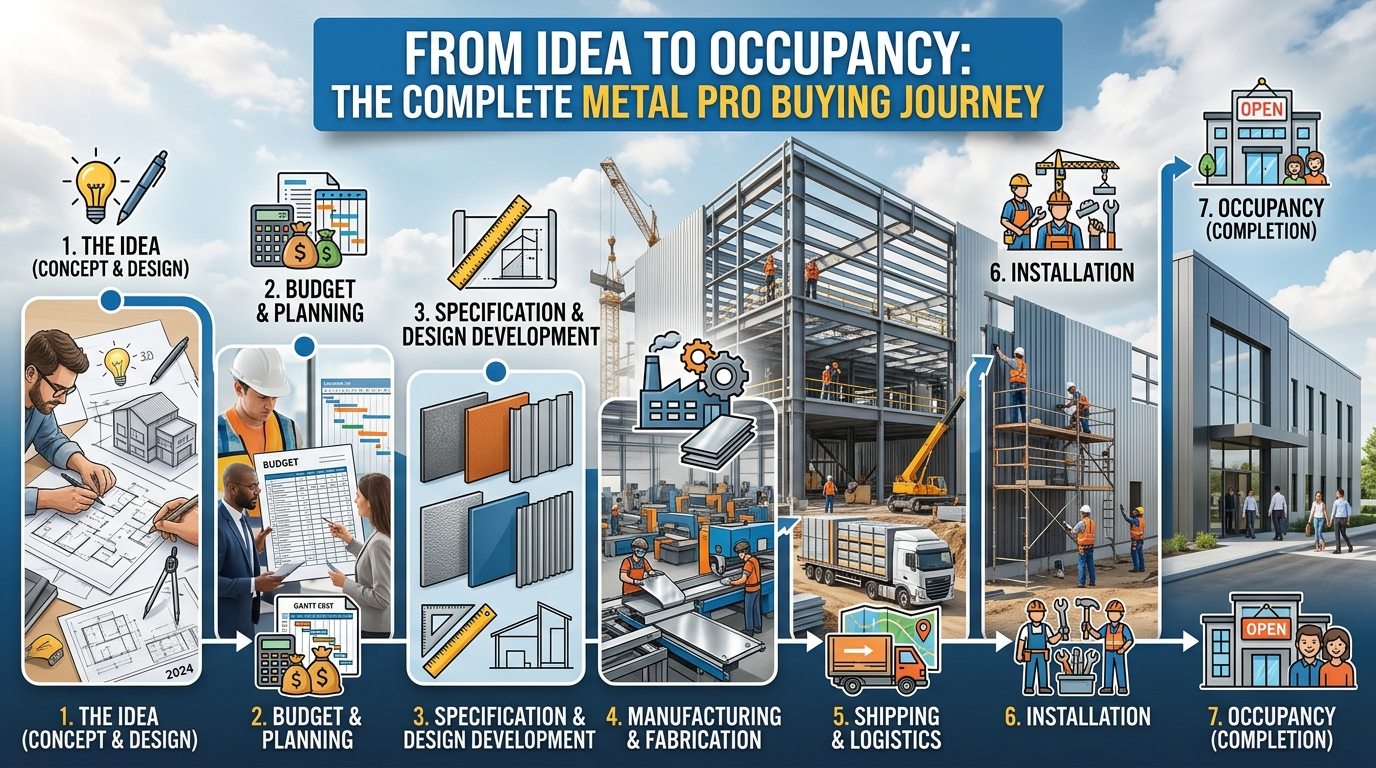
The process is straightforward by design. Most clients go from first conversation to compliant storage in under 30 days.
Here’s how it works:
Step 1: Needs Assessment Tell Metal Pro what you’re storing, in what volumes, and where. We’ll ask about your timeline, your site, and any compliance incidents or upcoming audits. This conversation costs nothing and usually takes under an hour.
Step 2: Code-Matched Recommendation Based on your materials and location, Metal Pro matches you to the right unit ( correct size, fire rating, ventilation type, and containment specs). No upselling. No guesswork.
Step 3: Transparent Quote You get a full cost breakdown upfront. Structure, delivery, installation, and documentation , all in one number. No change orders, no surprise fees.
Step 4: Delivery and Installation Metal Pro coordinates delivery and installation on your schedule. Most standard units are on-site and operational within weeks of order confirmation.
Step 5: Documentation Ready to Go When your unit arrives, so does your compliance package. Permit applications, insurance documentation, and inspection support materials are ready to submit the same day.
Stop Guessing. Get Storage That Passes the Inspection.
Every week without a proper solution is another week of liability exposure and another week closer to the inspection you’re not ready for.
Prefab steel hazmat buildings give most Canadian operations everything they need: certified compliance, fast delivery, and documentation that holds up when an inspector walks through the door.
Your team’s safety deserves better than improvised storage. Your operation deserves better than a compliance gap that could shut you down.
The next step is simple. Tell Metal Pro what you’re storing, where you are, and when you need it. They’ll handle the rest.
Most clients go from first conversation to compliant storage in under 30 days.
Get a Free Hazmat Storage Assessment → Contact Metal Pro
Canadian operations trust Metal Pro because compliance isn’t a checkbox , it’s a responsibility.