
You’re Not Just Buying a Home , You’re Buying a Decision You’ll Live With for Decades
Here’s a number that should stop you cold: the average Canadian home now costs over $700,000.
That’s why more buyers are looking at alternatives and two options keep coming up: manufactured homes and barndominiums.
But here’s the problem. Most of what you’ll find online is either vague, American-focused, or quietly trying to sell you something.
You deserve straight talk.
This article breaks down both options honestly real costs, durability in Canadian winters, financing realities, and long-term value. By the end, you’ll know exactly which one fits your life and your budget.
At Metal Pro Company, we’ve helped Canadian families build homes that work as hard as they do. Here’s what we’ve learned.
What Are We Actually Comparing?
What Is a Manufactured Home?
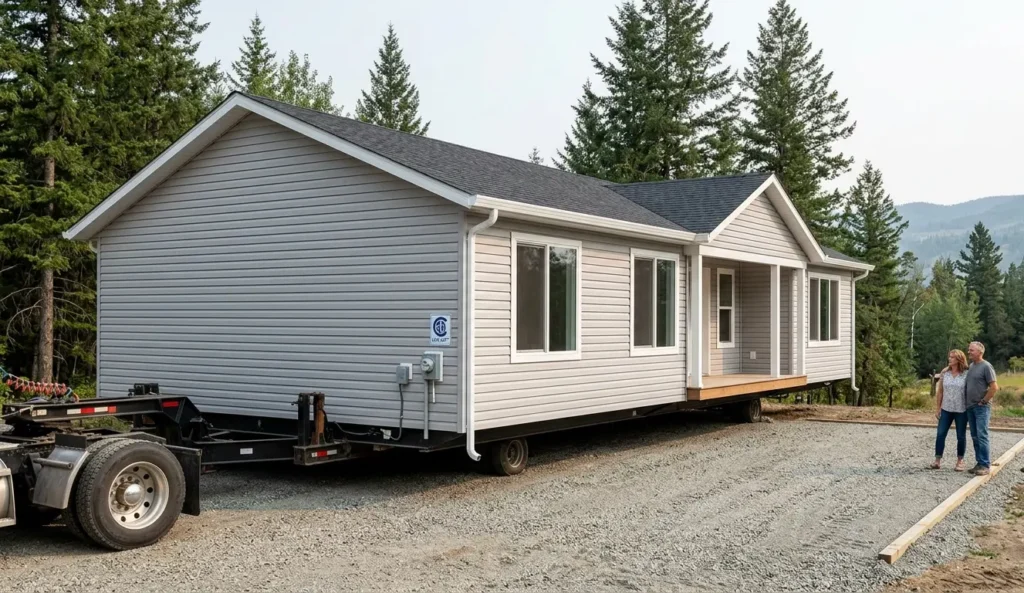
A manufactured home is built entirely in a factory, then transported to your site.
In Canada, these homes must meet CSA A277 standards, a national certification that governs how they’re built. Think of it as the manufactured home equivalent of a building code.
Once delivered, they’re typically placed on a rented pad in a mobile home community or on private land you own.
And yes, they’ve come a long way. Forget the “trailer” stigma. Modern manufactured homes can look and feel surprisingly close to a site-built house. But there are still important limitations we’ll get into.
Best fit for: Rural properties, retirement downsizing, and budget-first buyers who need to move quickly.
What Is a Barndominium?
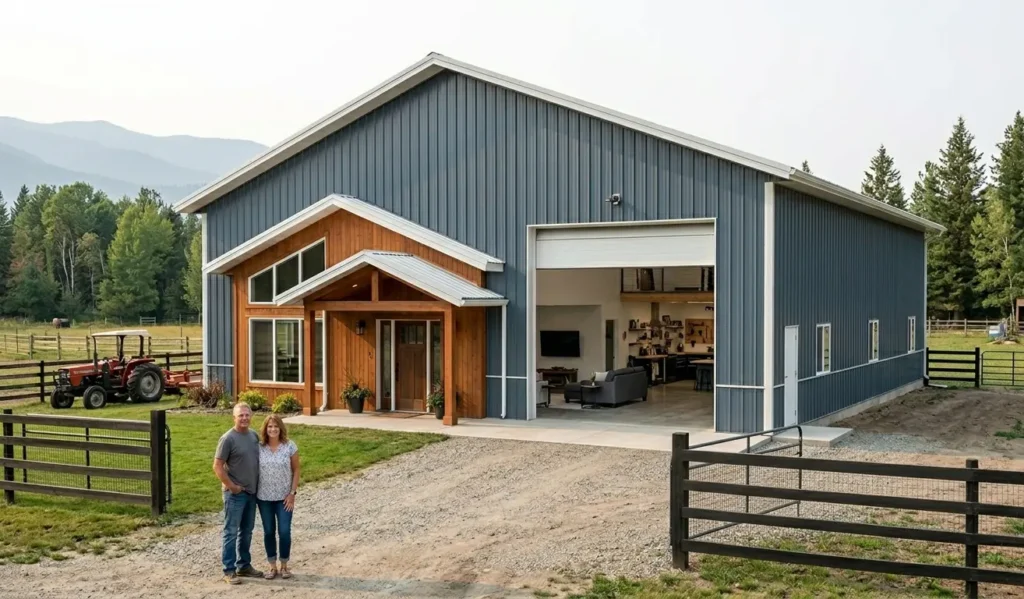
A barndominium starts with a steel or metal building shell then gets finished on the inside as a full living space.
It’s built on a permanent foundation on land you own. That detail matters more than most people realize, and we’ll explain why in the financing section.
The concept originated in the US but has been growing fast across Canadian provinces especially on acreages, hobby farms, and rural properties where people want more than just a place to sleep.
Best fit for: acreage owners, live/work properties, hobby farms, and anyone who wants flexible multi-use space under one roof.
Why This Comparison Matters Right Now in Canada
Post-pandemic, rural and acreage land purchases surged across the country.
More Canadians are asking: “Can I build something meaningful out here without spending $800K?”
That question is exactly why this comparison matters. These two options look similar on the surface both are alternatives to traditional construction, both can work on rural land.
But they perform very differently over time. And most buyers don’t find that out until it’s too late.
The Real Cost Breakdown , What You’re Actually Paying For
One of the biggest frustrations buyers face: nobody gives you a straight number. Let’s fix that.
Manufactured Home Costs in Canada
The sticker price on a manufactured home looks attractive. Entry-level models start around $80,000–$120,000 for the unit itself.
But that’s just the beginning.
Add site prep, delivery, and installation and you’re looking at another $20,000–$50,000 depending on your province and how remote your lot is.
Then come the extras most buyers don’t budget for:
- Utility hookups (water, sewer, electrical)
- Skirting and deck construction
- Permits and inspections
- Pad rental if you don’t own land
That last one is where things get painful. Pad rental in Canada typically runs $400–$900/month and it never builds equity. Ever.
Honest total cost range: $150,000–$350,000+ depending on province, land situation, and finish level.
Barndominium Costs in Canada
A barndominium costs more upfront. There’s no point pretending otherwise.
The steel building shell typically runs $25–$60 per sq ft depending on size and specs. Foundation work whether that’s a slab, crawlspace, or ICF adds another $15,000–$50,000+ in Canadian climate conditions.
Then comes interior finishing. This is the wide variable.
A basic finish might cost $50–$80 per sq ft. A high-end custom interior can push $150 per sq ft or more. The beauty of a barndominium is that you control that lever.
Want a deeper look at what drives barndominium pricing in Canada? We break down every cost factor in detail in our complete guide to metal barndominium costs , from shell to finishing, foundation to permits.
Honest total cost range: $180,000–$500,000+ depending on size, finish level, and province.
Cost Comparison at a Glance
| Factor | Manufactured Home | Barndominium |
| Base cost per sq ft | $80–$150 | $100–$200+ |
| Land ownership required | Optional | Yes |
| Long-term lot costs | High (if pad rental) | None |
| Customization cost | Low–Medium | Medium–High |
| Lifespan | 30–55 years | 50–100+ years |
| Resale value trajectory | Depreciating | Appreciating |
The Number Most People Miss: Total 20-Year Cost of Ownership
This is where the real story lives.
A manufactured home on a rented pad at $600/month costs you $144,000 in pad rental alone over 20 years. That money is gone. No equity. No return.
Meanwhile, a barndominium on owned land is building value the entire time.
| Year | Manufactured Home (pad rental) | Barndominium (owned land) |
| Year 5 | Unit depreciating, $36K in pad fees paid | Structure appreciating, equity building |
| Year 10 | $72K in pad fees paid, limited resale value | Significant equity, strong resale appeal |
| Year 20 | $144K in pad fees paid, unit near end of life | Land + structure = substantial asset |
Here’s a rough comparison of what each option looks like over time:Add higher energy costs from lower insulation performance a real factor in Canadian winters and the gap widens even further.
The manufactured home that seemed cheaper at purchase? It often isn’t by year ten.
Durability & Performance in the Canadian Climate
If you’re building in Canada, “will it hold up?” isn’t a minor concern, it’s the whole game.
How Manufactured Homes Handle Canadian Weather
Modern manufactured homes are better insulated than they used to be. CSA A277 certification sets minimum standards for thermal performance but minimum doesn’t always mean enough.
Here’s where Canadian buyers run into trouble.
Manufactured homes are vulnerable to freeze-thaw cycles in ways that site-built homes aren’t. The underfloor area is a particular weak point. Without proper skirting and insulation, pipes freeze. Floors get cold. Energy bills climb.
Snow loads are another concern. Most manufactured homes are engineered for standard loads but in heavy snow regions like Northern Ontario, BC’s interior, or rural Alberta, that margin can get tight.
Foundation options make a big difference here:
- Piers or blocking : the most common setup, but the least protective in harsh climates
- Perimeter foundation : better thermal protection, more stable
- Full basement : rare for manufactured homes, but the best performance option
Buyers in Alberta and Saskatchewan consistently report higher-than-expected heating costs in manufactured homes. That’s not a coincidence, it’s physics.
Bottom line: A well-set-up manufactured home can handle Canadian winters. But it requires the right foundation, proper skirting, and ongoing maintenance to perform reliably.
How Barndominiums Handle Canadian Weather
Steel doesn’t rot. It doesn’t warp. It doesn’t get eaten by insects.
In a Canadian climate, those aren’t small advantages.
A properly engineered barndominium shell is designed to handle heavy snow loads and high wind events, both of which are engineered into the building specs from day one. This isn’t an afterthought. It’s baked into how metal buildings are designed.
Where some barndominiums fall short is insulation but only when done poorly.
The good news: steel buildings are highly compatible with high-performance insulation systems:
- Spray foam : seals the envelope completely, excellent vapour barrier, high R-value
- Rigid board insulation : cost-effective, good thermal resistance
- Batt insulation with vapour barrier : standard approach, works well when installed correctly
A well-insulated barndominium in Northern Alberta or rural Ontario can achieve R-40 walls and R-60 ceilings performance that rivals or exceeds most site-built homes.
The shell is only part of the equation. The insulation system and build quality determine how your home actually performs on a -30°C January night.
Metal Pro Company’s Approach to Canadian Climate Engineering
This is where build partner selection becomes critical.
A barndominium built to US specs in a Canadian climate is a problem waiting to happen. Snow loads, wind ratings, and insulation requirements differ significantly and not all suppliers account for that.
At Metal Pro Company, every building is:
- Engineered to Canadian load requirements : not generic North American specs
- Designed with provincial climate zones in mind : because a build in Kelowna performs differently than one in Winnipeg
- Built with insulation packages matched to your location : so you’re not guessing on R-values
The goal isn’t just a building that survives Canadian winters. It’s a home that performs efficiently and comfortably for generations.
Financing, Insurance & Resale : The Stuff Nobody Talks About
This is the section most websites skip. It’s also the section that can save or cost you tens of thousands of dollars.
Financing a Manufactured Home in Canada
Here’s where the manufactured home path gets complicated fast.
If your home sits on leased land, most major Canadian lenders won’t offer a traditional mortgage. Instead, you’re looking at a chattel loan essentially treating your home like a vehicle loan.
What does that mean practically?
- Higher interest rates (often 1–3% above mortgage rates)
- Shorter amortization periods
- Less favourable terms overall
- No equity building in the land beneath you
CMHC insured financing is available for manufactured homes but only under specific conditions. The home must be on owned land, on a permanent foundation, and meet strict eligibility criteria.
The takeaway: financing a manufactured home on a rented pad is expensive and limiting. Many buyers don’t realize this until they’re already committed.
Depreciation compounds the problem. Unlike a site-built home, a manufactured home loses value over time much like a vehicle. That makes it harder to refinance, harder to leverage equity, and harder to sell at a profit.
Financing a Barndominium in Canada
When a barndominium sits on owned land with a permanent foundation, lenders treat it much closer to a conventional home.
That means:
- Standard mortgage eligibility through major lenders
- Normal amortization periods (up to 25–30 years)
- Competitive interest rates
- Equity that builds as the property appreciates
The construction loan pathway is slightly more involved; you’ll typically draw funds in stages as the build progresses. But this is standard practice for any custom build in Canada, and most lenders are familiar with the process.
The permanent foundation changes everything. It’s the single biggest factor that determines how lenders, insurers, and future buyers view your property.
Insurance Differences
Insurance is another area where the two options diverge meaningfully.
Manufactured homes can be harder to insure particularly older units or those on leased land. Key considerations:
- Replacement cost coverage is often limited or unavailable for depreciating units
- Wind and storm coverage may carry higher premiums
- Some insurers won’t cover units beyond a certain age
Barndominiums, by contrast, are generally insured as residential structures when built on owned land. Steel construction can actually work in your favour here steel is fire-resistant and structurally resilient, which some insurers view positively.
One important note: always confirm coverage details with your insurer before you build. Requirements vary by province and by provider.
Resale Value: The Long Game
Let’s be direct about this.
Manufactured homes depreciate. There are exceptions: a well-maintained home on owned land in a desirable area can hold value reasonably well. But as a general rule, your manufactured home will be worth less in 10 years than it is today.
Rural Canadian real estate agents will tell you the same thing: manufactured homes on leased pads are genuinely difficult to sell, and rarely at a profit.
Barndominiums appreciate because land appreciates. When your structure sits on owned land, you’re building a real property asset. The combination of land value growth plus a unique, durable structure is a strong position in the rural Canadian real estate market.
Acreage properties with barndominiums are increasingly sought after. Buyers want the flexibility, the space, and the durability. That demand translates directly into resale value.
The long game strongly favours the barndominium and the numbers back it up.
Customization, Space & Lifestyle : Building a Home That Feels Like Yours
The best home isn’t the cheapest one. It’s the one you actually want to live in.
What You Can (and Can’t) Do with a Manufactured Home
Manufactured homes have come a long way aesthetically. Modern units offer decent finishes, open-concept layouts, and attractive exteriors that look nothing like the old trailer-park stereotype.
But there are real limits.
Floor plans are largely fixed at the factory. You choose from available models ,you don’t design from scratch. Structural modifications after delivery are limited and often expensive.
Exterior customization is similarly constrained. You’re working within the boundaries of what the manufacturer offers. Additions are possible but complicated, and not all municipalities will approve them.
Interior upgrades are where manufactured homes offer the most flexibility. Flooring, cabinetry, fixtures, and finishes can all be upgraded either at the factory or after installation. This is where buyers can meaningfully personalize their space.
Who is a manufactured home actually right for?
- Retirees looking to downsize without sacrificing comfort
- Buyers who need to move in quickly and on a tight budget
- People who want simplicity : low maintenance, smaller footprint, less to manage
- Rural buyers who don’t need workshop or multi-use space
There’s no shame in that list. A manufactured home is a legitimate housing solution for the right buyer. The key is knowing whether you are that buyer.
What a Barndominium Lets You Build
This is where barndominiums genuinely shine.
Steel spans allow for wide open interior spaces without load-bearing walls breaking up the floor plan. Want a 40-foot open-concept kitchen and living area? Done. A vaulted ceiling in the main living space? Easy. A loft bedroom overlooking the main floor? Absolutely.
The flexibility doesn’t stop at the interior layout.
A barndominium can combine living space, workshop, and garage under one roof, something no manufactured home can offer. For trades workers, hobbyists, farmers, or anyone who works from home, that’s a life-changing feature.
Design options include:
- Single-storey open concept :maximum accessibility, great for families and retirees who want space without stairs
- Two-storey and loft designs : maximize square footage on a smaller footprint
- Mixed-use layouts : living quarters on one side, workshop or garage on the other
- Future expansion : steel buildings can often be extended without major structural changes
Not sure where to start with your layout? Our step-by-step guide on how to design a barndominium floor plan walks you through every decision from room placement to multi-use zoning so you can visualize your build before anything gets built.
And the exterior? Barndominiums don’t have to look industrial. Board and batten cladding, stone accents, large windows, and covered porches are all common and they look stunning on a rural acreage. If you’re drawn to bold, modern exteriors, explore black barndominium design ideas for inspiration and real pricing before you decide on your look.
The Lifestyle Angle: Who Thrives in Each Option
Be honest with yourself here. This decision is as much about lifestyle as it is about money.
The manufactured home buyer typically values speed, simplicity, and low upfront cost. They may not plan to stay long-term, or they’re at a life stage where a smaller, lower-maintenance home genuinely makes sense. That’s a completely valid place to be.
The barndominium buyer is usually someone who:
- Owns or is buying acreage and wants to build something lasting
- Needs flexible space : for work, hobbies, animals, or equipment
- Wants to build equity and leave something of value behind
- Refuses to feel like they compromised on their home just because they chose an alternative build
The barndominium buyer isn’t necessarily richer. They’re just thinking longer.
They’re asking: “What do I want this property to look like in 20 years?” and building toward
Permits, Zoning & Building Codes Across Canada
Buy the wrong land, or build the wrong structure on it, and you could face costly delays or worse, be told to tear it down.
that answer.
Provincial and Municipal Rules for Manufactured Homes
Manufactured homes are generally well understood by Canadian municipalities. They’ve been around long enough that most zoning frameworks have a clear category for them.
But “generally permitted” doesn’t mean “permitted everywhere.”
Key things to know:
- Manufactured homes are typically allowed in residential, rural residential, and agricultural zones but rules vary significantly by municipality
- Some rural municipalities restrict manufactured homes to specific subdivisions or mobile home parks
- Others require a permanent foundation before they’ll issue an occupancy permit
- Tie-down and anchoring requirements vary by province and are strictly enforced in high-wind regions like the Prairies
The older your unit, the more scrutiny it may face. Many municipalities have age restrictions on manufactured homes being moved onto new lots; some won’t allow units older than 10–15 years.
Always confirm zoning with your local municipality before purchasing land for a manufactured home.
Permits and Zoning for Barndominiums in Canada
Barndominiums are newer to the Canadian regulatory landscape which means the rules are less uniform and require more due diligence.
How a barndominium gets classified depends heavily on your municipality:
- Residential : when the primary use is a dwelling on a residential or rural lot
- Agricultural : when located on farm land, sometimes with restrictions on the residential component
- Mixed-use : when combining living space with commercial or agricultural operations
The classification affects everything: what permits you need, what inspections are required, and what your property taxes look like.
The good news? Most Canadian provinces do permit barndominiums but the process isn’t always straightforward. Working with a builder who understands Canadian code and has experience navigating local permit offices makes a significant difference.
What to check before you buy land for a barndominium:
- Is residential use permitted on this parcel?
- What is the minimum dwelling size requirement?
- Are steel or metal-frame structures explicitly permitted as residential builds?
- What foundation type does the municipality require?
- Are there aesthetic or exterior cladding requirements?
Quick Provincial Snapshot
Alberta Alberta is one of the most barndominium-friendly provinces in Canada. Rural municipalities tend to be pragmatic about alternative builds, and acreage development is well established. Manufactured homes are widely permitted but subject to foundation and tie-down requirements. Snow and wind load engineering is non-negotiable here.
Ontario Ontario’s zoning landscape is more complex. Rural and agricultural zones vary significantly by region; what’s permitted in Grey County may not be in Simcoe County. Barndominiums are growing in popularity in Eastern and Northern Ontario, but buyers should expect more permit scrutiny than in Western Canada. Manufactured homes face age restrictions in several municipalities.
British Columbia BC offers strong opportunities in the Interior and Northern regions. The Lower Mainland is heavily regulated and expensive for land, but rural BC is increasingly open to alternative builds. Seismic considerations add a layer of engineering requirements that don’t apply elsewhere. Both build types are permitted in most rural zones with proper approvals.
Saskatchewan & Manitoba These provinces represent some of the strongest opportunities for barndominium builds in Canada. Rural land is affordable, municipalities are generally accommodating, and the demand for durable, multi-use structures on acreages is high. The climate demands serious insulation and snow load engineering but that’s exactly what a quality metal building is designed for.
The Honest Verdict Which Is Right for You?
You’ve read the breakdown. Now let’s make it simple.
Choose a Manufactured Home If…
A manufactured home makes genuine sense in the right situation. Here’s when that is:
Budget is your primary driver and your timeline is short. If you need to be in a home quickly and your capital is limited, a manufactured home gets you there faster than any other option.
You’re not planning to stay long-term. If this is a stepping-stone property, a place to live while you save, build, or transition a manufactured home can serve that purpose without overcommitting your finances.
You’re downsizing and simplicity is the goal. Retirees who want a lower-maintenance, smaller-footprint home on a quiet pad community often find manufactured homes genuinely meet their needs. Less to manage, less to maintain, less to worry about.
You’re not concerned about building equity. If your wealth is already established elsewhere and this is purely a lifestyle or convenience decision, the depreciation reality matters less.
Be honest with yourself about which of these applies. If none of them do, keep reading.
Choose a Barndominium If…
This is the option that rewards long-term thinking. Choose a barndominium if:
You own or plan to own land. This is the foundation literally and financially of everything that makes a barndominium work.
You want to build equity and long-term value. Every mortgage payment builds ownership in an appreciating asset. That’s a fundamentally different financial trajectory than pad rental.
You need flexible space. Workshop, garage, studio, storage a barndominium puts it all under one roof without the compromises of a manufactured home.
You want a home built for Canada’s climate. Engineered snow loads, high-performance insulation, and steel construction that doesn’t rot, warp, or deteriorate these aren’t nice-to-haves in a Canadian winter. They’re essentials.
You want something that feels custom, not compromised. Open-concept layouts, loft designs, mixed-use spaces a barndominium lets you build the home you actually imagined, not the closest available model to it.
You’re thinking generationally. A well-built barndominium on owned land is an asset you can pass down. That matters to a lot of Canadian families and it should.
The Uncomfortable Truth Most Sites Won’t Say
Here it is, plainly.
Manufactured homes are not bad. For the right buyer, in the right situation, they are a legitimate and practical housing solution. We’ve been clear about that throughout this article.
But here’s what most sites won’t tell you: a manufactured home often costs more over time than it appears to upfront. Pad rental, depreciation, higher financing costs, energy inefficiency, and limited resale value add up quietly until one day you do the math and realize the “affordable” option wasn’t as affordable as it looked.
A barndominium requires more planning. More upfront capital. More patience in the permitting process.
But it rewards all of that.
And the biggest variable in either option, the thing that determines whether you end up proud of your decision or frustrated by it isn’t the building type. It’s who you build with.
A poorly built barndominium is just an expensive problem. A well-built one is a home for generations.
That distinction matters more than any cost-per-square-foot comparison.
Why Canadian Buyers Choose Metal Pro Company for Their Barndominium
You’ve done the research. You’ve weighed the options. Now the most important decision remains: who builds it with you.
After everything covered in this article, one truth stands out clearly.
The building type matters. The financing matters. The zoning matters. But none of it matters more than the quality and experience of the team that brings your build to life.
That’s why Canadian buyers who’ve done their homework keep arriving at Metal Pro Company.
Not because of a flashy ad. Because when you’ve spent time researching barndominiums, serious climate performance, Canadian engineering standards, long-term value you start to understand what separates a builder worth trusting from one that will leave you with problems.
What Metal Pro Company Does Differently
There’s no shortage of metal building suppliers in North America. Most of them are selling you a generic product designed to the lowest common denominator.
That’s not what Canadian buyers need.
Here’s what sets Metal Pro Company apart:
- Canadian-engineered steel buildings. Every structure is engineered to meet Canadian load requirements ; not adapted from US specs. Snow loads, wind ratings, and thermal performance are built in from the start, not patched in after the fact.
- End-to-end support. From your first conversation to final inspection, Metal Pro Company guides you through the entire process. Permits, foundation planning, insulation packages, interior layout , nothing gets left to chance or passed off to someone else.
- Climate-ready builds for every province. A build in Kelowna needs a different approach than one in Winnipeg or Northern Ontario. Metal Pro Company designs for your specific climate zone because a barndominium that performs beautifully in one province can fail in another if the insulation and engineering aren’t matched to the environment.
- No generic floor plans. Your property, your life, and your needs are specific. Your building should be too. Metal Pro Company works with you to design a structure that fits how you actually live whether that’s a live/work setup, a multi-generational layout, or a workshop-first design with a stunning living space attached.
What Working With Metal Pro Company Looks Like
The process is straightforward , because it should be.
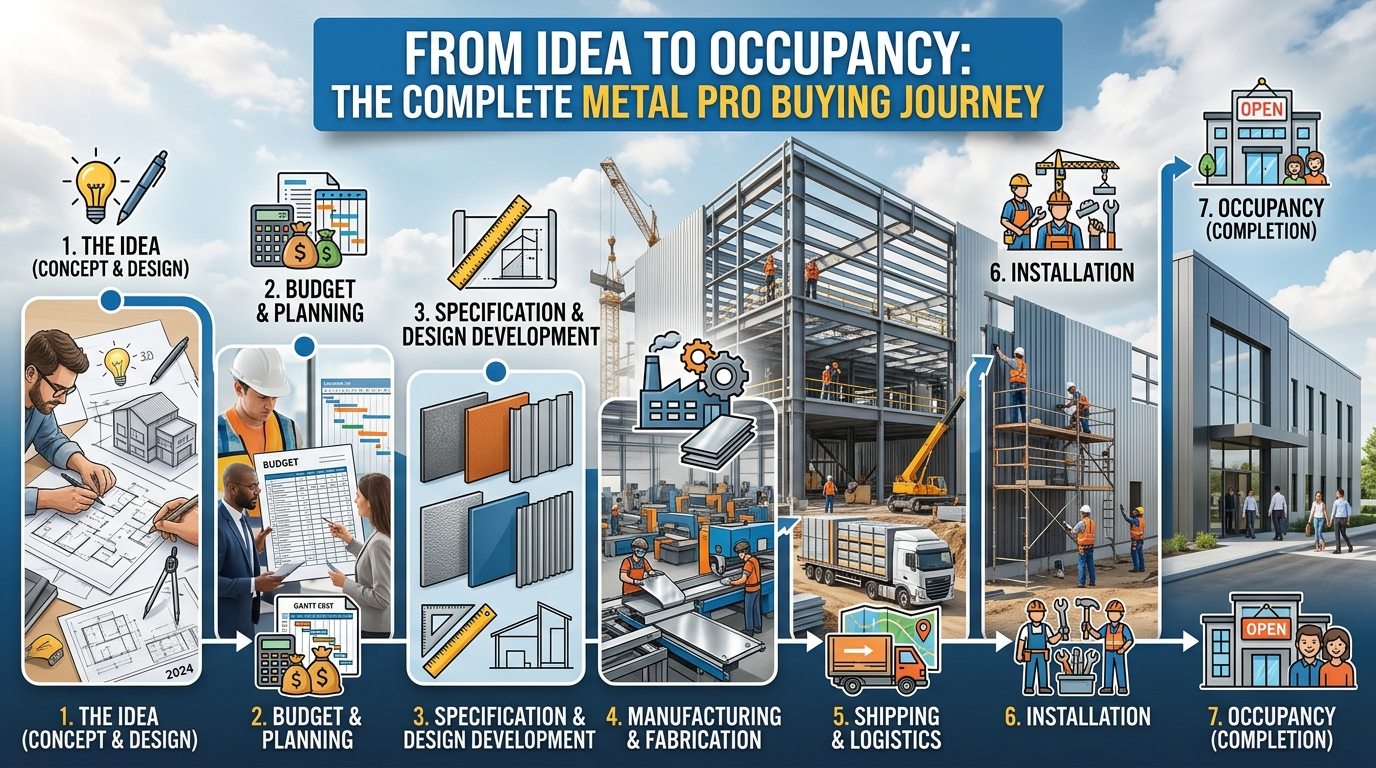
Step 1: Discovery Call. A 15-minute conversation to understand your land, your goals, your timeline, and your budget. No pressure. Just clarity.
Step 2: Custom Quote. A detailed, transparent quote based on your actual build , not a vague range designed to get you in the door.
Step 3: Design & Engineering. Your building is designed to your specs and engineered to Canadian standards. You see exactly what you’re getting before anything gets built.
Step 4: Delivery & Build. Your steel building package is delivered and assembled by experienced teams who know what they’re doing in Canadian conditions.
Step 5: You Move In. Into a home that’s built to last, built for your climate, and built for your life.
The Feeling We Deliver
Buyers who build with Metal Pro Company describe the same thing when it’s done.
Not just satisfaction. Pride.
Pride in a home that looks exactly like what they imagined. Pride in a structure that handles a Prairie winter without complaint. Pride in knowing they made a smart long-term decision , not just the cheapest short-term one.
That’s what a well-built barndominium on Canadian soil delivers.
And that’s what Metal Pro Company is here to help you build.
Conclusion: More for Your Money Means More Than the Sticker Price
The best financial decision you’ll ever make on a home isn’t about finding the lowest number. It’s about understanding what that number actually buys you.
A manufactured home might cost less on day one. But as we’ve walked through together ( pad rental, depreciation, financing limitations, energy costs, and resale reality ) the true cost of ownership tells a different story over time.
A barndominium asks more of you upfront. More planning. More patience. More capital.
But it gives back more too. Equity. Durability. Flexibility. A home that grows in value instead of quietly losing it.
The real question was never “which one is cheaper?”
It was always: which one lets you build the life you’re actually after?
You deserve a home that works as hard as you do. One that stands up to Canadian winters without apology. One that’s worth more the longer you own it , not less.
That’s not a luxury. That’s just a smart decision, made with the right information.
And now you have it.
Start Building the Right Way
Get a Free Custom Quote for Your Barndominium Build No Obligation. No vague estimates. Just a clear, honest picture of what your build looks like : on your land, in your province, for your life.
Not ready to commit yet? That’s completely fine.
📞 Book a Free 15-Minute Discovery Call , talk to a real person at Metal Pro Company who knows Canadian builds inside and out.