
The Stakes Are Too High to Wing It
A steel building is one of the biggest purchases you’ll ever make. Get it right, and it serves your farm, business, or property for decades. Get it wrong, and you’re stuck with a costly mistake that’s very hard to undo.
The Canadian market is full of suppliers, kits, and quotes. That variety is exactly what makes the process overwhelming.
Here’s what most buyers don’t realize: they rarely lose money on the building itself. They lose it on avoidable errors made before the purchase, wrong specs, missed permits, hidden costs.
At Metal Pro, we’re a Canadian steel building. We’ve seen these mistakes play out for real customers, and we’re here to help you avoid them.
This guide covers the 10+ most common and costly mistakes Canadian buyers make and exactly how to sidestep each one.
Why Buying a Steel Building in Canada Is Different From Anywhere Else
Canada isn’t a forgiving environment for poorly planned buildings.
Freeze-thaw cycles crack foundations. Heavy snow loads stress roofs. Wind uplift in coastal BC hits differently than Prairie gusts in Alberta. Northern regions deal with permafrost that changes everything about how a building is anchored.
These aren’t minor details, they’re the difference between a building that lasts 50 years and one that fails in five.
On top of climate, every province has its own building code variations. What’s approved in Saskatchewan may not fly in Ontario or BC. Setbacks, load ratings, occupancy classifications they all shift depending on where you’re building.
That’s why working with a supplier who genuinely understands Canadian engineering standards matters so much. A generic “North American spec” building isn’t good enough.
Metal Pro designs every building specifically for Canadian conditions engineered to your location, your climate zone, and your provincial code requirements. Not adapted from American templates. Built for here from the start.
Mistake #1: Choosing Price Over Value (The Cheapest Quote Trap)
You got three quotes. One was dramatically lower. It’s tempting but that gap is almost never free.
Low-ball quotes hide costs in ways most buyers don’t catch until it’s too late. Here’s what’s often buried inside a suspiciously cheap price:
- Thinner steel gauges that don’t meet Canadian load requirements
- Inferior coatings that rust and degrade faster in harsh Canadian winters
- Missing components like trim, fasteners, or flashing quoted separately later
- Exclusions in fine print that shift costs onto you after you’ve already committed
By the time you’ve paid for the missing pieces, re-ordered incorrect components, or dealt with structural issues down the road, that “cheap” building has cost you far more than the higher quote would have.
What you should actually compare when evaluating quotes:
- Steel gauge and coating specs
- What’s included vs. excluded
- Engineering and certification costs
- Delivery and erection support
- Warranty terms
A lower number on page one means nothing without knowing what’s on pages two through ten. Learn exactly how to compare steel building quotes the right way here.
Metal Pro provides itemized, transparent quotes. You know exactly what you’re getting, what it costs, and why before you commit a single dollar.
Mistake #2: Not Accounting for Canadian Snow & Wind Loads
Your building looks great on paper until the first Prairie winter buries it in three feet of snow.
Snow load ratings aren’t one-size-fits-all in Canada. They vary dramatically by region, municipality, and even elevation. A building engineered for Vancouver Island won’t cut it in Northern Ontario. What works in Southern Alberta may be completely inadequate in Newfoundland.
Under-engineered buildings don’t just underperform , they fail. A roof collapse mid-winter isn’t just expensive. It’s dangerous.
Wind loads add another layer of complexity. Coastal BC deals with sustained wind uplift that inland provinces rarely see. Open Prairie regions face their own unique wind exposure challenges. Getting these numbers wrong means your building could be at risk or flagged and rejected during inspection.
Here’s what every Canadian buyer must ask for:
- Engineer-stamped drawings specific to your location
- Snow load calculations based on your municipality’s ground snow data
- Wind uplift ratings matched to your site’s exposure category
- Confirmation that specs meet your provincial building code
Don’t accept a quote that doesn’t address these points directly. If a supplier can’t answer these questions clearly, that’s a red flag.
Metal Pro engineers every building to your postal code’s climate data and local code requirements. Your location isn’t an afterthought, it’s the starting point of every design.
Mistake #3: Skipping the Permit & Zoning Research Phase
You’ve paid a deposit. Then you find out your municipality won’t approve the footprint, height, or intended use. Now what?
This scenario plays out more often than you’d think. And it’s one of the most frustrating and expensive mistakes a buyer can make.
Permits aren’t simple. They vary wildly across Canadian provinces, municipalities, and even rural districts. What’s straightforward in one county can be a months-long battle in the next.
Common zoning pitfalls that catch buyers off guard:
- Agricultural vs. commercial designations : your land use type affects what you can legally build
- Setback rules : minimum distances from property lines, roads, and other structures
- Height restrictions : especially near airports, utility corridors, or residential zones
- Footprint limitations : maximum lot coverage percentages that cap your building size
- Permitted use requirements : some zones don’t allow certain business or storage activities at all
The biggest mistake? Ordering your building before permits are confirmed.
Once production starts, changes are costly. Cancellations are worse. And a building sitting on your lot without an approved permit is a liability ,not an asset.
Start the permit research phase before you finalize any specs. Talk to your local municipality early. Understand what’s required. Then design your building around what’s actually approvable. Get a complete overview of permits and zoning for metal buildings in Canada here.
Metal Pro walks clients through permit-readiness before a single dollar is committed to production. We help you ask the right questions upfront , so there are no surprises after you’ve signed.
Mistake #4: Ignoring Foundation Requirements Until It’s Too Late
Your building arrives. Your foundation isn’t ready or wasn’t designed for the actual load. Now you’ve got a delivery crew on-site, a tight schedule, and a very expensive problem.
Foundation planning is one of the most commonly skipped steps in the steel building process. Buyers focus on the building itself and treat the foundation as something to “figure out later.” That approach almost always backfires.
Steel buildings require specific foundation types depending on several factors:
- Soil conditions : bearing capacity varies significantly across Canadian terrain
- Climate zone : frost depth determines how deep footings must go
- Building use : a storage shed has very different load requirements than a commercial workshop
- Building size and weight : larger spans demand more robust foundation systems
In Canada, the foundation decision is especially critical. Frost heave is real. Permafrost in northern regions changes the equation entirely. Getting this wrong means cracking, shifting, and structural damage that’s enormously expensive to fix after the fact.
Common foundation options for Canadian steel buildings:
- Concrete slab : ideal for most commercial and agricultural applications
- Perimeter footings : common for buildings with specific floor requirements
- Helical piles : excellent for challenging soil conditions or frost-sensitive zones
- Concrete piers : a cost-effective option for lighter structures
Not sure which foundation type is right for your project? Explore our complete guide to metal building foundation types here. Once you’ve chosen the right foundation, learn how to properly prepare a concrete foundation for your prefab metal building here.
Metal Pro provides detailed foundation specs at the design stage, not as an afterthought. Before your building goes into production, you’ll know exactly what your foundation needs to look like , giving your contractor time to get it right.
Mistake #5: Underestimating the True Total Cost of the Project
The building was $80K. By the time it was up, you’d spent $140K. Where did it go?
This is one of the most common shocks Canadian steel building buyers experience. The kit price is just the starting point and for many projects, it’s not even the biggest line item.
Here’s what’s rarely included in a base building quote:
- Delivery costs : especially to rural or remote Canadian locations
- Erection labour : hiring a crew to assemble your building is a significant expense
- Site preparation : grading, clearing, and access road work
- Foundation work : concrete, piles, or footings depending on your site
- Insulation : essential in Canada, and often quoted separately
- Doors and windows : basic openings may be included, but upgrades add up fast
- Electrical rough-ins : wiring, panels, and lighting are almost never in the kit price
- Permits and engineering fees : these vary by province but are rarely free
- Finishing work : interior walls, flooring, HVAC if applicable
That gap between the quote and the final bill isn’t the supplier cheating you. It’s the natural result of planning your budget around one number instead of the whole picture.
How to build a realistic budget:
Ask every supplier for a complete project cost conversation , not just a building price. Map out every phase from site prep to final inspection. Add a 10–15% contingency buffer for surprises. That’s how real projects get funded without stress.
Metal Pro helps clients build a complete project budget from day one. We’d rather have an honest conversation about total costs upfront than leave you scrambling halfway through your build.
Mistake #6: Overlooking Insulation and Energy Efficiency Needs
In January in Saskatchewan, a non-insulated steel building is basically a refrigerator.
Steel is an excellent building material , but it conducts cold extremely well. Without proper insulation, your building becomes uncomfortable at best and unusable at worst during Canadian winters.
And it’s not just about comfort. Poor insulation decisions lead to real, ongoing costs:
- Higher heating bills every single winter
- Condensation buildup that damages stored equipment and inventory
- Frost and ice forming on interior walls and ceilings
- Accelerated corrosion of the steel itself over time
Condensation is a particularly sneaky problem. When warm interior air meets cold steel, moisture forms. Without a proper vapour barrier and insulation system, that moisture accumulates , leading to rust, mold, and structural deterioration that voids warranties and shortens your building’s lifespan.
Common insulation options for Canadian steel buildings:
- Batt insulation : cost-effective and widely used for walls and ceilings in agricultural and storage applications
- Spray foam : superior air sealing and vapour barrier performance, ideal for heated commercial spaces
- Rigid board insulation : excellent thermal resistance, often used in combination with other systems
The right choice depends on your climate zone, how you’ll use the building, and your heating setup. See a detailed comparison of spray foam vs. batt vs. bubble insulation for metal structures here.
A storage building in mild BC needs a very different insulation strategy than a heated workshop in Northern Alberta.
Don’t treat insulation as an optional upgrade. In Canada, it’s a necessity and choosing the wrong system costs you every month for the life of the building. Learn more about maximizing energy efficiency in your steel building here.
Metal Pro helps clients choose the right insulation package for their specific climate zone and intended use. We factor it into the design from the start , not as an add-on afterthought.
Mistake #7: Buying From an Out-of-Country Supplier Who Doesn’t Understand Canadian Codes
The building shipped from the US. It doesn’t meet Ontario Building Code. Now it’s sitting in a field.
It sounds extreme. But it happens. And when it does, the financial and legal consequences are severe.
American steel building suppliers often market aggressively into Canada. The prices can look attractive. But what’s not advertised is what those buildings are and aren’t engineered for.
Here’s what buying cross-border actually risks:
- Non-compliant engineering : American buildings are designed to US standards, not the National Building Code of Canada or provincial amendments
- Failed inspections : a building that doesn’t meet Canadian code can’t be occupied, insured, or legally used
- Import duties and taxes : cross-border purchases attract tariffs that can significantly inflate the final cost
- Customs delays : your timeline gets handed to a process you can’t control
- Zero local support : when something goes wrong, you’re dealing with a foreign company across a border with no obligation to help you
The savings you thought you found disappear fast once duties, delays, and non-compliance costs are factored in.
Canadian building codes aren’t just bureaucratic formality. They exist because Canadian conditions ( climate, seismic activity, snow loads, wind exposure ) are genuinely different from American ones. A building engineered to US standards may be structurally inadequate for where you’re building.
Always ask any supplier: “Are your drawings stamped by a Canadian professional engineer?” If the answer is vague, that’s your answer.
Metal Pro is proudly Canadian designed here, engineered here, supported here. Every building meets Canadian code requirements because that’s the only standard we build to.
Mistake #8: Not Asking About Warranty, Certifications, and After-Sale Support
Something goes wrong two years in. You call the company. The line is disconnected.
It’s a nightmare scenario but it’s not as rare as you’d hope. Some suppliers prioritize closing the sale over supporting the customer. Once your building ships, you’re on your own.
Warranty and after-sale support matter enormously for a purchase of this size. Before you sign anything, you need clear answers to these questions:
What to ask about warranties:
- What does the structural warranty cover and for how long?
- What does the paint and coating warranty cover?
- Are there conditions that void the warranty?
- Is the warranty backed by the manufacturer, the supplier, or both?
- What’s the claims process if something goes wrong?
A vague warranty is almost as bad as no warranty. Make sure the terms are in writing and clearly explained before you commit. Get a full breakdown of what steel building warranties typically cover here.
Certifications to look for:
- CSA-certified steel : confirms the steel meets Canadian standards
- PE-stamped drawings : signed off by a licensed Canadian professional engineer
- Manufacturer certifications : indicates quality control standards are being met at the production level
These aren’t just checkboxes. They’re your protection if something ever needs to be disputed, insured, or inspected.
Red flag: Any supplier who gets evasive or dismissive when you ask about certifications and warranties. Confidence in your product means being proud to show its credentials.
After-sale support is just as important as the sale itself. Steel buildings are long-term assets. Questions come up. Expansions get planned. Issues occasionally arise. You need a supplier who will still be reachable and helpful years down the road.
Metal Pro stands behind every building with clear warranties and a Canadian support team that picks up the phone. We’re not done when your building ships. We’re in it for the long term just like you are.
Mistake #9: Choosing the Wrong Building Size or Layout for Future Needs
Three years later, you’ve outgrown it. And expanding is way more expensive than just sizing it right the first time.
It’s one of the most common regrets steel building owners express. They bought for today’s needs and didn’t leave any room for tomorrow’s growth.
It’s understandable. Bigger buildings cost more upfront. Budget constraints are real. But the math almost always favors building slightly larger from the start over retrofitting or expanding later.
Common sizing mistakes Canadian buyers make:
- Underestimating how quickly operations, equipment, or inventory grow
- Forgetting to account for aisle space, workflow clearance, and maneuvering room
- Not considering future equipment that requires more eave height
- Assuming a second building later will be cheaper , it rarely is
Layout decisions matter just as much as square footage. A building that’s the right size but poorly configured can still hold your operation back.
Key layout questions to think through:
- Clearspan vs. multi-span : clearspan buildings eliminate interior columns, giving you full flexibility in how you use the space. Learn more about clearspan vs. multi-span steel buildings here.
- Eave height : do you need room for a mezzanine, tall equipment, or overhead cranes?
- Bay spacing : affects where doors can go and how easily the building can be expanded later
- Expansion walls : designing an endwall for future addition is a small upfront cost with enormous long-term value
Think about your 10-year plan, not just your current square footage.
Where will your business, farm, or operation be in a decade? What equipment will you add? Will you need more staff, more storage, more production space?
A good supplier doesn’t just ask what you need today. They ask where you’re headed and design accordingly.
Metal Pro’s design consultants help clients plan buildings that grow with them. We ask the questions that save you from expensive regrets down the road.
Mistake #10: Rushing the Process Under Time Pressure
You needed it done by fall. You rushed. You skipped steps. Now you’re dealing with the consequences.
Time pressure is one of the biggest drivers of bad decisions in the steel building buying process. A hard deadline creates urgency and urgency makes people cut corners they shouldn’t.
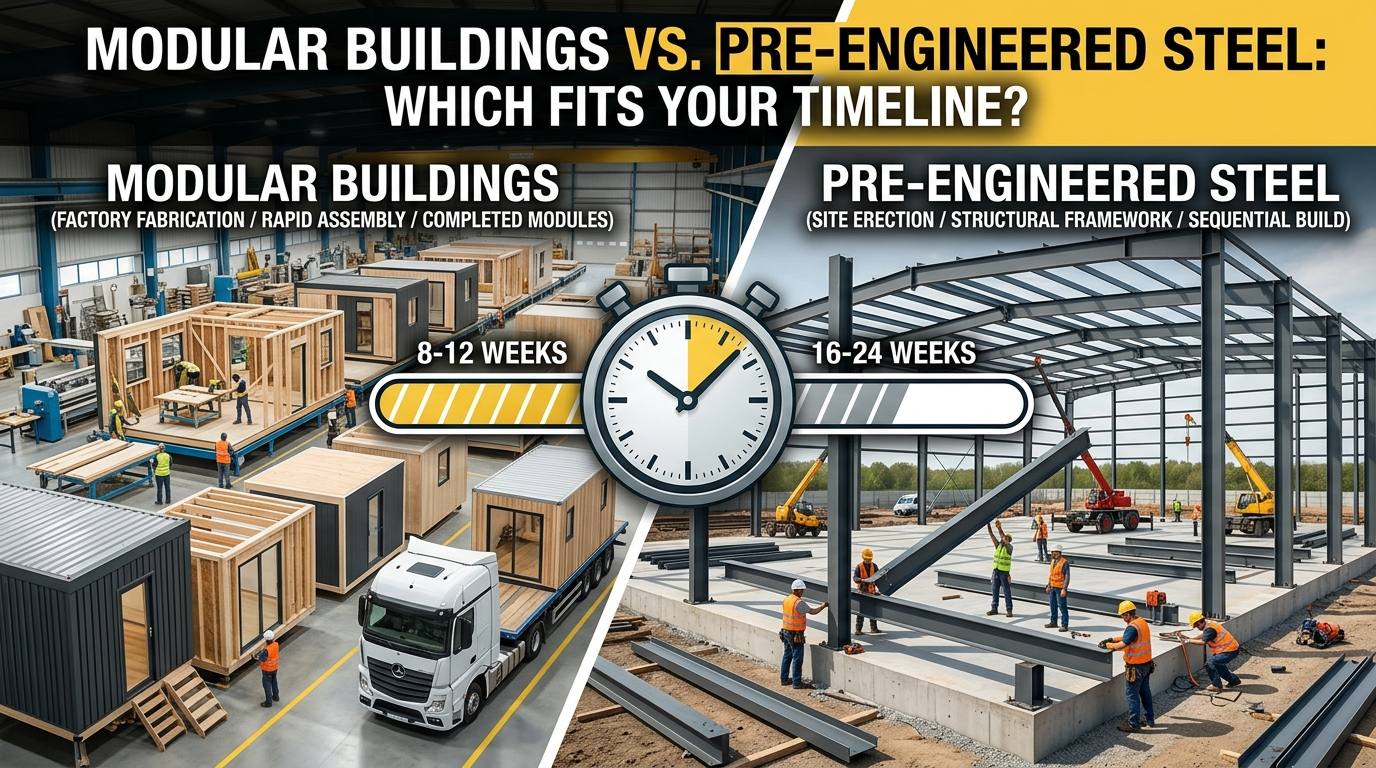
The reality is that steel buildings in Canada take time. From the moment you place an order, you’re typically looking at 8 to 16 weeks of production time before your building even ships. That’s before site prep, foundation work, delivery, and erection are factored in.
What happens when buyers rush:
- Spec errors : decisions made too quickly lead to wrong sizes, incorrect door placements, or missing features that are costly to change after production starts
- Site prep chaos : your building arrives before the foundation is ready, creating expensive delays and crew scheduling conflicts
- Permit problems : rushing past the permit phase means your building may arrive before approvals are in place
- Contractor scheduling issues : good erection crews book out weeks or months in advance. Rush timelines mean settling for whoever is available
- Budget overruns : expedited shipping, last-minute changes, and rushed decisions almost always cost more
The honest timeline for a well-executed steel building project in Canada:
- 1–2 months for planning, design, and permit applications
- 8–16 weeks for production after order confirmation
- 2–4 weeks for site prep and foundation work
- 1–2 weeks for delivery and erection depending on building size
Add it up and you’re looking at 6 to 12 months from first conversation to occupancy for a properly executed project. Starting too late doesn’t compress that timeline, it just adds stress and mistakes to every phase.
The smartest thing you can do is start early. If you want your building ready by a certain date, work backward from that date and start the process well in advance.
Metal Pro is upfront about timelines from day one. We help clients plan backward from their target occupancy date so every phase has the time it needs to be done right.
Bonus: Red Flags to Watch for When Evaluating Steel Building Suppliers
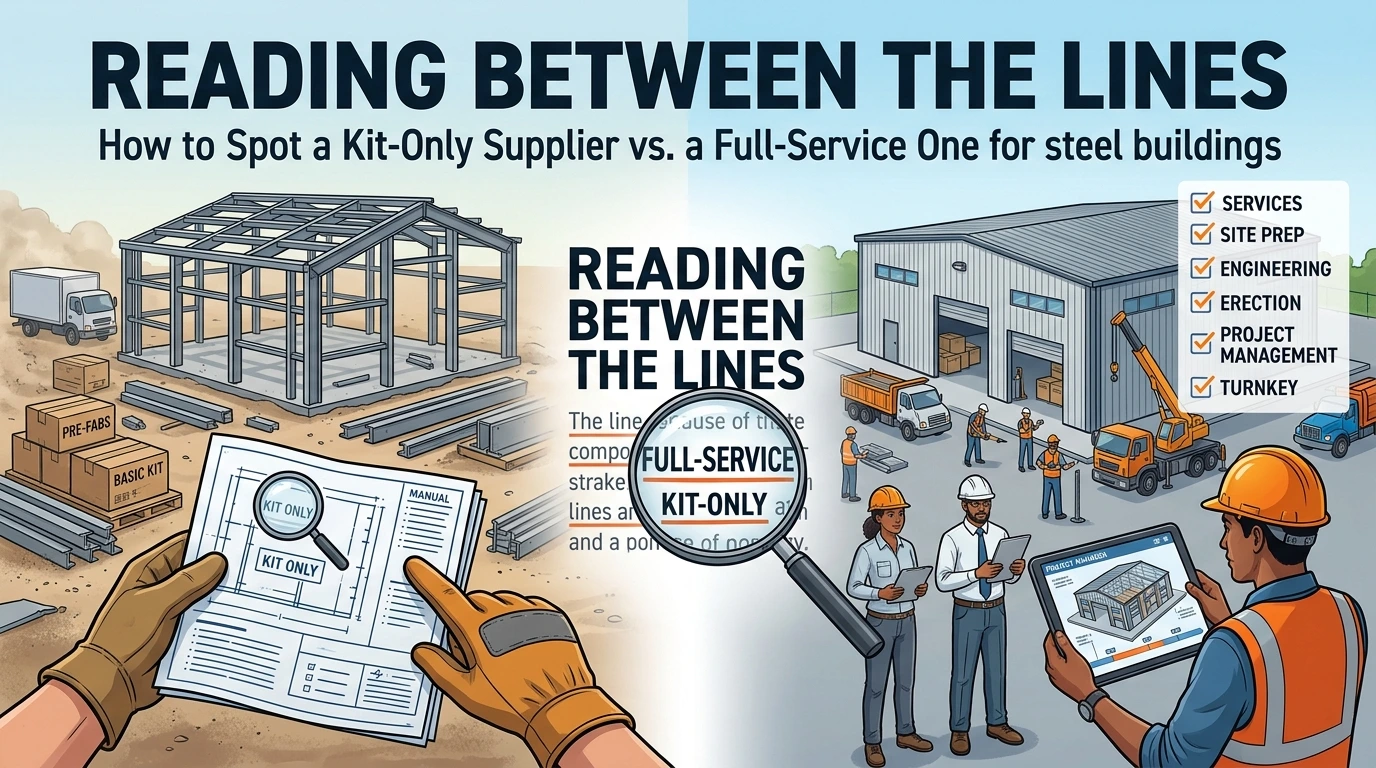
Sometimes the biggest mistake isn’t a single decision , it’s choosing the wrong supplier in the first place.
No matter how well you plan, a bad supplier can derail your entire project. Knowing what to watch for early can save you from a very painful experience. If you want a full walkthrough of how to vet and compare Canadian steel building companies, see our guide on how to actually choose the best steel building company in Canada.
Walk away if you notice any of these warning signs:
- No Canadian engineering stamps offered Any legitimate supplier selling into Canada should provide PE-stamped drawings from a licensed Canadian engineer. If they can’t or won’t, their building may not meet your provincial code.
- Vague or all-inclusive quotes with no line-item breakdown If a supplier can’t tell you exactly what’s included in their price, you won’t know what’s missing until it’s too late. Transparency is non-negotiable.
- Pressure to sign quickly or “lock in pricing” High-pressure sales tactics are a classic distraction from due diligence. A reputable supplier gives you the time and information you need to make a confident decision.
- No physical Canadian address or support team If something goes wrong, you need someone reachable. A supplier with no Canadian presence has no real accountability to you or your project.
- No references from Canadian projects. Ask for references. Ask specifically for Canadian customers in similar provinces or climate zones. A supplier with nothing to show has nothing to stand behind.
- Won’t provide permit-ready drawings Permit-ready drawings are a basic deliverable for any serious supplier. If they’re reluctant or unable to provide them, your permit process will be a nightmare.
- Unusually low quotes with no explanation As covered in Mistake #1 , if the price seems too good to be true, it almost certainly is. Ask what’s excluded before celebrating the number.
The right supplier welcomes your questions. They’re confident in their product, transparent about their process, and happy to provide documentation, references, and credentials. Anything less than that isn’t good enough for a purchase of this size.
What the Right Steel Building Buying Experience Actually Looks Like
After reading through every mistake and red flag, it’s worth stepping back and asking: what should this process actually feel like when it’s done right?
The answer is simple. It should feel like working with a partner , not a vendor.
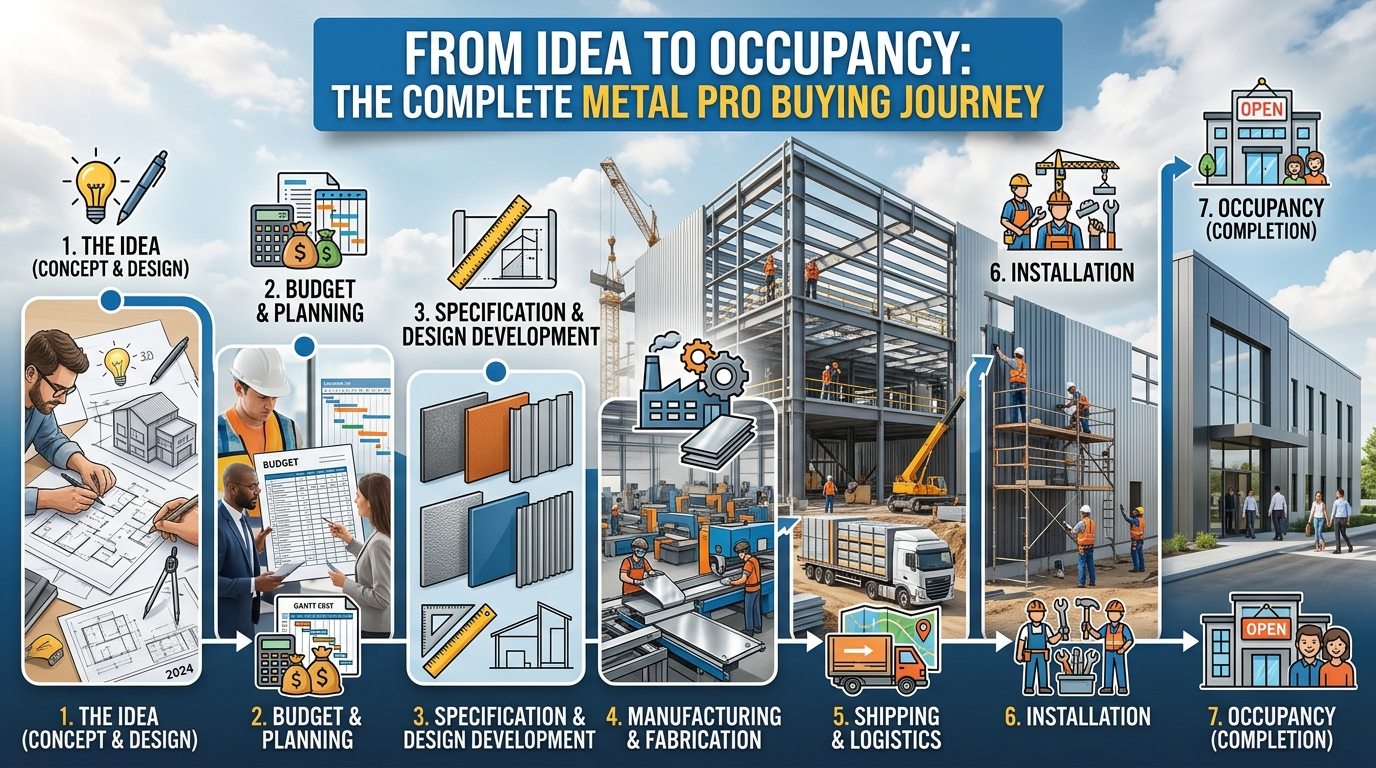
Here’s what a good steel building buying experience looks like from start to finish:
Step 1: A Real Consultation It starts with a conversation, not a sales pitch. A good supplier asks about your project, your site, your timeline, and your long-term plans. They listen before they quote.
Step 2: Honest, Itemized Pricing You receive a detailed quote that breaks down every component and cost. No surprises buried in fine print. No vague all-inclusive numbers that hide what’s missing.
Step 3: Engineering and Design for Your Location Your building is designed specifically for your site, your postal code’s snow loads, wind exposure, frost depth, and provincial code requirements. Not a generic template adjusted after the fact.
Step 4: Permit Support and Readiness Your supplier provides permit-ready drawings and helps you understand what your municipality requires. You don’t walk into the permit office unprepared.
Step 5: Clear Production and Delivery Timeline You know exactly when your building goes into production, when it ships, and when it arrives. No guessing. No chasing updates.
Step 6: Foundation Specs Delivered Early Your foundation contractor receives detailed specs well before delivery so the site is ready when your building arrives.
Step 7: Delivery and Erection Support Your building arrives complete, on time, and with clear assembly documentation. If questions arise during erection, support is a phone call away.
Step 8: After-Sale Care That Actually Exists Months or years after your building is up, you can still call your supplier with questions. They know your project. They pick up the phone.
When you work with the right partner, buying a steel building doesn’t feel stressful. It feels exciting because you can actually see your project coming together with confidence.
That’s the experience Metal Pro has built its reputation on. From first inquiry to long after delivery, we treat every project like it’s our own because our clients’ success is how we measure ours.
Don’t Let a Preventable Mistake Cost You Tens of Thousands of Dollars
A steel building is a serious investment. It deserves serious planning.
Every mistake in this guide is completely avoidable. You don’t need luck you just need the right partner.
At Metal Pro, we’ve helped hundreds of Canadians avoid exactly these mistakes. We’ve built our entire process around transparent pricing, Canadian engineering, permit support, and after-sale care that doesn’t disappear once your building ships.
If you’re ready to start your project the right way, we’d love a no-pressure conversation about what you’re building and how to make it a success.
Get a Free Quote from Metal Pro | Talk to a Canadian Steel Building Expert