
Pre-engineered steel farm storage buildings now deliver lower lifetime costs than wood-frame construction for most Canadian agricultural operators, according to 2026 industry pricing data and updated insurance trends that are shifting the calculus on major farm capital decisions.
With farm operating expenses across Canada reaching $83.0 billion in 2025, according to Statistics Canada, and farmland equity at $833.4 billion, producers are under renewed pressure to maximize long-term value from every construction dollar. The latest cost comparisons show steel’s initial price premium roughly $28,000 to $46,000 CAD more than wood on a 930-square-metre building eroding within 10 to 15 years once maintenance, insurance, and operational factors are applied.
“The single greatest cost driver farmers miss is not the building kit, it is the foundation, the site prep, and the snow-load engineering,” said Herbert Broderick,CEO of Metal Pro Buildings. “Matching the frame specification to the actual load requirements for a given region cuts waste on steel tonnage and keeps the total project budget in line.”
Entry costs: steel versus wood
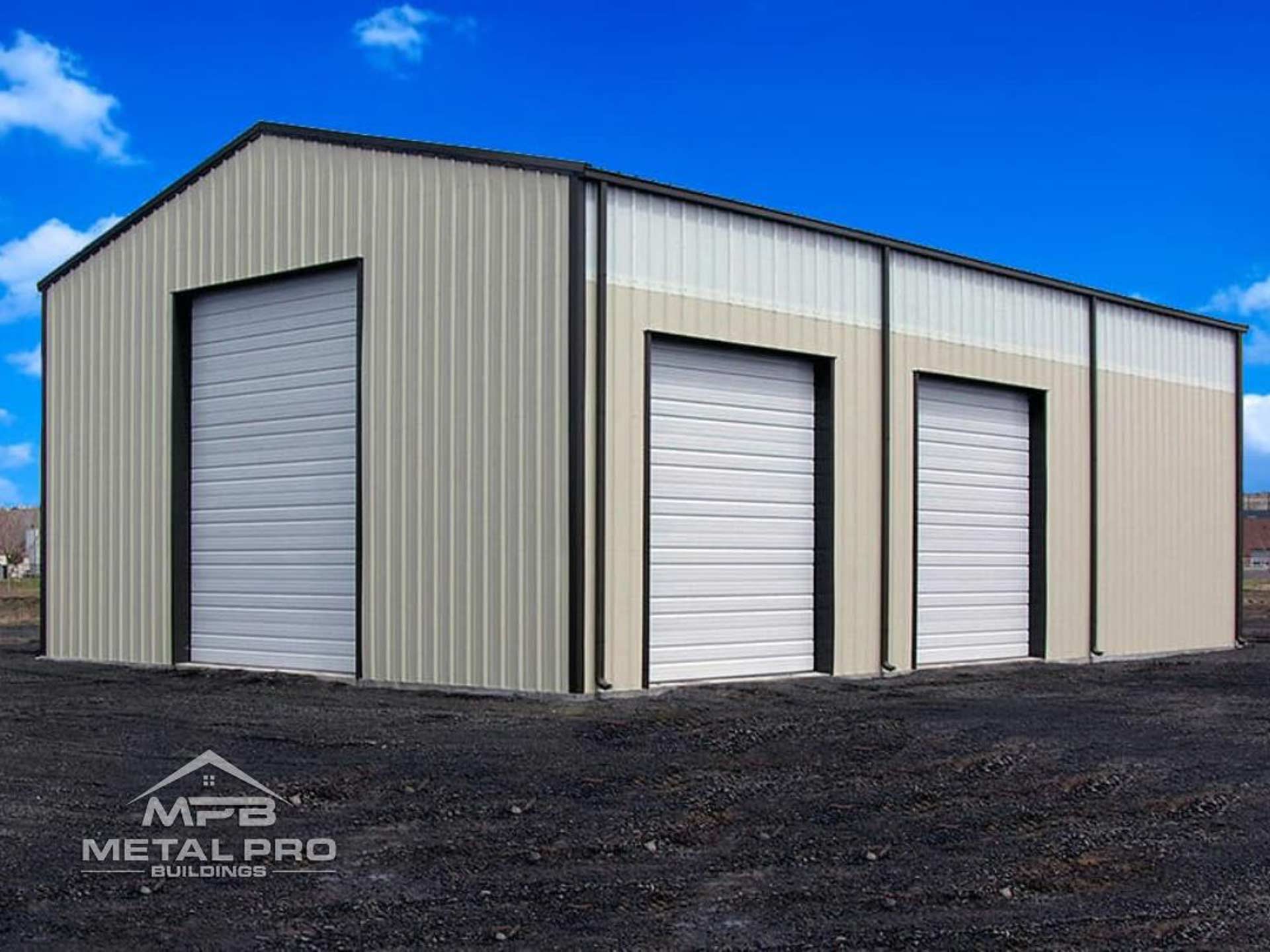
Basic farm storage steel shell packages typically range from $20 to $35 CAD per square foot in Canada, according to industry pricing guides published in 2025 and 2026. Wood framing runs higher at the finished-building level, typically $120 to $140 CAD per square foot for agricultural structures, compared with $150 to $170 for finished steel. For a 930-square-metre storage building, that represents a gap of roughly $28,000 to $46,000 CAD at initial construction.
Steel also sits well below concrete, which studies by ArcelorMittal have found costs roughly 9.6% more than comparable steel structures.
Where steel recovers the gap
Steel’s lifecycle advantage accumulates through three channels: lower maintenance, better insurance ratings, and reduced construction time.
Steel resists rot, pests, fire, and moisture damage that commonly degrade wood farm buildings in humid or coastal regions. Maintenance costs on a steel structure run consistently lower over a 20- to 30-year horizon.
Many Canadian insurers now assign more favourable risk ratings to non-combustible steel buildings with sealed engineering stamps, a trend that accelerated through 2025 and into 2026 as underwriters tightened requirements for agricultural structures.
“Insurance savings alone can close the construction cost gap within 10 to 15 years, depending on the province and the insurer,” Broderick said. “Producers who factor in premiums, not just build costs, reach a different conclusion.”
Pre-engineered systems also reduce construction time by up to 30% compared with stick-frame wood barns, according to structural steel industry data, lowering labour costs and allowing farmers to begin using the building sooner in the season.
Clear-span design and equipment fit
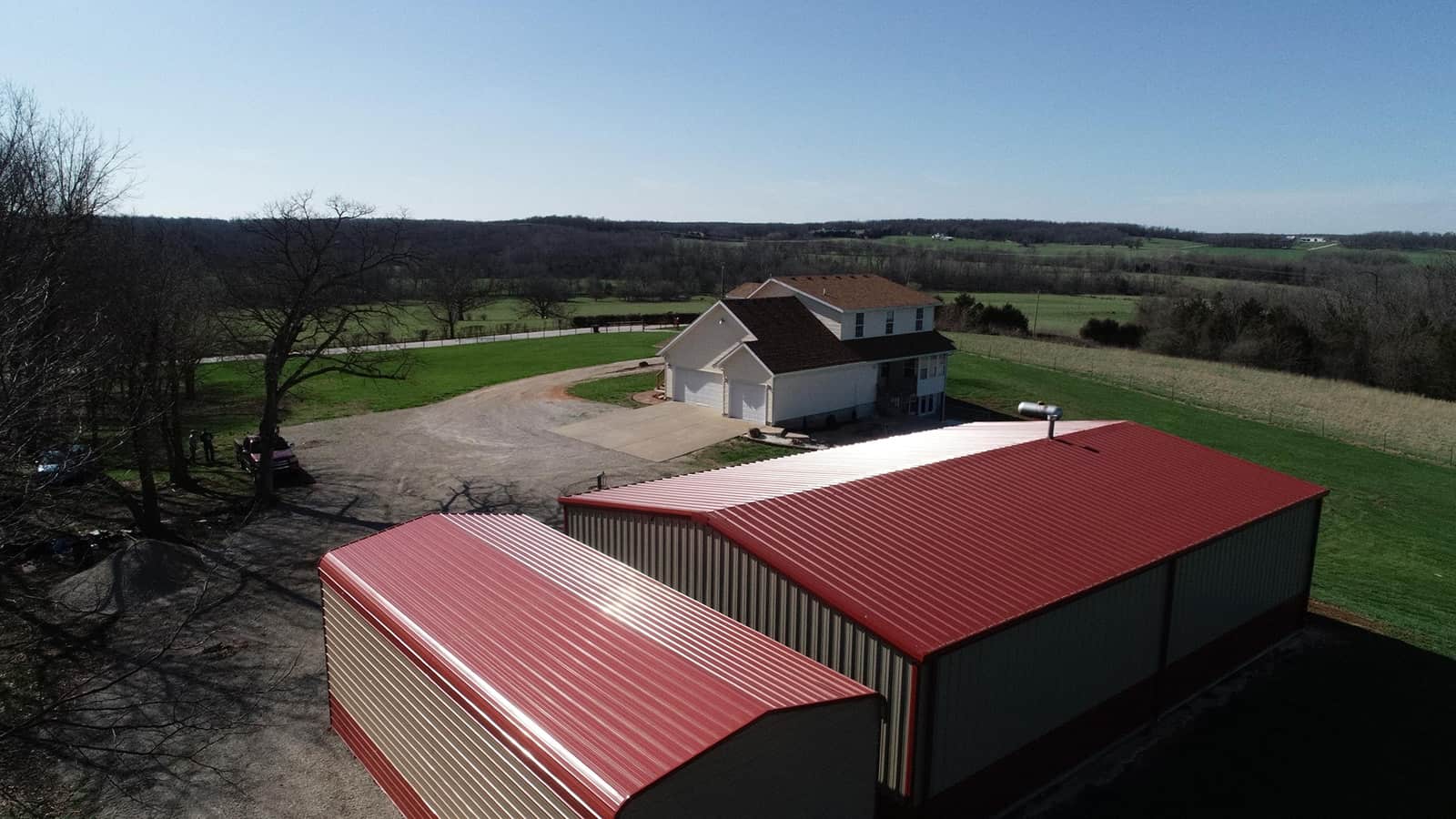
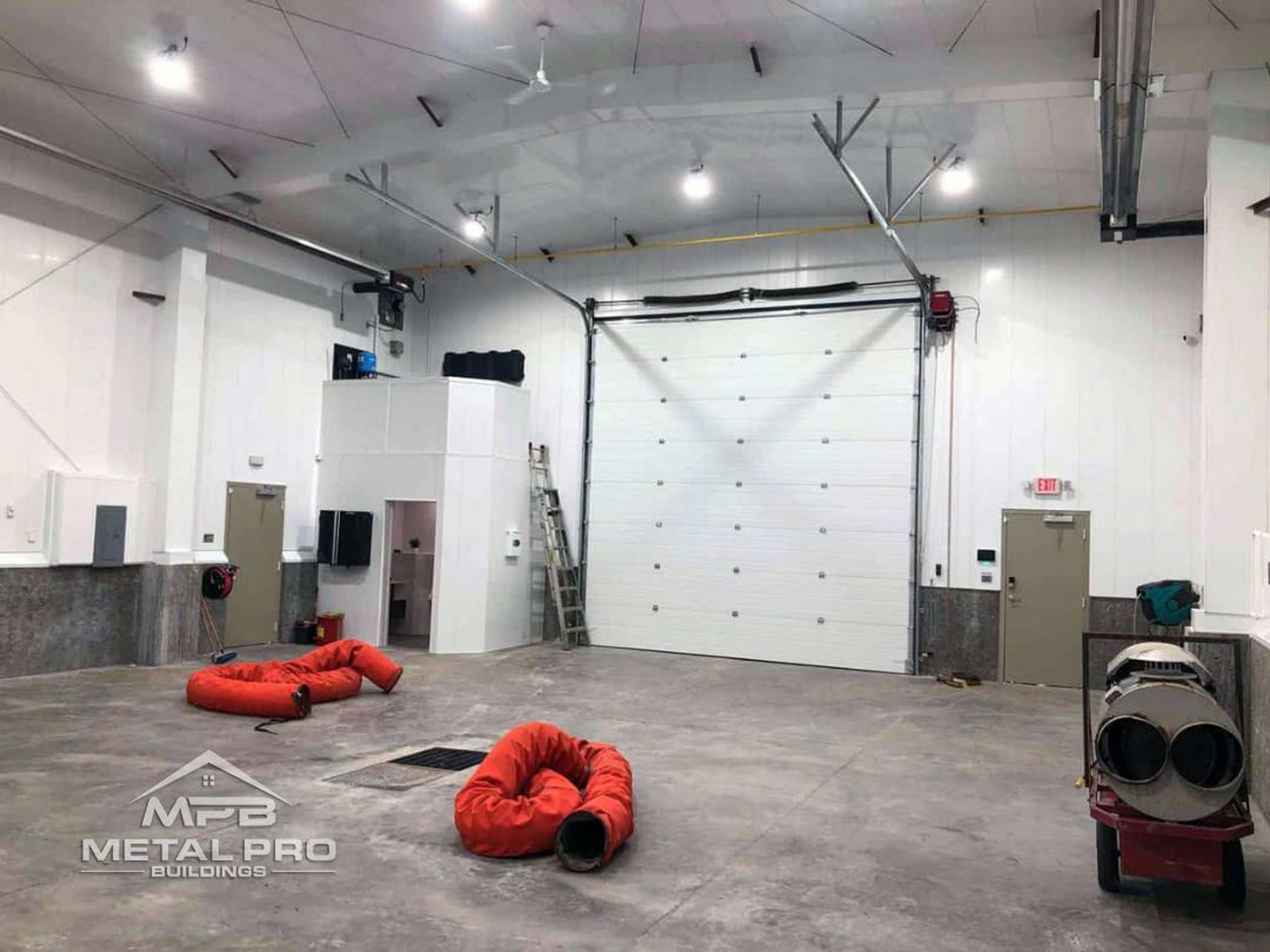
The clear-span format eliminates interior columns, maximizing usable floor area for combines, grain trailers, and high-clearance sprayers. For mid-size operations storing one or two large machines, an 18-by-36-metre structure typically provides adequate coverage while keeping per-square-foot costs near the lower end of the price range through economies of scale.
NBC 2025 raises the code baseline
The updated National Building Code of Canada, which took effect in 2025, incorporates revised climatic data reflecting more extreme weather patterns. Structures engineered to the new code include higher design snow loads than many older specifications require.
Superior snow-load capacity matters across most of Canada, where roof failures on under-engineered agricultural buildings have resulted in significant equipment losses. Structures designed to handle 40 pounds per square foot and above offer measurable safety margins in regions prone to heavy accumulation.
Provincial variation in snow, wind, and seismic loads also determines how much steel a structure actually requires. A building in the Fraser Valley faces different wind exposures than one on the Prairies; a facility in northern Ontario requires heavier snow engineering than a comparable structure in southern Manitoba. Buyers comparing quotes should confirm that each specification references NBC 2025 loads for their precise location including site-specific ground snow load, hourly wind pressure, and applicable seismic zone factors before making cost comparisons.
What to watch
Statistics Canada’s total construction cost index rose 3.7% year over year in the second quarter of 2025, with structural steel identified as a top contributor, signalling that material price increases are sustained rather than temporary. The 2026 Census of Agriculture, scheduled for May 2026, is expected to show continued growth in large-equipment storage demand as farm consolidation increases average operation size.
Producers planning construction in the second half of 2026 should obtain quotes that include full NBC 2025 engineering documentation to ensure accurate cost comparisons across bidders.