
Quick Answer: Do We Install Steel Buildings?
We don’t install buildings ourselves , we supply fully engineered building kits. For installation, we maintain a network of certified and experienced contractors across Canada who have completed Metal Pro projects before. If you need installation support, just contact our team and we’ll connect you with a trusted installer in your region.
That means every Metal Pro purchase gives you two workable paths to a finished building:
- DIY Kit : you (or your own crew) assemble the pre-cut, pre-drilled steel components yourself.
- Installer Referral : we connect you with an independent, vetted contractor from our regional network who handles assembly on your behalf.
Either way, the kit itself, the steel, the engineering, the drawings, the warranty is identical. What changes is who bolts it together. This gives you the flexibility of a prefab kit with the option of full-service delivery, and it’s worth understanding before you request a quote, because it affects your budget, your timeline, and how much hands-on involvement you’ll have.
Why This Distinction Matters
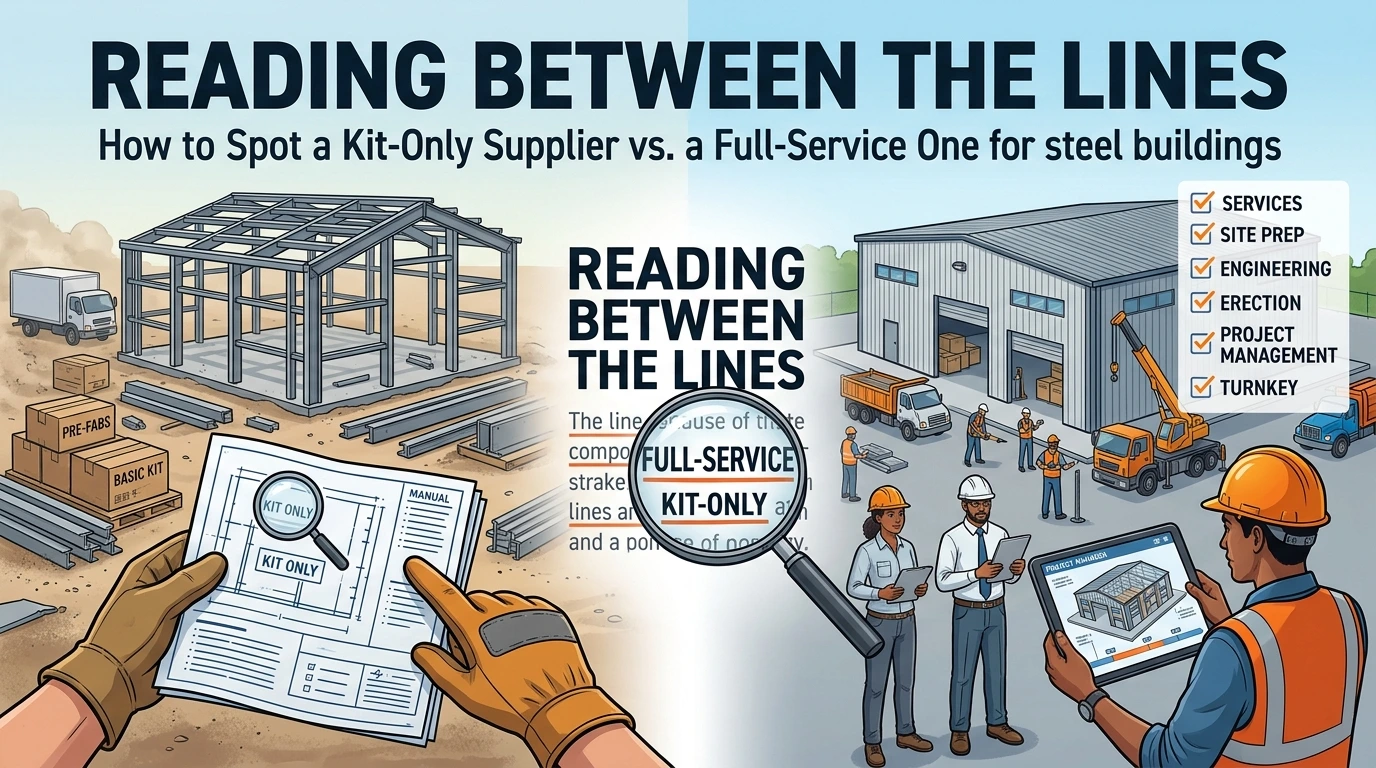
Search around “steel building companies” and you’ll find two very different business models hiding under similar-looking websites:
- Full-service builders who employ or subcontract their own crews, price installation into the project, and manage the build from foundation to final walkthrough.
- Kit suppliers who manufacture and ship engineered components, and leave assembly to the buyer or to a separate, independently contracted installer.
We sit in the second category, but with a bridge to the first: we’re a kit supplier with an installer referral network, not a general contractor. That’s an important distinction if you’re comparing quotes, because a “$/sq ft” price from a full-service builder and a “$/sq ft” price from us aren’t measuring the same thing. If you’re comparing our pricing against a company that pours the slab, frames the building, and hangs the doors as part of one contract, you’ll want to add labor into our side of the comparison to see the real total cost.
How Buying From Us Actually Works
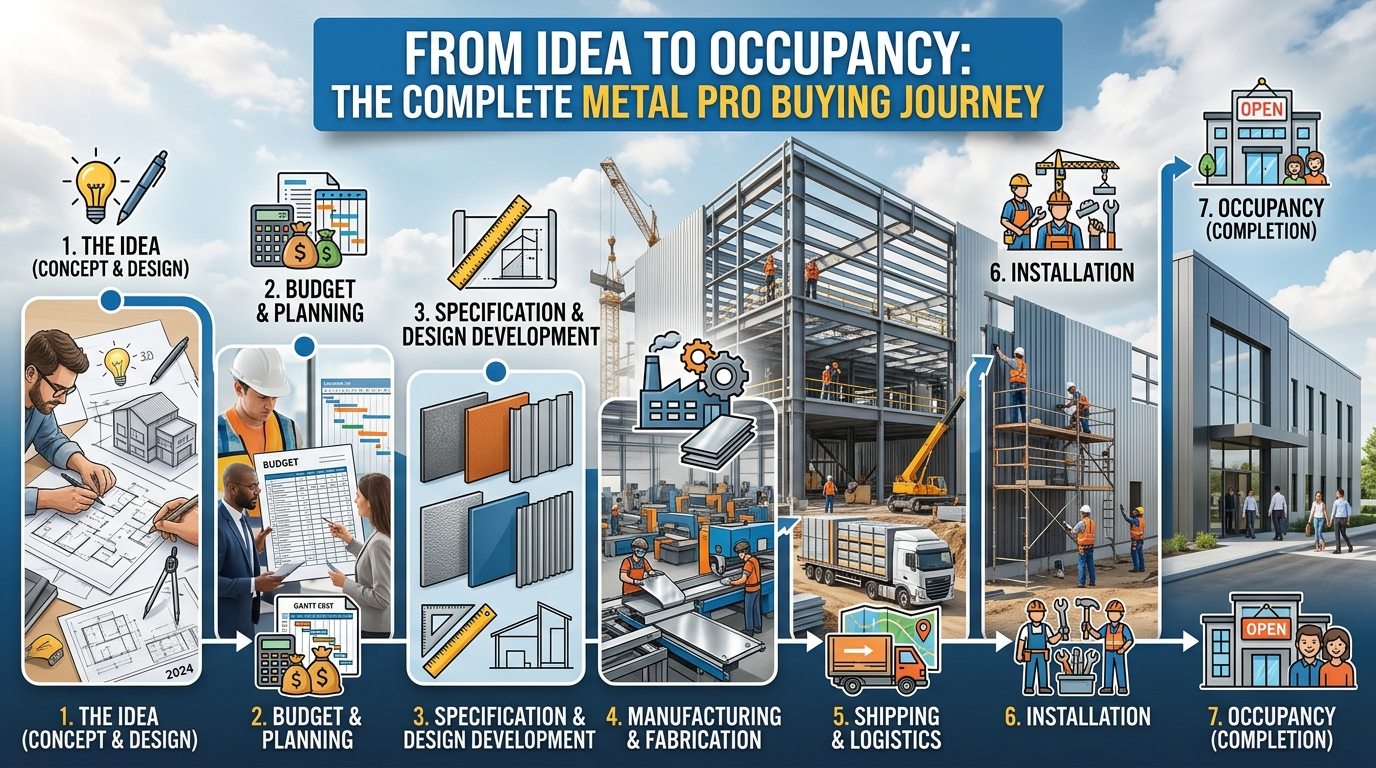
Step 1: Design and Quote
You start with your building’s dimensions, province, and intended use (garage, workshop, barn, warehouse, etc.). Our team works with you on roof style, door and window placement, insulation, and finishes, and returns a quote for the kit itself.
Step 2: Engineering and Drawings
Every order ships with three sets of certified, engineer-stamped structural and foundational drawings, prepared by a Canadian engineer to meet or exceed your province’s code requirements. This happens regardless of whether you plan to self-assemble or hire an installer , it’s part of what you’re buying, not an add-on.
Step 3: Permits (If Required)
Whether you need a building permit depends on your province, municipality, zoning, and how the structure will be used , there’s no single national rule. Agricultural buildings, small storage structures, and rural or unorganized areas are often exempt; permanent, occupied, or utility-connected buildings usually aren’t. The engineer-stamped drawings from Step 2 are typically what your local Authority Having Jurisdiction (AHJ) will want to see when you apply. We can walk you through what to expect before you break ground , see our full guide to metal building permit assistance in Canada for a deeper look at how the process works province by province.
Step 4: Manufacturing and Delivery
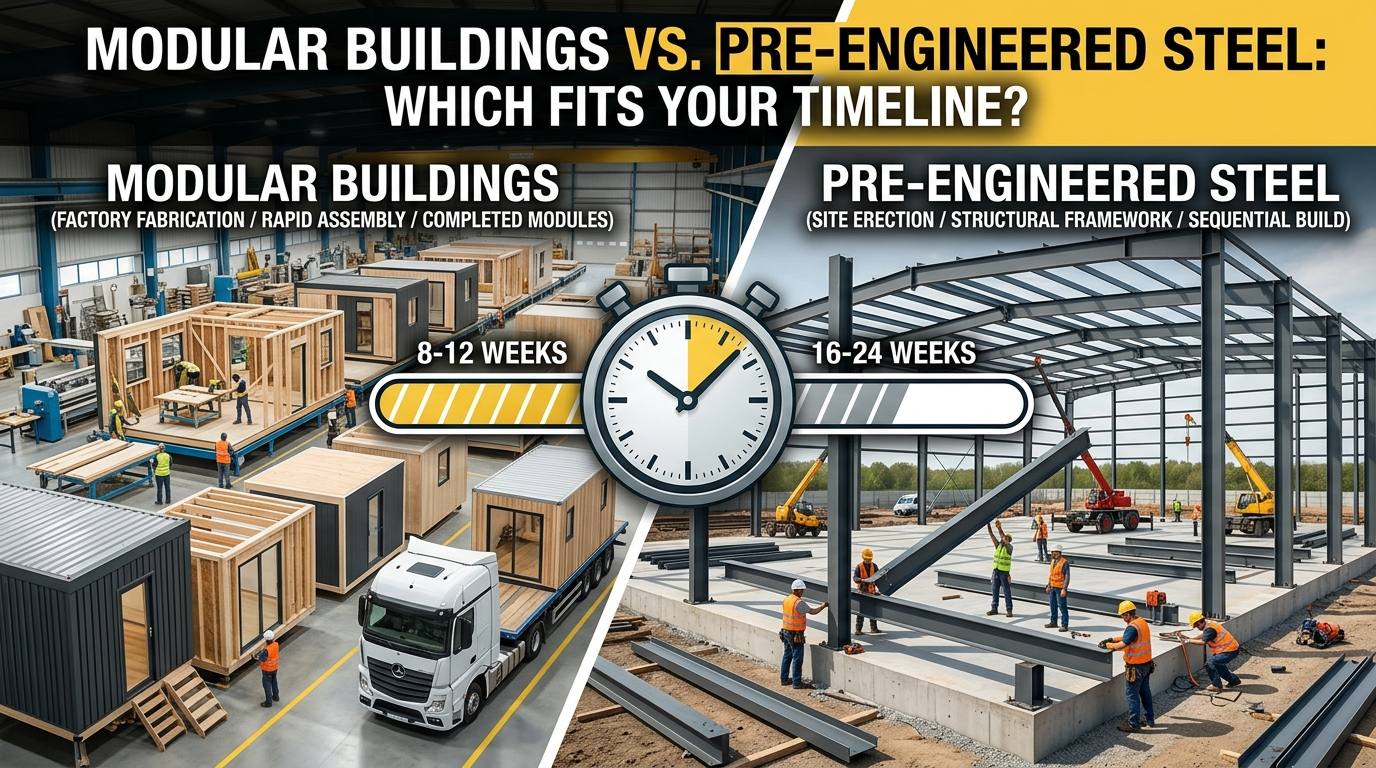
Smaller structures can be delivered in as little as 3 weeks; larger or more complex buildings typically take 6–14 weeks from order confirmation. We’ll give you a firm timeline during quoting.
Step 5: Choose Your Assembly Path
This is where the DIY-vs-installer decision actually happens, and it’s the step most people underestimate when comparing prices. Two options:
- Assemble it yourself. Components are pre-cut and pre-drilled specifically so a small crew with basic tools can do the work. Smaller buildings often go up in a few days.
- Request an installer referral. Contact us and we’ll connect you with a certified, experienced contractor from our regional network who has completed Metal Pro builds before. You then contract with that installer directly for labor.
Either path uses the exact same kit, engineering package, and 50-year rust perforation warranty.
DIY Kit vs. Installer Referral: Side-by-Side
| DIY Kit | Installer Referral | |
| Who does the labor | You or your own crew | Independent contractor from our network |
| Who you contract with for labor | N/A (self-performed) | The installer directly, not us |
| Typical fit | Smaller garages, sheds, workshops; comfortable DIYers | Larger or more complex structures; buyers who want a hands-off build |
| Timeline control | You set the pace | Set by installer’s schedule and crew availability |
| Cost | Lower , labor is your time/tools | Higher , installer quotes labor separately |
| Engineering & warranty | Identical | Identical |
| Best for | Confident with basic construction, tools, and a helper or two | Buyers who want the kit’s flexibility without swinging a wrench |
Neither path is “the real way” to buy from us both are normal, supported options. We’re upfront that we offer the flexibility of a prefab kit alongside the option of full-service delivery through our installer network.
Can I Really Assemble It Myself?
Yes. This comes up often enough that it’s worth answering plainly: our kits are pre-cut and pre-drilled for straightforward assembly, and smaller buildings can often be put up in a few days with a small crew and basic tools. For larger or more complex structures, most buyers opt for the installer referral instead , not because self-assembly is impossible, but because the labor, equipment, and timeline required for a large-span commercial or agricultural building are a different scale of project than a backyard garage.
If you’re weighing this decision for your own project size, our deeper cost breakdown is worth reading: DIY vs. Full-Service Steel Garage Kits: How Much Can You Really Save.
What Our Installer Network Actually Is
We are not a licensed contractor and we don’t employ installation crews. What we maintain is a referral network of independent, certified contractors across Canada who have prior experience assembling Metal Pro buildings specifically.
When you contact us for installation help, here’s what happens:
- You tell us about your project and location.
- We connect you with a contractor in that network who covers your region.
- You contract with, schedule, and pay that installer directly for labor , separate from your kit purchase.
This structure gives you access to experienced, kit-familiar labor without us carrying general contractor liability for the installation itself. It’s a meaningfully different arrangement than a full-service builder who bundles labor into one contract and one point of accountability and it’s worth asking any installer , referral for their license, insurance, and references before you sign anything, the same way you would for any independent contractor.
Why “Engineered Kit + Installer Referral” Beats “Kit-Only” With No Support
Buying a steel building kit from a supplier with no installer network at all is where a lot of DIY projects run into trouble later not at delivery, but months in, when a missing detail surfaces during a permit inspection or an assembly step nobody warned you about. We’ve seen this play out with buyers who came to us after starting elsewhere; read more in Missing Engineering Stamps: How Kit-Only Projects Can Face Unexpected Delays. Engineered drawings solve part of that risk; having a vetted contractor option solves the rest. That combination is central to how we’ve built our process.
How to Decide Which Path Fits Your Project
A few honest questions to ask yourself before requesting a quote:
- Do I have a crew, or access to one? Self-assembly generally needs at least two to three people for anything beyond a small shed.
- How complex is the span and layout? Straightforward rectangular garages and workshops are the most common successful DIY builds. Wide-span commercial or agricultural buildings, complex rooflines, and tight municipal timelines tend to favor an installer.
- What’s my actual timeline? DIY gives you control over pacing but competes with your other commitments. An installer referral runs on the contractor’s schedule but typically compresses the build into a shorter window.
- What’s my total budget, not just the kit price? Add labor costs into any comparison , whether that’s your own time and any rented equipment, or a contractor’s quote.
If you’re still weighing this against other structure types entirely, not just assembly method Build or Buy: Choosing the Right Garage Kit for Your Project walks through that broader decision. And if a shed rather than a garage is more your size, DIY vs. Prefab Storage Sheds breaks down the same DIY-vs-supported question for smaller structures.
Frequently Asked Questions
The Bottom Line
We’re a kit supplier, not a general contractor and we’re upfront about that. What sets our buying process apart isn’t that we install buildings ourselves; it’s that we don’t leave you stranded if you don’t want to do the labor yourself. You get an engineered, code-ready kit either way, plus the option to bring in a contractor who already knows the product. That combination , DIY flexibility with a full-service option on standby is the actual answer to “does Metal Pro install steel buildings,” and it’s worth knowing before you start comparing quotes against companies that price things differently.
Ready to see numbers for your project? Start your project and get a free quote, and let us know upfront whether you’re planning to self-assemble or want an installer referral , it’ll shape the whole conversation from there.