
You’ve got the land. You’ve got the vision. Now what?
Building a steel garage from scratch sounds straightforward until you’re staring at a blank lot and a hundred decisions you didn’t expect.
What size do you actually need? What foundation works in your climate? What permits are required? One wrong call can cost you thousands and years of frustration.
This is one of the biggest investments you’ll make on your property. It deserves more than guesswork.
That’s why we put this guide together. We’ll walk you through every major design decision clearly, honestly, and in plain language so you can move forward with confidence.
At Metal Pro Buildings, we’ve helped thousands of Canadians design steel garages that fit their lives perfectly. What follows is exactly what we tell them.
Start With “Why” Define Your Primary Purpose Before Anything Else
Here’s the biggest design mistake most people make.
They build for today not for tomorrow.
Your garage’s purpose drives every other decision. Size, doors, insulation, layout all of it flows from one question: What do I actually need this space to do?
It sounds simple. But most people don’t think it through deeply enough.
Ask yourself which of these fits your situation:
- Storing 1–4 vehicles, trucks, RVs, or boats
- A personal workshop or hobby space
- Running a home-based business or light commercial operation
- Housing farm or agricultural equipment
- A mixed-use build garage below, living or office space above
Maybe it’s more than one. That’s common.
The problem is this: many homeowners design around their current needs and regret it within three years when life changes. A new truck. A side business. A growing family. Suddenly, the garage that felt “big enough” isn’t anymore.
Think 10 years ahead, not just to next season.
At Metal Pro, that’s exactly how we start every conversation. Before we talk steel gauge or door sizes, we talk about your life where it is now, and where it’s headed.
The rest of the design falls into place from there.
Size and Dimensions , How Big Should Your Steel Garage Actually Be?
If there’s one thing people consistently get wrong, it’s this.
They undersize.
It feels like a safe, budget-friendly choice at the time. But a garage that’s too small isn’t just inconvenient, it’s a daily frustration you’ll live with for decades.
The True Cost of Going Too Small
It’s not just about fitting your vehicle inside.
Think about opening your car doors without dinging the wall. Walking around your truck with tools in hand. Adding shelving, a workbench, or a spare freezer. These things eat space fast.
Steel buildings can be built to nearly any dimension but once your slab is poured, changing your mind is extremely expensive.
Key Dimensions to Plan For
Width is usually the first number people think about but they often underestimate it.
- Single bay: 12–14 ft (tight for most trucks)
- Double bay: 24–28 ft (most popular for Canadian homeowners)
- Triple bay or more: 36+ ft (ideal for workshops, mixed-use, or multiple large vehicles)
Not sure if a 30×30 footprint fits your needs? Our dedicated 30×30 steel garage design guide walks through exactly what that size delivers and whether it’s the right call for your property.
Length is where people leave the most space on the table. Always account for a workbench wall, rear storage, and at least one future vehicle you don’t own yet.
Eave height is critical and often overlooked. Standard 10 ft walls feel fine until you buy a lifted truck, an RV, or want to add a vehicle hoist. In Canada especially, 12–14 ft eave heights are worth serious consideration.
Overhead door size matters more than most people realise. A standard 9×8 ft door works for most sedans and small trucks. But for larger vehicles, a 10×10 ft or even a 12×14 ft tall door can be a game changer.
A Note for Canadian Builders
Snow load affects how your roof is designed and by extension, how tall your building can be without structural upgrades. In higher snow load regions like Northern Ontario, Quebec, or the Prairies, taller buildings may require heavier steel framing.
This isn’t a reason to go smaller. It’s a reason to plan smarter with engineering that’s matched to your province from day one.
Choosing the Right Steel Building System
Not all steel garages are built the same way.
And the difference between systems isn’t just technical; it directly affects your budget, your build timeline, and how well the structure holds up 20 years from now.
Pre-Engineered vs. Custom-Designed Steel Garages
You’ll hear the term “pre-engineered” a lot in this industry.
It doesn’t mean cookie-cutter. It means the structural components ( columns, rafters, purlins) are designed and fabricated in advance to precise engineering specifications. This process eliminates waste, reduces cost, and speeds up your build without sacrificing quality.
Custom-designed buildings offer more flexibility for unusual shapes or complex use cases. But for the vast majority of Canadian homeowners, a pre-engineered steel garage delivers everything they need at a significantly lower price point.
Which Frame Style Is Right for You?
There are three main options:
Rigid frame is the most popular choice for garages and workshops. It offers wide clear-span interiors , no interior columns eating into your usable space. If you want an open, flexible floor plan, this is it.Not sure whether a straight-wall or Quonset style suits your needs? This breakdown covers the key differences in detail.
Straight-wall buildings work well for standard storage applications. They’re cost-effective and straightforward to erect.
Quonset-style buildings have a distinctive curved arch profile. They’re extremely strong and economical but the curved walls limit how you use the interior space, and they have a very specific look that doesn’t suit every property. . If you’re weighing a Quonset against a rigid frame building, this comparison will help you decide.
Steel Gauge and Quality , What Canadians Need to Know
This is where budget quotes can quietly become expensive mistakes.
Steel gauge refers to the thickness of the panels used on your walls and roof. The lower the gauge number, the thicker and stronger the steel.
In Canada, the freeze-thaw cycle is relentless. Moisture, ice, and temperature swings put real stress on exterior panels year after year. Thinner steel shows wear faster and replacement costs add up quickly.
The coating matters just as much as the gauge.
Galvanized steel uses a zinc coating for corrosion resistance. Galvalume combines zinc and aluminium, offering superior protection against the humidity and freeze-thaw conditions common across most Canadian provinces.See how the two coatings compare and which one lasts longer in Canadian conditions.
The cheapest quote almost always means the thinnest steel. And thin steel in a Canadian climate isn’t a bargain it’s a liability.
At Metal Pro Buildings, we use commercial-grade steel and Canadian-engineered frames. It’s not the same product you’ll find bundled at a big-box retailer or imported from overseas at a suspiciously low price.
The difference shows up 10 years down the road in a building that still looks sharp and performs flawlessly, versus one that’s already showing rust lines and panel fatigue.
Foundation Options ,The Decision That Affects Everything
Your steel building can be engineered to perfection.
But if it’s sitting on the wrong foundation, none of that matters.
A poor foundation leads to structural shifting, water intrusion, cracked floors, and in some cases, a voided manufacturer warranty. It’s the part of the project most people think about last and it should be one of the first.
The Four Main Foundation Types for Canadian Garages
Concrete slab is the most common choice and for good reason. It’s durable, versatile, and works well for both heated and unheated garages. For most Canadian builds, a minimum 4-inch thickness is standard, though 5–6 inches is recommended for heavier vehicles or equipment. Reinforcement with rebar or wire mesh is essential.
Perimeter foundation with interior slab is the stronger option for larger structures or heated garages. A frost wall runs around the perimeter, dropping below the frost line, with a slab poured inside. This approach provides better thermal performance and structural stability especially important in colder provinces.
Gravel pad is the most budget-friendly option. It works well for smaller, unheated storage buildings where a permanent slab isn’t required or desired. However, it’s not suitable for workshops, heated spaces, or any structure where a finished floor matters.
Helical piers are used in challenging terrain, high water tables, unstable soil, or sloped lots. Steel screw piles are driven deep into stable ground, bypassing the problematic surface layer entirely. They’re more expensive but can be the only viable solution in certain locations.
The Canadian Frost Line , Why It Changes Everything
This is the detail that catches out-of-province plans and online calculators every time.
Canada’s frost depth varies dramatically by region:
- Southern Ontario: roughly 4 ft
- Alberta and the Prairies: up to 6–7 ft in some areas
- British Columbia (coast): as shallow as 1–2 ft
- Atlantic provinces: varies significantly by location and soil type
Any footing or foundation wall that doesn’t extend below the local frost line will heave. Freeze-thaw cycles push the ground up and down and whatever is anchored to it moves with it. The result is cracked slabs, out-of-square door frames, and structural stress that compounds every winter.
This isn’t a scare tactic. It’s physics.
Getting your foundation depth right the first time is far cheaper than fixing it later. At Metal Pro Buildings, every project includes foundation specifications engineered to local frost depths, no guesswork, no generic online templates, no surprises when spring arrives.
Canadian Climate & Weather Engineering ,This Is Non-Negotiable
Building a steel garage in Canada isn’t the same as building one in Texas.
The climate demands more. The codes reflect that. And any supplier who doesn’t account for your specific region is setting you up for problems.
Snow Loads, Wind Loads, and Seismic Zones
Every steel building in Canada must be engineered to meet regional structural requirements. These aren’t suggestions, they’re code.
Snow load is measured in kilopascals (kPa) and varies significantly across the country. A building designed for Southern Ontario’s snow load won’t meet the requirements for Northern Quebec or the Okanagan. Your roof structure (pitch, purlin spacing, frame weight ) is all calculated around this number.
Low-slope roofs in high-snow regions are one of the most common and costly design mistakes we see. Snow accumulates faster than it sheds. The weight adds up. And an under-engineered roof doesn’t give you much warning before it becomes a serious problem.
Wind load is equally important, and equally regional. Prairie provinces face sustained high winds that put constant lateral pressure on wall panels and frames. Coastal BC deals with moisture-laden storm winds. The Ontario corridor has its own patterns. Your building needs to be designed for where it actually sits, not for some national average.
Seismic considerations apply most prominently in British Columbia and parts of Quebec. If your build falls within a designated seismic zone, your engineer must account for lateral ground movement in the frame design. This isn’t optional and it’s another reason stamped, region-specific engineering drawings matter.
The Insulation Decision More Important Than Most People Realise
Here’s a question worth sitting with for a moment.
Do you want a heated garage or an unheated one?
It sounds like a simple budget question. But in Canada, it’s actually a lifestyle decision , one that affects how you use your garage every single day from October through April.
An unheated garage in a Canadian winter means:
- Frozen fingers every time you work on your vehicle
- Condensation damage to tools and equipment
- A space you avoid rather than enjoy
A properly insulated, heated garage changes everything.
Batt insulation is the most affordable option. It works well between wall girts and roof purlins. It’s a solid starting point for moderate climates or budget-conscious builds.
Rigid board insulation offers better thermal resistance with less thickness. It’s a strong choice for walls and is often used in combination with other insulation types.
Spray foam delivers the highest performance. It seals every gap, acts as a vapour barrier, and provides the best R-value per inch. It costs more upfront and saves more long-term.
Speaking of vapour barriers in Canada, they’re not optional in heated buildings. Without one, warm interior air meets cold steel and creates condensation inside your walls. Over time, that moisture causes rust, mold, and insulation degradation.
The right insulation system, installed correctly, means your garage stays warm, dry, and functional year-round. It extends the life of your vehicles, your tools, and the building itself.
Imagine working on your truck in February without frozen fingers. That’s not a luxury. In Canada, that’s just good planning.
Door and Window Placement : Function, Light & Curb Appeal
Most people think about doors and windows last.
That’s a mistake. Where you place them shapes how the entire space functions every single day.
Overhead Doors
Think beyond just pulling your car in.
A single front-entry door works for most builds. But if your workflow requires driving through for a workshop, farm, or commercial use a rear door saves enormous time and frustration.
Standard overhead doors are 9×8 ft. For trucks, RVs, or equipment, size up to 10×10 ft or taller. You won’t regret it. Not sure which door type suits your build? This guide breaks down roll-up vs. overhead vs. hydraulic doors and helps you choose the right one.
Walk-In Doors and Windows
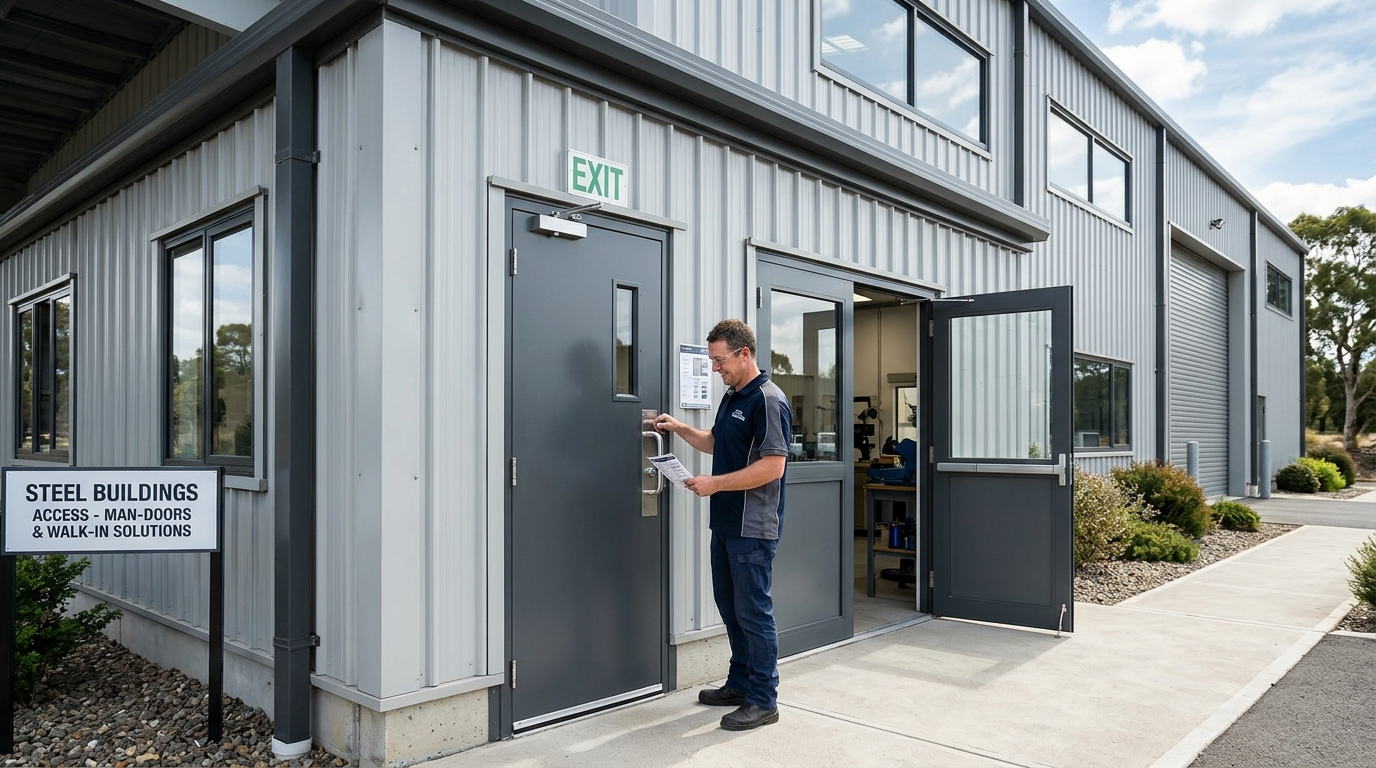
Every garage needs at least one walk-in man door. Large garages benefit from two one on each side of the building.
For windows, south-facing placement maximises passive solar heat in winter. It’s a small decision that meaningfully cuts your heating costs.
Translucent roof panels are an affordable upgrade worth considering. They flood the interior with natural light without compromising the roof structure.
Ventilation
Don’t overlook airflow.
Ridge vents, sidewall louvers, or powered exhaust fans prevent moisture buildup especially critical in heated garages where condensation is a constant concern.
One of the most common regrets we hear from customers: “I wish I’d added more windows and a second walk-in door.”
Plan for more than you think you need. Future you will be grateful.
Electrical, Plumbing & HVAC , Plan Now or Pay Later
Here’s a rule that saves thousands of dollars.
Rough everything in during construction. Adding electrical, plumbing, or heating after the slab is poured costs dramatically more, sometimes 3–5 times as much.
Electrical
A 100-amp sub-panel works for basic lighting and tools. But if you’re running a welder, air compressor, or EV charger, step up to 200 amps.
Plan your 240V outlets before the walls go up. Add more than you think you need. You’ll use them.
For lighting, LED fixtures are the clear choice. Aim for even coverage across the full floor area; dark corners in a workshop are both frustrating and unsafe.
Plumbing
If there’s any chance you’ll want a utility sink or floor drain, rough it in now.
In-floor heating is the same story; the decision must be made before your slab is poured. Once the concrete is down, that option is essentially gone.
Heating
Three options dominate Canadian garages:
- Radiant in-floor heat : the most comfortable option, highest upfront cost
- Suspended gas unit heaters : the most popular choice across Canada, great value
- Electric baseboard : easiest to install, highest ongoing operating cost
In Canada, a heated garage isn’t a luxury. It’s a lifestyle upgrade that pays for itself in comfort, productivity, and the long-term health of your vehicles.
Exterior Design & Curb Appeal , Your Garage Should Make You Proud
Steel doesn’t mean industrial ugly anymore.
Modern steel garages can be genuinely beautiful and designed to complement any home style.
Panel Profiles
Three main options define the look of your exterior:
- R-panel : clean, popular, and cost-effective
- Corrugated : classic profile with strong visual texture
- Standing seam : premium, contemporary, and extremely weather-tight
Colour and Trim
Matching your garage to your home’s existing siding and roof colour creates instant curb appeal.
Two-tone wainscoting a contrasting lower panel colour adds visual depth without adding cost. Trim packages for corners, eaves, and fascia pull the whole look together cleanly.
Accent Features
Want something that really stands out?
Stone or brick accent walls combined with steel panels create a high-end, mixed-material look that photographs beautifully and adds real property value.
Gutters and downspouts are worth adding too; they protect your foundation and finish the exterior professionally.
Your garage is often the first thing people see when they pull up to your home.
It should make you proud, not embarrassed.
Budget Planning : The Real Cost of a Steel Garage in Canada
Let’s talk numbers honestly.
In Canada, a basic pre-engineered steel garage typically runs $15–$25 per square foot for the building package alone. A finished, insulated, and heated garage with electrical can range from $35–$60+ per square foot depending on size, location, and specs.
What’s Often Not Included in Base Quotes
This is where budgets get blindsided:
- Site preparation and grading
- Foundation and concrete work
- Permits and engineering stamps
- Electrical, plumbing, and HVAC rough-in
- Delivery and erection labour
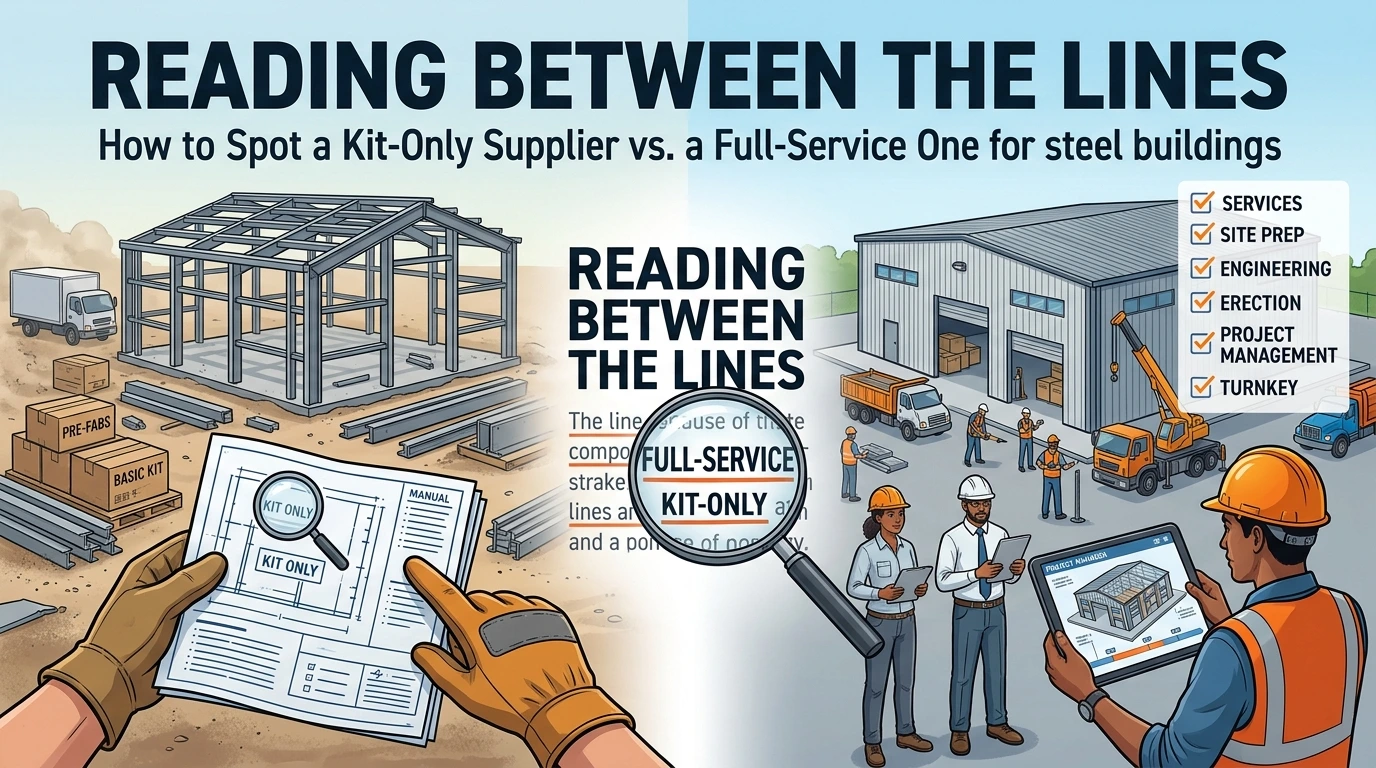
Always ask what’s included. A low quote that excludes half the project isn’t a deal, it’s a surprise waiting to happen.
Steel vs. Wood : The Long Game
Steel costs more upfront in some cases. But it doesn’t rot, warp, or attract pests. Insurance rates are often lower. Maintenance costs over 20 years are significantly less.
The total cost of ownership tells a very different story than the initial price tag.
The ROI Is Real
A well-built steel garage adds measurable property value. It protects vehicles worth tens of thousands of dollars. It creates usable space that improves your daily life.
Budget for the garage you actually want, not the smallest version you can get away with.
Metal Pro provides transparent, all-inclusive quotes so you know exactly what you’re getting before committing to anything.
Choosing the Right Steel Building Supplier in Canada
Your building is only as good as the company behind it.
This decision matters more than almost any other in the entire process.
What to Look For
- Canadian-engineered stamped drawings : accepted by municipalities nationwide
- Experience with Canadian climate zones : snow loads, wind loads, frost depths
- Transparent pricing : no hidden freight, foundation, or erection surprises
- Solid warranty : covering steel, paint finish, and structural frame
- Real customer support : from initial design through final erection
Red Flags to Avoid
- No stamped engineering drawings available
- Vague “starting from” pricing with no clear inclusions
- No Canadian references or local installations
- Unusually cheap quotes thin gauge steel and offshore materials cut costs somewhere
Why the Supplier Decision Is Final
Unlike most purchases, you can’t easily switch suppliers mid-project.
Once your deposit is placed and engineering begins, you’re committed. Choose a company with a proven track record in Canada , not just a slick website and low opening price.
Metal Pro Buildings is a Canadian company, serving Canadian customers with Canadian-engineered buildings. We’re not a middleman. We manufacture, engineer, and support every structure we sell from first quote to final bolt.
Conclusion: Your Steel Garage Starts With the Right Partner
Designing a steel garage from scratch is one of the most exciting projects a Canadian homeowner can take on.
It’s also one of the most complex.
But you’re no longer going in blind. You now know how to size your building for the future, choose the right foundation, navigate permits, and avoid the mistakes that cost people thousands of dollars every year.
More importantly you know what questions to ask.
The right garage gives you more than storage. It gives you space to build things, fix things, create things, and protect what matters most to you. In a Canadian climate, that’s not a small thing.
That’s a garage you’ll use every single day.
Ready to Start Designing?
Get a free custom quote from Metal Pro Buildings. Our team will walk you through every decision, help you avoid costly mistakes, and design a steel garage built for your life and your Canadian climate.
Get Your Free Design Consultation →