
You’ve got a clear vision, the equipment that needs to fit, the workflow that has to make sense, the Canadian winters it needs to survive.
Then someone hands you a spec sheet full of terms like “clearspan” and “bay spacing,” and suddenly you’re lost.
Here’s what most people miss: span and bay spacing lock in your building’s usability before a single bolt is placed. Get them wrong, and you’re stuck with columns in all the wrong spots, equipment that barely fits, and a layout that fights you every day.
This guide changes that. By the end, you’ll know what these terms mean, what’s typical for your building type, and how to make a confident decision even on your first build.
This is the kind of clarity Metal Pro brings to every client before they spend a dollar.
Why Spans and Bay Spacing Are the Most Underrated Decisions in Your Build
Most people shopping for a pre-engineered building zero in on one thing: price per square foot.
That’s understandable. But it’s also how costly mistakes happen.
The structural layout , your spans and bay spacing determines whether the building actually works for your operation. A great price means nothing if a column sits right where your forklift needs to turn. Or if your largest piece of equipment clears the door but can’t maneuver inside. Or if you need to retrofit openings that weren’t planned for from the start.
Those fixes are expensive. Sometimes they’re impossible without major structural changes.
Here’s the reframe worth holding onto: your building isn’t just a structure , it’s a 30-year investment in how you work, store, and grow. The layout has to serve you, not the other way around.
Getting the span and bay spacing right upfront isn’t a technical detail. It’s one of the highest-leverage decisions you’ll make in the entire project.
So let’s break it down , in plain language.
What Is a “Span” in a Pre-Engineered Building?
The span is simply the distance from one sidewall to the other , your building’s width.
Simple enough. But how that width is structured makes a huge difference in how usable your space actually is.
Clearspan vs. Multi-Span
There are two main ways to structure your span: clearspan (no interior columns, full open floor space) and multi-span (interior columns that divide the width into sections).
Each approach has real advantages depending on your building size, budget, and how you plan to use the space. We’ve covered this topic in depth , check out our full breakdown: Clearspan vs. Multi-Span Steel Buildings: Which Is Better?
Why It Matters
The span you choose determines how freely people, equipment, and vehicles can move through your building every single day.
Get it right, and the space works effortlessly. Get it wrong, and you’re working around your building instead of inside it.
Common Span Ranges by Building Type
Span choices aren’t one-size-fits-all. The right width depends heavily on what you’re building for. Here’s what’s typical across the most common building types in Canada.
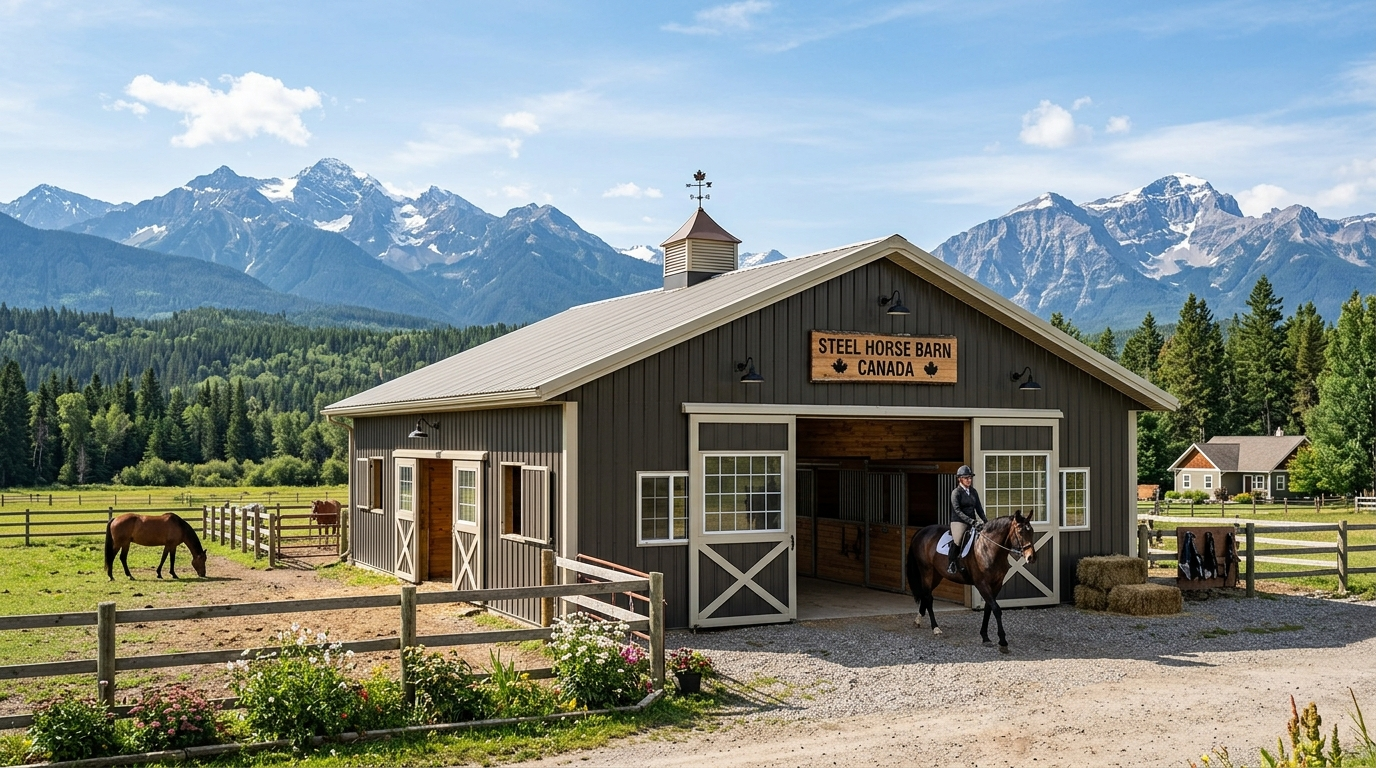
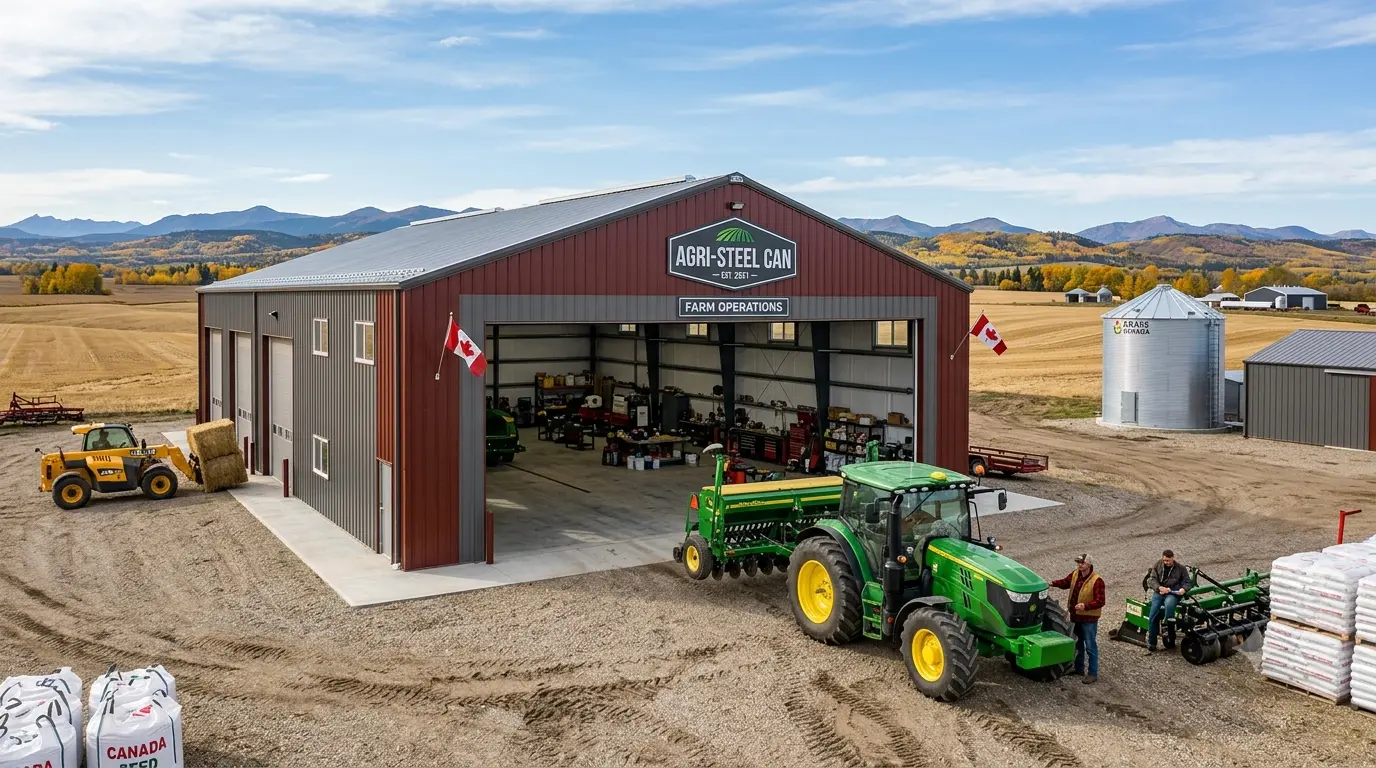
Agricultural Buildings
Common spans: 40 ft to 80 ft (clearspan)
Farm buildings need room to move combines, grain augers, and large tractors don’t leave much margin for error. A clearspan in this range keeps the floor completely open for equipment storage, hay, or livestock without any columns getting in the way.
Commercial & Retail
Common spans: 30 ft to 60 ft (often clearspan)
Retail and commercial spaces need flexibility. Shelving layouts change, showrooms get reconfigured, and customer flow has to feel natural. Clearspan in this range gives you that freedom and Canadian buildings in this category need frames engineered for heavier snow loads than you’d see in milder climates.
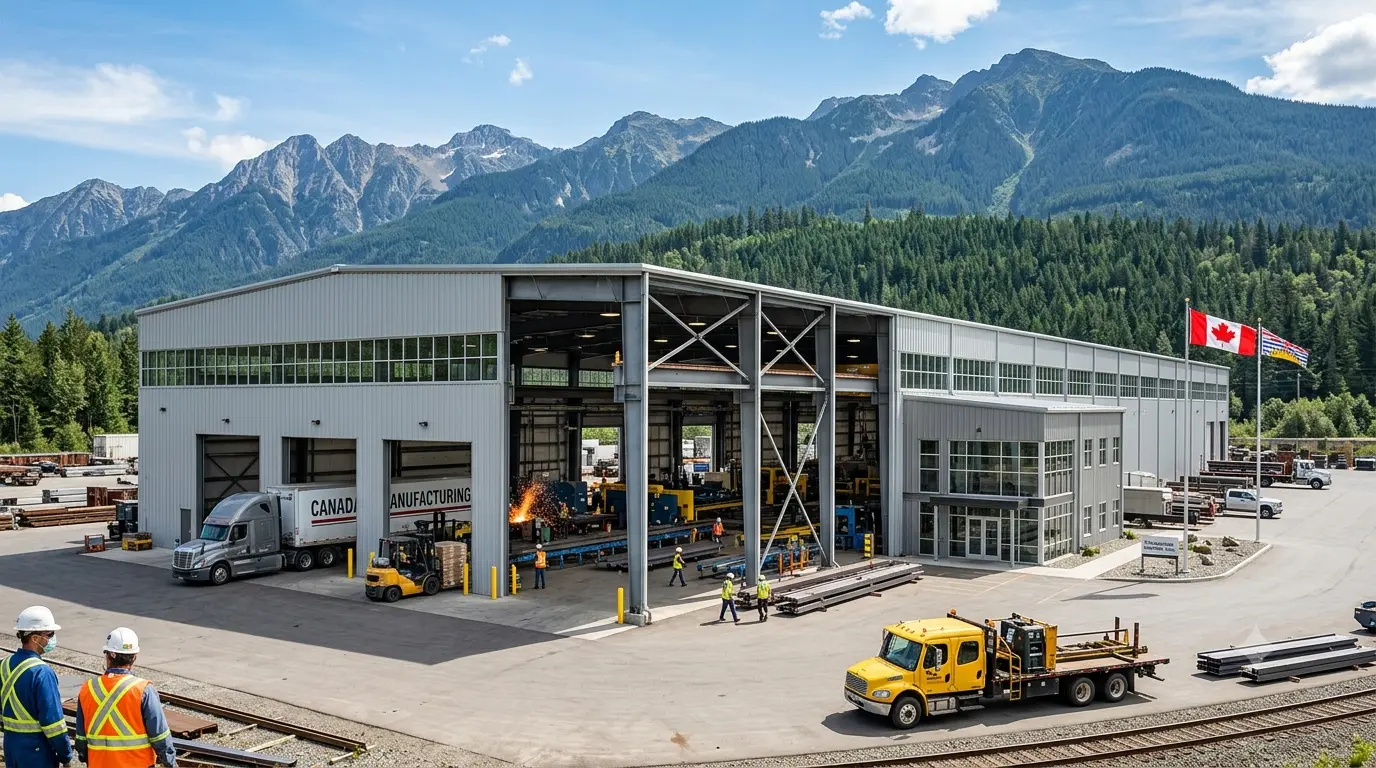
Industrial & Warehousing
Common spans: 60 ft to 150 ft+ (multi-span common beyond 100 ft)
This is where the big footprints live. Racking systems, forklifts, and loading docks all demand open, logical floor planning. Beyond 100 feet, multi-span becomes practical but column placement needs to be mapped around your workflow from day one, not as an afterthought.
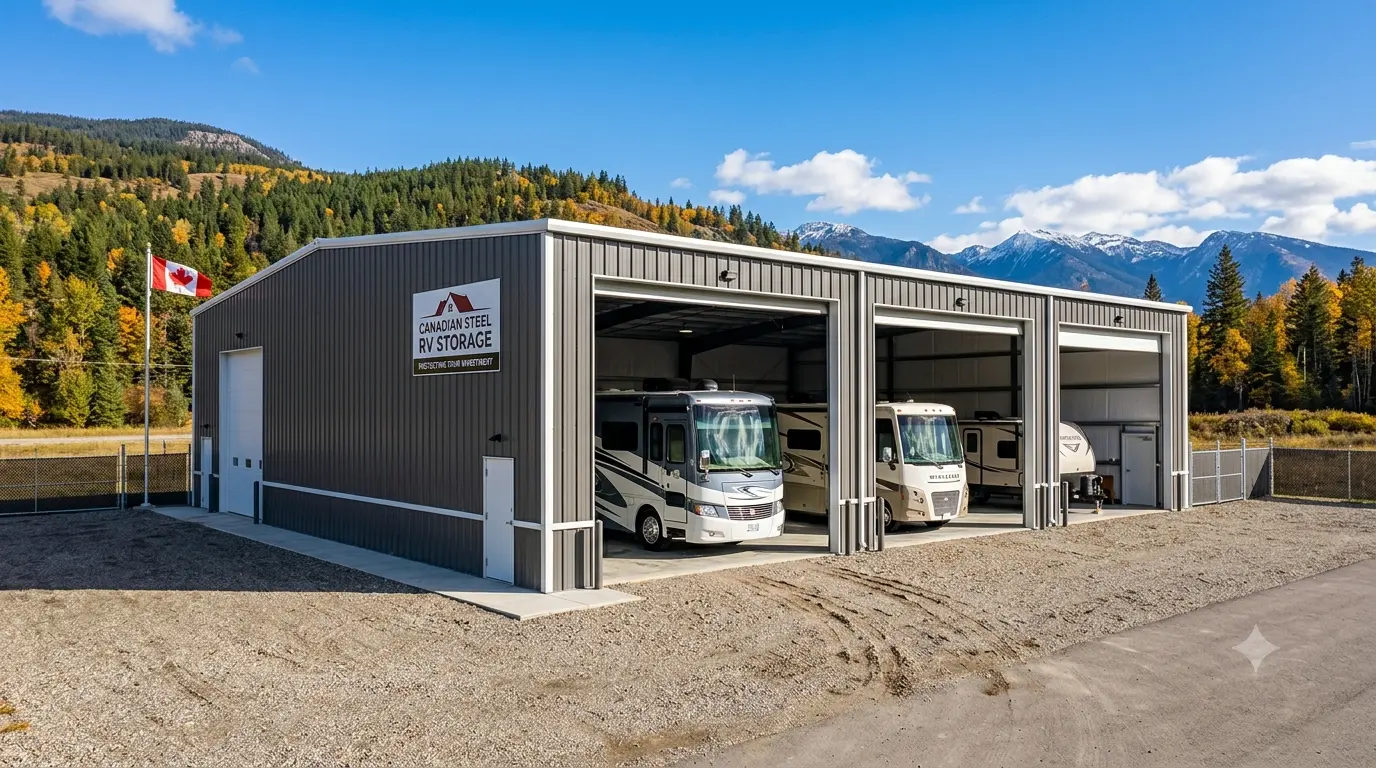
Workshops & Garages
Common spans: 30 ft to 60 ft
The sweet spot for most personal and commercial shops sits between 40 and 50 feet, enough room for a 4 to 6 bay layout with comfortable working clearance. In Canada, these buildings are almost always insulated and heated, so tighter, well-engineered spans make a lot of sense.
Recreational & Community Buildings
Common spans: 60 ft to 120 ft
Arenas, community halls, and multipurpose facilities almost always go clearspan. The flexibility to reconfigure the interior for different events and uses is simply too valuable to give up with interior columns.
What Is “Bay Spacing” And Why It’s Just as Important as Span
If the span is how wide your building is, bay spacing is how the length gets divided up.
More specifically, bay spacing is the distance between the structural frames that run along the length of your building. Those frames are the backbone of your structure and how far apart they sit affects everything from material costs to where your doors and windows can go.
The Most Common Bay Spacings in Canada
The three standard bay spacings you’ll encounter are 20 ft, 25 ft, and 30 ft.
Each one involves a real trade-off:
- Wider bay spacing means fewer frames, which lowers material costs , but requires heavier purlins and girts to span the gap between them.
- Tighter bay spacing means more frames, which makes it easier to add doors, windows, and wall openings exactly where you need them.
- Canadian snow loads are a major factor here. Heavier roof loads push most Canadian builds toward 20 to 25 ft bay spacing to distribute the weight properly across the structure.
Bay Spacing Quick Reference
| Bay Spacing | Best For | Trade-off |
| 20 ft | High snow loads, frequent openings | More frames, slightly higher cost |
| 25 ft | Most commercial & agricultural builds | Balanced cost and flexibility |
| 30 ft | Large industrial/warehouse, lower snow zones | Requires heavier secondary structure |
One Thing Most People Overlook
Bay spacing also determines where you can place doors and windows along your sidewalls. Openings typically fall between frames so if your bay spacing doesn’t align with where you need access, you’re either relocating the opening or adding extra framing.
Plan your bay spacing around your openings, not the other way around.
Canadian Climate Considerations That Change the Equation
This isn’t the U.S. Sun Belt. Building in Canada means designing for conditions that will genuinely test your structure every single year.
Span and bay spacing decisions don’t happen in a vacuum; they have to account for the climate realities of where your building will actually sit.
Snow Loads
Snow loads vary dramatically across Canada. A building in Southern BC deals with very different roof loads than one in Northern Ontario, Quebec, or the Prairies. Your structural frames, bay spacing, and roof design all need to reflect the ground snow load specific to your location, not a national average.
Underestimating snow load isn’t just a code violation. It’s a structural risk.
Wind Loads
Prairie provinces face wide-open wind exposure that puts serious lateral pressure on steel frames. Coastal BC brings its own challenges with moisture-heavy storms. Your building’s frame design including how spans and bays are configured needs to account for the prevailing wind conditions in your region.
Frost Depth
Foundation design is tied directly to your structural grid. In colder regions, frost depth requirements affect how your anchor bolts and column bases are set ,which connects back to your bay spacing layout from the very beginning of the design process.
The Hidden Cost of Getting This Wrong
A building spec’d for mild climates and dropped into Winnipeg or Northern Quebec is a liability, not an asset. Retrofitting for climate loads after the fact is expensive and sometimes not possible without major structural changes.
Every Metal Pro building is engineered to the National Building Code of Canada and applicable provincial standards. Because we’re Canadian, and we build for Canadian conditions, not a generic North American spec.
How to Choose the Right Span and Bay Spacing for Your Project
Here’s the most important shift in thinking you can make: start with how you’ll use the building, not with the dimensions.
The numbers follow the use case , not the other way around.
Ask Yourself These Questions First
What’s the largest vehicle or equipment that needs to move through the space? This sets your minimum clearspan requirement. Don’t just account for the equipment itself account for how it turns, maneuvers, and gets serviced inside the building.
Do you need an overhead crane? Crane systems have a significant impact on column-free span requirements and frame height. This needs to be on the table from day one.
How many doors and windows do you need and where? Your bay spacing should be planned around your openings, not the other way around. Every door and window location ties back to your structural grid.
Will you expand in the future? Plan your bays with expansion in mind. A little foresight here saves a lot of money and headaches down the road.
The Clearspan vs. Multi-Span Decision
Use this as a starting point:
- Under 80 ft wide? → Clearspan is almost always the right call.
- 80 to 120 ft wide? → Evaluate column placement carefully against your workflow before deciding.
- Over 120 ft wide? → Multi-span is likely the practical choice, but column locations need expert planning around your operation.
The Rule Worth Remembering
Plan for the building you’ll need in 10 years , not just the one you need today.
Businesses grow. Operations change. Equipment gets bigger. The span and bay spacing decisions you make now will either accommodate that growth or fight against it.
Getting this right upfront is one of the smartest investments you can make in the entire project.
Why Working With a Pre-Engineered Building Specialist Changes Everything
There’s a big difference between a vendor and a partner.
A vendor quotes you a building. A specialist helps you figure out which building you actually need and why.
What the Right Specialist Does Differently
The conversation starts in a different place entirely. Instead of jumping straight to dimensions and pricing, a good specialist asks about your operation first.
- How do you move through the space on a typical day?
- What are you storing, building, or processing inside?
- What does growth look like for you in the next 5 to 10 years?
Those answers shape everything: the span, the bay spacing, the door locations, the frame height, the foundation layout. Every structural decision flows from how the building needs to function for you.
The Costly Mistakes a Specialist Helps You Avoid
Over-building means spending money on capacity you’ll never use. Under-building means outgrowing your space faster than expected or worse, realizing on day one that the layout doesn’t work.
A specialist also coordinates your structural layout with the details that first-time builders often forget: mezzanine placement, crane systems, future expansion bays, insulation requirements, and regional climate loads.
Getting all of that aligned early is far less expensive than fixing it later.
What Metal Pro Brings to the Table
Metal Pro has helped hundreds of Canadian businesses, farmers, and contractors stop guessing and start building with confidence.
Every project starts with a real conversation about how the building needs to work before anyone talks dimensions or dollars. Our buildings are engineered for Canadian climate conditions, designed around your workflow, and built to serve you for decades.
We don’t just meet code. We build around your life.
Conclusion : Let’s Figure Out Your Building Together
Spans and bay spacing aren’t just numbers on a spec sheet.
They’re the skeleton of how your building will serve you every single day, for the next 30 years. The right decisions here mean equipment that moves freely, workflows that make sense, and a structure that grows with you. The wrong ones mean costly fixes, wasted space, and a building that fights you instead of working for you.
Getting it right starts with one conversation.
Not Sure Where to Start?
That’s exactly what our team is here for. Metal Pro offers free, no-pressure consultations. We’ll help you map out the right span, bay spacing, and structural layout before you commit to anything.
No jargon. No hard sell. Just clarity. Get Your Free Consultation →
Or if you’re still in the planning stage:
Explore Our Project Gallery , browse real Metal Pro builds by type to see what’s possible for your project .