
Canadian construction cost data released this spring show structural steel framing costs in non-residential segments climbed 3.4 percent year-over-year in the second quarter of 2025, even as demand for pre-engineered metal storage buildings continues to outpace wood-frame and concrete alternatives from Saskatchewan’s agricultural belt to southern Ontario’s industrial corridors.
Statistics Canada’s national construction cost index rose 3.7 percent over the same period, compounding affordability pressure for buyers yet industry analysts say the long-term economics increasingly favour steel, not away from it.
A Market Tracking Upward
Canada’s structural steel market generated USD $1.07 billion in revenue in 2024 and is forecast to reach USD $1.24 billion by 2030, growing at a compound annual rate of 2.7 percent, according to Grand View Research. Non-residential construction : warehouses, farm buildings, and commercial storage facilities , accounted for the largest share of that demand.
“Rising labour and material costs are actually accelerating the shift to pre-engineered steel,” said Herbert Broderick,CEO at Metal Pro Buildings . “When a farmer or a fleet operator runs a 20-year cost comparison, the numbers consistently point to steel ; lower maintenance, fewer repairs, and meaningfully reduced insurance premiums.”
Engineered for Canada’s Climate
Steel storage buildings are designed to meet regional snow, wind, and seismic load requirements under the National Building Code of Canada (NBC) and the CSA A660 standard for pre-engineered steel design. Unlike wood, which can warp, swell, or rot under the repeated freeze-thaw cycles common from British Columbia’s coast to the Maritimes, steel maintains dimensional stability across extreme temperature ranges. Protective galvanised coatings further extend service life in high-moisture agricultural environments, where fertiliser vapours and road salts accelerate corrosion in lesser materials.
Lifetime Cost Gap Widens
Prefabricated steel framing currently costs roughly $20 to $25 CAD per square foot, compared with approximately $35 per square foot for wood framing and up to $50 per square foot for concrete, according to figures tracking Ontario industrial construction. Over a 20-year ownership period, steel buildings are estimated to deliver between $320,000 and $750,000 in total cost savings for a mid-sized facility, driven by lower maintenance costs, fewer structural repairs, and reduced insurance premiums. Learn whether steel storage is right for your operation before making your investment.
Pre-engineered steel buildings’ resistance to fire, pests, and severe weather leads many Canadian insurers to apply premium reductions of up to 40 percent compared with combustible wood-frame construction.
“Insurers have become much more sophisticated about construction type,” Broderick said. “A properly documented, NBC-compliant steel building with engineered drawings gives underwriters exactly the predictability they’re looking for and that typically translates directly to lower annual premiums for the owner.”
Labour Shortage Drives Prefabrication
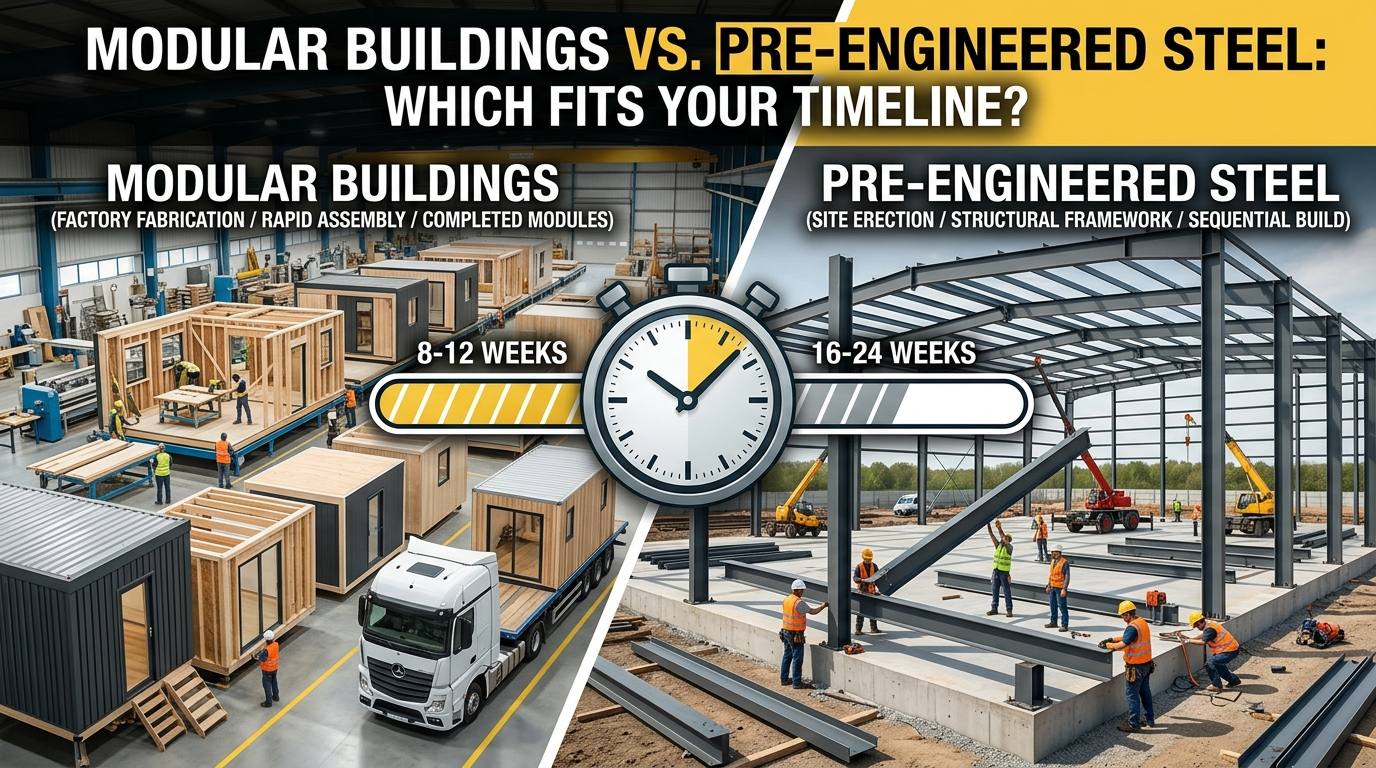
Canada could require more than 500,000 additional construction workers by 2030 to meet housing and infrastructure demand, according to projections from the Canada Mortgage and Housing Corporation (CMHC). That looming shortfall is directing buyers toward pre-engineered systems, where components arrive on site pre-cut and pre-drilled shifting labour-intensive fabrication off-site to controlled factory conditions and compressing on-site build timelines significantly.
Clear-span interior designs, made possible by steel’s high strength-to-weight ratio, allow for large, column-free storage spaces suitable for agricultural equipment, fleet vehicles, or industrial inventory. Wood trusses typically require multiple interior posts for spans beyond 25 to 30 metres, directly reducing usable floor area.
Sustainability Standards and Regulatory Context
Steel is 100 percent recyclable and retains its full structural strength through the recycling process. The National Research Council of Canada has noted that life-cycle assessments consistently show steel’s advantages in longevity and reduced environmental impact over multi-decade project horizons, a factor gaining weight as federal and provincial sustainability targets tighten.
The Canadian Sheet Steel Building Institute (CSSBI), based in Cambridge, Ontario, has published the technical standards that have standardised engineering practices for cold-formed steel building products nationally. With Canada’s broader steel market projected to grow from USD $19.6 billion in 2024 to USD $26 billion by 2033 at a 3.2 percent annual rate (IMARC Group), supply chains for pre-engineered storage systems are expected to remain robust even as short-term U.S. tariff volatility affects raw material pricing.
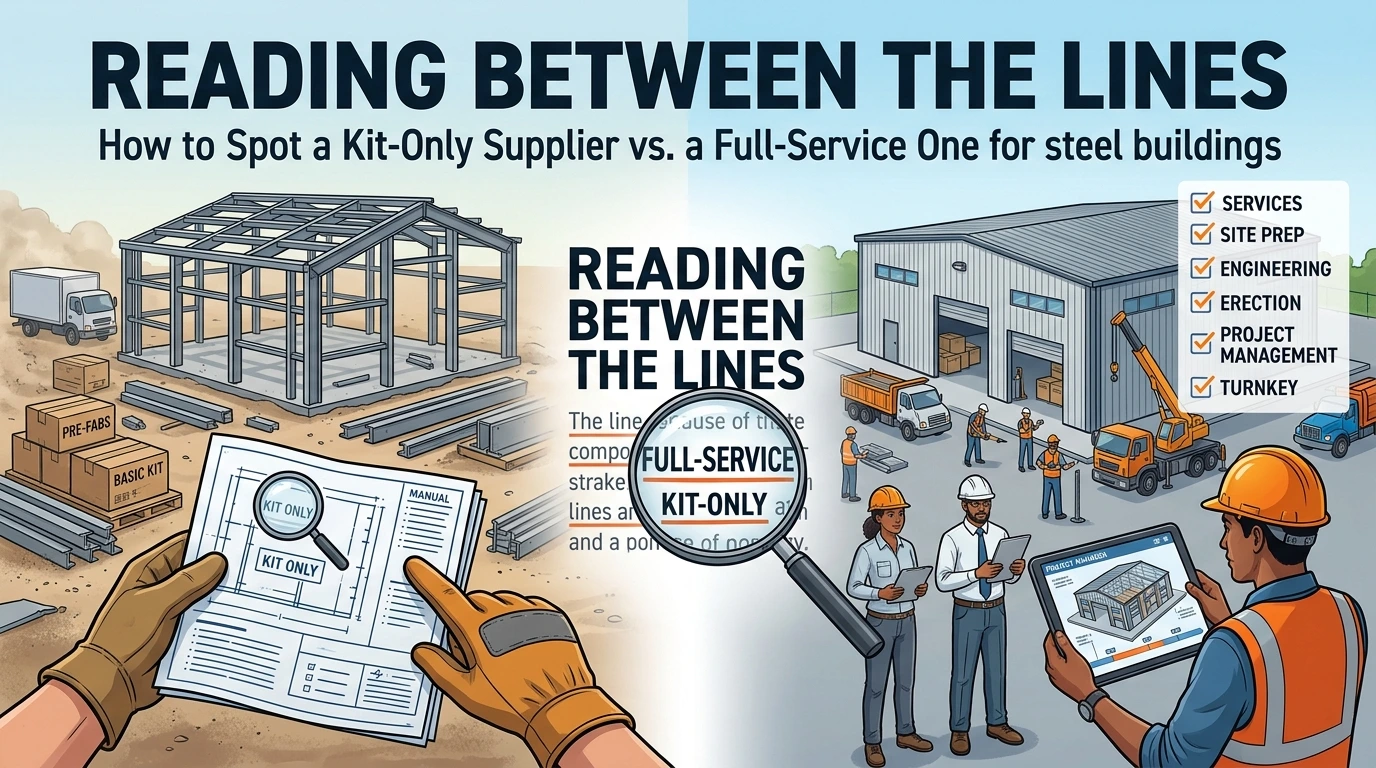
Broderick said buyers should request detailed life-cycle cost comparisons not just upfront material quotes and confirm that any building supplier provides engineered drawings stamped to provincial and NBC requirements before signing a purchase agreement.