
Struggling to squeeze your SUV into the garage every winter? You’re not alone.
Choosing the right garage size isn’t just about parking, it’s about comfort, safety, and value. Before diving into dimensions, it’s worth knowing the key things to consider when adding a garage so you plan it right from the start.
In Canada’s snowy climate, a garage that’s too small means frozen doors, scratched mirrors, and no space for tires or gear. The right size keeps your car safe, gives you storage room, and even boosts resale value.
This guide breaks down ideal garage dimensions for every vehicle type from motorcycles to RVs plus tips on insulation, doors, and layout. You’ll learn exactly how to plan a garage that fits your life (and your climate).
Standard Garage Dimensions
Choosing the right size for a steel garage means more than just fitting your vehicle. You need enough space to park comfortably, move freely, and handle Canada’s snowy conditions. Here’s how to size it right.
Typical Steel Garage Sizes
Steel garages follow the same general size ranges as traditional wood-frame ones, but the thinner wall design gives you slightly more usable interior space for the same exterior footprint.
| Garage Type | Approx. Width | Approx. Depth | Notes |
| Single-car steel garage | 3.0 – 3.6 m (10 – 12 ft) | 6.0 – 7.3 m (20 – 24 ft) | Fits one sedan or compact SUV with extra gear space. |
| Double-car steel garage | 6.0 – 7.3 m (20 – 24 ft) | 6.7 – 8.0 m (22 – 26 ft) | Common suburban layout; enough for two midsize vehicles. |
| Triple-car / workshop combo | 9.1 – 11.0 m (30 – 36 ft) | 6.7 – 8.0 m (22 – 26 ft) | Ideal for families, tools, or hobby spaces. |
| Tandem / deep-bay steel garage | 3.6 – 4.8 m (12 – 16 ft) | 10.5 – 12.0 m (35 – 40 ft) | Great for narrow lots or extra storage depth. |
| RV or oversized steel garage | 3.6 – 4.3 m wide × 4.3 – 4.8 m high | 9 – 15 m (30 – 50 ft) deep | Designed for RVs, lifted trucks, and boats. |
Clearance and Walk Space
Even with thinner walls, plan for comfort:
- Side clearance: 0.6 – 0.9 m (2 – 3 ft) per side for doors and walking space.
- Front and back clearance: 0.9 – 1.2 m (3 – 4 ft) for bumpers, benches, or storage.
- Ceiling height: 2.7 m (9 ft) minimum; 3.0 m (10 ft) or higher if adding lifts or overhead storage.
Steel framing allows you to go taller more easily than wood, making it perfect for multi-use or RV garages.
Garage Door Dimensions (Steel Structures)
Steel garages use roll-up or sectional doors sized to your bay width:
| Door Type | Width | Height | Typical Use |
| Single Door | 2.4 – 2.7 m (8 – 9 ft) | 2.1 m (7 ft) | Standard for compact cars and small SUVs. |
| Double Door | 4.8 – 5.0 m (16 – 17 ft) | 2.1 m (7 ft) | Common for dual bays. |
| Oversized / RV Door | 3.0 – 3.7 m (10 – 12 ft) | 3.0 – 4.3 m (10 – 14 ft) | For large trucks, boats, or campers. |
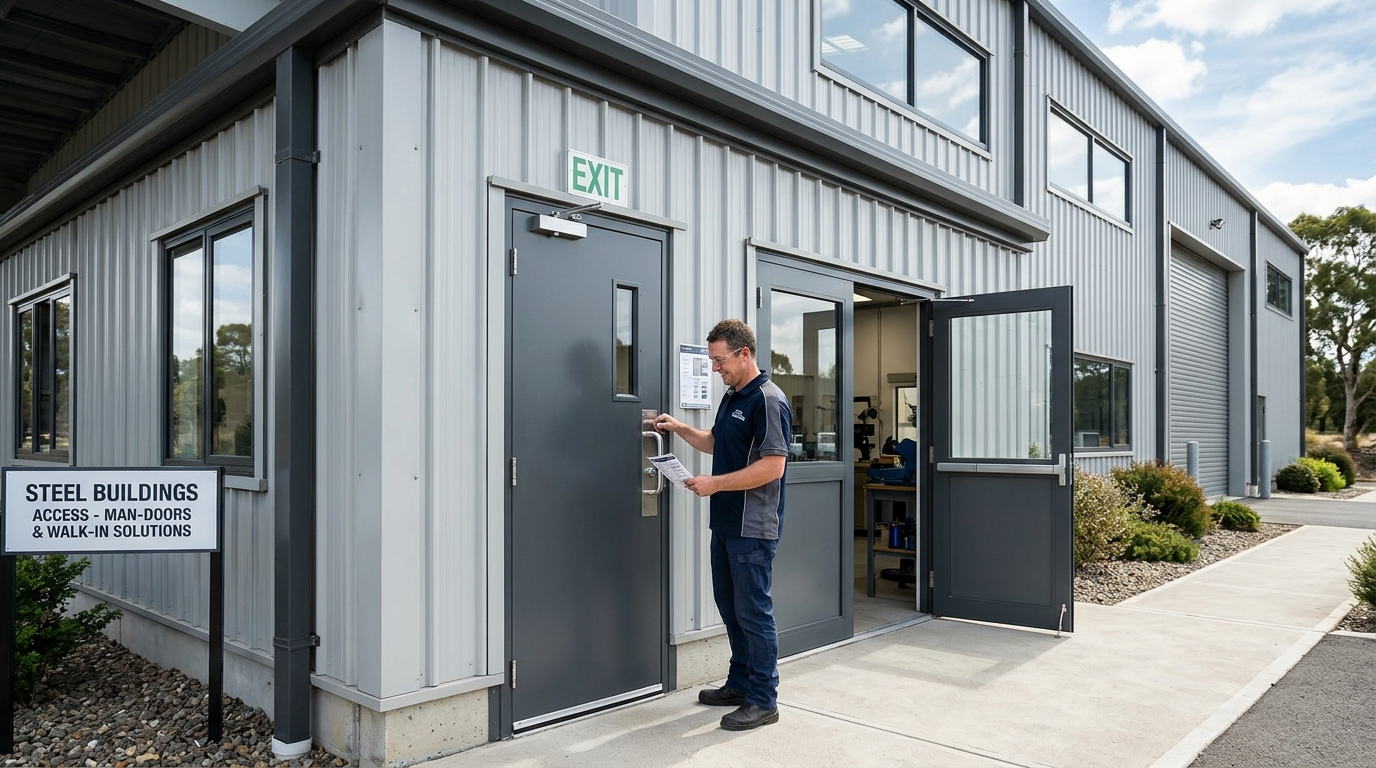
Steel frames handle heavier door weights easily, so you can install taller or wider openings without structural stress.
Why Steel Garages Work Well in Canada
- Thinner walls, more room: Corrugated steel panels save interior inches.
- High snow-load capacity: Engineered to meet regional building codes.
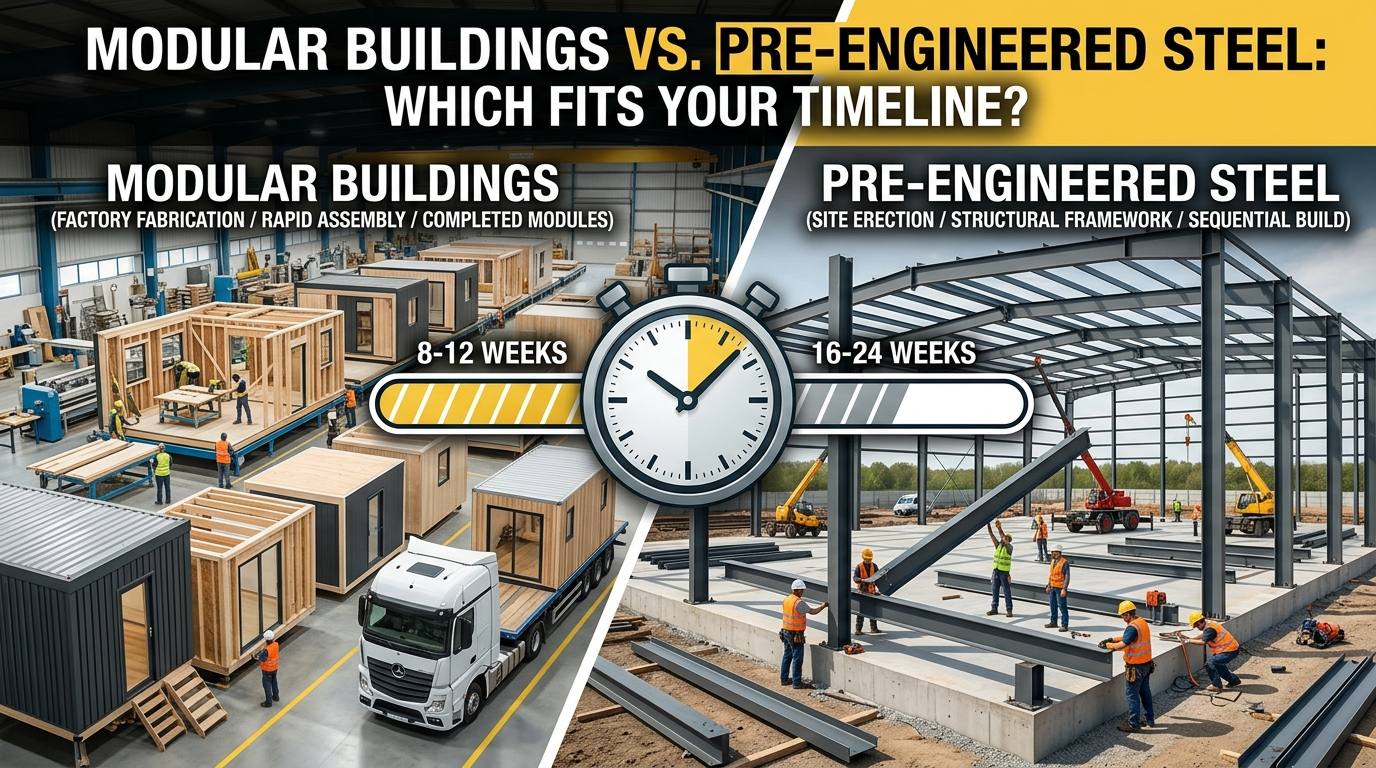
- Faster construction: Pre-engineered kits assemble quickly, even in cold weather.
- Flexible insulation options: Add insulated panels (R-12 – R-18) or spray foam for year-round comfort.
Recommended Steel Garage Sizes by Vehicle Type
Yes those “standard” dimensions can be tuned further depending on what you drive. Here’s a practical, vehicle-based guide for steel garages with room for snow, storage, and movement.
A. Motorcycles, Snowmobiles, ATVs
- Suggested bay: 2.0 – 2.5 m wide × 3.0 – 4.0 m deep (≈ 6.5–8 ft × 10–13 ft)
- Use vertical wall space : hooks, racks, shelving.
- Leave at least 0.3 m (1 ft) buffer around the vehicle to walk or stow gear.
B. Compact Cars & Sedans
- Suggested bay: 3.0 – 3.6 m wide × 6.0 m deep (≈ 10–12 ft × 20 ft)
- Since steel walls are thinner, a narrow version (3.0 m) might work but 3.3–3.6 m gives more comfort in snow.
- Add side clearance 0.6–0.9 m per side for door swing and walking.
C. Crossovers & SUVs
- Suggested bay: 3.6 – 4.3 m wide × 6.7 – 7.3 m deep (≈ 12–14 ft × 22–24 ft)
- Account for roof racks, cargo boxes, and winter tire storage inside.
- Extra depth helps reduce snow accumulation in front of the door.
D. Pickup Trucks & Cargo Vans
- Suggested bay: 4.3 – 4.9 m wide × 7.3 – 8.5 m deep (≈ 14–16 ft × 24–28 ft)
- Height: at least 2.7 m (9 ft); better: 3.0 m or more steel framing handles this well.
- Allow extra width so mirrors can open fully without hitting posts.
E. Boats & Utility Trailers
- Suggested bay: 3.6 – 4.3 m wide × 9.0 – 11.0 m deep (≈ 12–14 ft × 30–36 ft)
- Leave space ahead or behind for launching, rigging, or winterizing tasks.
- Use one side wall for tools and mooring gear keep, center clear.
F. RVs, Campers & Large Vehicles
- Suggested dimensions: 3.6 – 4.3 m wide × 9.0 – 15.0 m deep × 4.3 – 4.8 m high (≈ 12–14 ft × 30–50 ft × 14–16 ft)
- Use roll-up or vertical lift doors to match the height.
- Include generous turning and slide-out clearances.
- Steel garages support open-span bays, so you won’t need interior posts interfering with maneuvering.
Supporting Data & Best Practices
- A 3-car steel garage built to fit SUVs often uses 36 ft × 24 ft (≈ 11.0 m × 7.3 m) dimensions.
- Steel / metal garage kits list one-car widths of 12–18 ft (≈ 3.7–5.5 m) for singles, and two-car widths of 18–24 ft or more.
- A typical metal garage is 12 ft wide × 20–24 ft deep for a single vehicle.
Steel framing gives more flexibility for taller bays, wider spans, and fewer interior obstructions. That means your “ideal” bay sizes become more feasible in steel than in traditional builds.
Garage Door, Ceiling, and Driveway Considerations
When building a steel garage, doors, ceilings, and driveways are crucial they ensure usability, durability, and snow/water management. Get these wrong, and even a well-sized garage can feel tight, damp, or awkward.
1. Garage Door Dimensions & Types
Standard Sizes in Canada
- Single-car doors typically run 8 to 10 ft wide × 7 to 8 ft tall (≈ 2.4–3.0 m × 2.1–2.4 m).
- Double doors: 16 to 18 ft wide × 7 to 8 ft tall (≈ 4.9–5.5 m × 2.1–2.4 m)
- Oversized / commercial doors (for RVs, tall trucks): heights up to ~ 14 ft (≈ 4.3 m) and widths beyond 18 ft are available via steel door manufacturers.
Steel Garage Door Benefits & Considerations
- Steel garages support heavy insulated panels with no difficulty.
- You can select insulated sectional or roll-up steel doors rated for cold climates.
- When ordering, specify the rough opening (framed opening) slightly larger than the door to allow clearance and framing tolerances.
- For tall vehicles, choose doors with extra headroom (e.g. 3.0–4.3 m heights).
- Most steel doors come in 1-inch increments for both width and height.
2. Ceiling Height & Overhead Space
- A standard ceiling height of 2.4 to 2.7 m (8–9 ft) works fine for many sedans and SUVs.
- But for lifts, overhead storage, or tall trucks, aim for 3.0 m (10 ft) or more. Steel framing handles this smoothly.
- In areas with zoning or height limits, check allowed maximums. For example, in Winnipeg detached garages are limited to ~4.57 m (15 ft) total height.
- If your garage is attached to a house, fire / separation code often requires the ceiling or common wall to include fire-rated layers (e.g. 5/8” fire-rated gypsum) to separate the garage from living space.
3. Driveway Slope, Snow Clearance & Drainage
Driveway Slope & Grade
- Your driveway should slope away from the garage entrance (so water doesn’t run inside).
- Many building authorities require a drainage slope at garage doors, or the installation of a catch basin or trench drain at the threshold.
- The floor of an attached garage often must slope outward or include a raised sill at the door to prevent water ingress.
Snow Clearance Zones
- Leave extra depth in front of doors (~0.6 m or more) for snow piles or blowing snow.
- Avoid obstruction from downspouts, eaves, or ramp overhangs that drop snow near the doorway.
- Keep the driveway width generous wide enough for snow removal equipment.
Drainage & Moisture Control
- Ensure the concrete floor slopes slightly toward the door (1–2 % slope) to redirect meltwater.
- Include a floor drain or trench drain just inside or outside the door, especially in snowy climates.
- Use vapour barrier / moisture barrier systems under slabs to prevent condensation on steel walls.
- Seal floor joints and edges to prevent water migration under walls.
4. Integration & Best Practices
- Allow headroom above the door to clear tracks and hardware. Steel garages often can accommodate taller doors more easily than wood ones.
- For steel garages, plan roof truss or purlin height so it doesn’t interfere with door track or overhead storage.
- Coordinate door placement with driveway alignment to avoid tight turning radii.
- For cold climates, consider insulated doors and weather stripping to reduce energy loss and condensation.
Build It Right With Metal Pro Buildings
Choosing the right steel garage size in Canada isn’t just about parking it’s about planning for comfort, durability, and long-term value.
When your garage fits your vehicle and your climate, everything from winter mornings to weekend projects becomes easier.
At Metal Pro Buildings, we don’t just sell steel structures we help Canadians build garages that last a lifetime.
- Custom-engineered steel garages sized for your exact vehicle types
- Pre-designed kits for single, double, or RV garages
- Certified for Canadian snow and wind loads
- Energy-efficient insulation options to keep your space warm and dry
- Fast shipping and easy DIY installation across Canada
Our experts guide you from design to delivery whether you need a compact single bay in Toronto or a workshop-sized triple garage in Alberta.
Ready to Get Started?
Design your dream garage today with Metal Pro Buildings, Canada’s trusted name in pre-engineered steel garages.
Get your free custom quote and explore design options tailored to your vehicle and space.