
Quick answer: A steel farm building is the standard choice for Canadian agricultural operations because it closes the gap between what farmers expect from their infrastructure (dry storage, low upkeep, protection from snow load and pests) and what wood or older structures actually deliver. Canadian-made steel buildings also avoid the 25% import surtax on foreign steel, meet National Building Code snow-load requirements, and typically cut annual maintenance costs by 20–30% compared to wood.
The Outcome Gap Every Farm Owner Runs Into
Most farmers don’t start out searching for “steel farm building Canada.” They start out with a problem: a machine shed roof that leaked through the last storm, a hay barn that’s one wet spring away from mold, or an insurance renewal that jumped because the underwriter flagged an aging wood structure. The building they have isn’t producing the outcome they need ( dry equipment, protected livestock, predictable costs ) and that gap is what drives the search for a better structure.
This guide is built around that gap. It walks through what a steel agricultural building actually changes on a working Canadian farm: storage performance, upfront and lifetime cost, tariff exposure, family living space, greenhouse production, and how all of that connects to the income realities of running a farm in Canada today. Each section links to a deeper resource if you want the full breakdown on a specific topic.
Why Steel Has Become the Default for Canadian Farm Operations
Wood-framed sheds and pole barns were the default for decades because they were familiar and cheap to put up. But on a working farm, the building isn’t decorative , it’s infrastructure that has to perform through hail, blizzards, humidity, rodents, and forty years of daily use. That’s where wood tends to lose the argument. It rots, it warps, it feeds pests, and every one of those failures shows up later as an unplanned repair bill during planting or harvest, exactly when you can least afford the downtime.
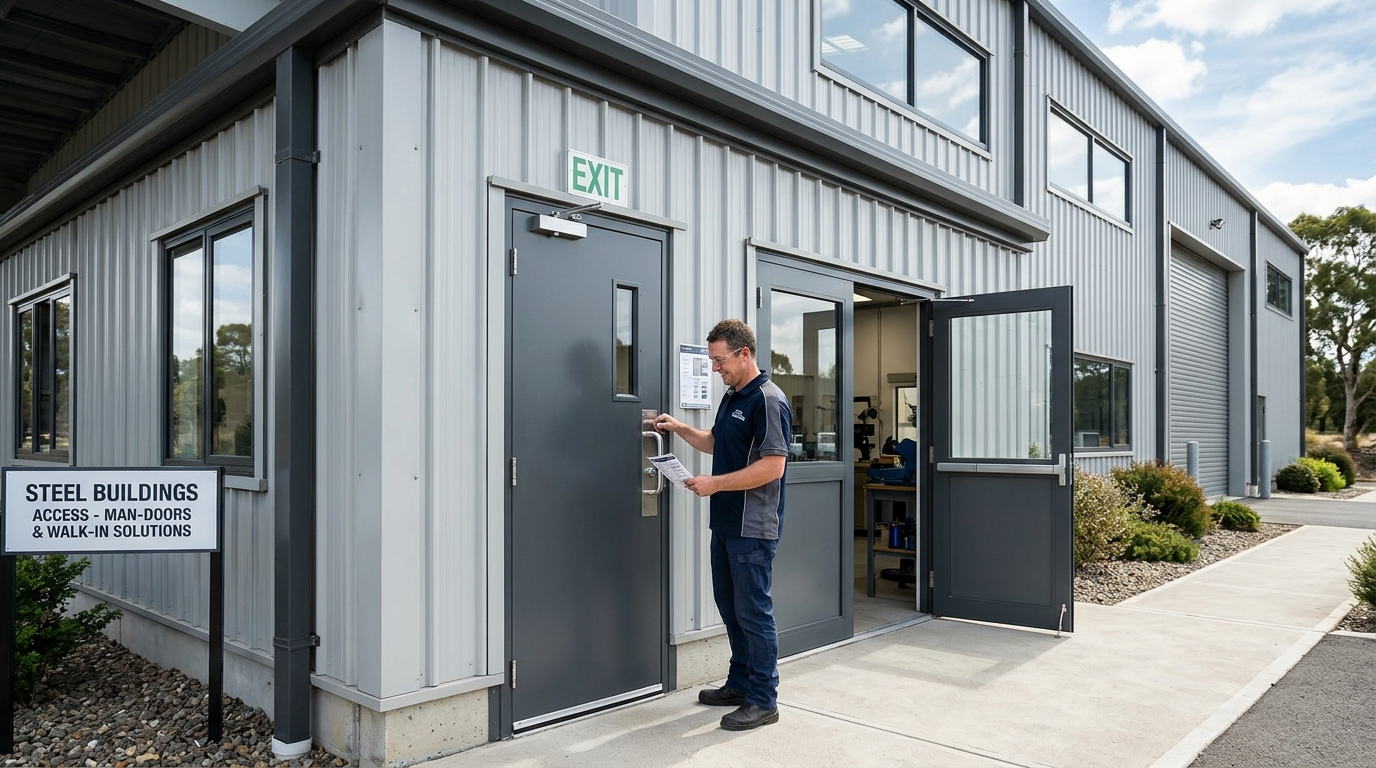
Steel framing and panels solve the specific failure points that wear farms down: no rot, no termite or rodent damage to the structure itself, and a clear-span interior that leaves the floor open for combines, balers, and grain trucks instead of chopping it up with support posts. For a full comparison of how steel stacks up against wood, pole-barn, and other traditional storage on a working farm, see why steel storage buildings are perfect for farms.
The outcome that matters here isn’t “a new building.” It’s fewer 2 a.m. calls about a roof, fewer insurance surprises, and equipment that’s still dry and functional when you need it in the field.
What Farm Storage Actually Costs in Canada
The building itself is only part of the number. Site prep, foundation, insulation, doors sized for equipment, and regional snow-load engineering all move the price, and they move it differently depending on whether you’re in coastal British Columbia, the Prairies, or Atlantic Canada. Farmers evaluating a purchase need the real cost per square foot, not a generic online estimate built for a different climate.
A detailed province-aware cost breakdown , including where the money goes on a typical build and how size, insulation, and features change the total , is covered in steel farm storage costs. Understanding that breakdown before you request a quote makes it much easier to compare bids apples-to-apples and avoid a mid-project surprise.
The pattern that shows up across most Canadian builds is the same one insurers and lenders already know: steel costs more or the same upfront in many cases, and less every year after that. Annual maintenance on a steel structure typically runs 0.5 — 1% of the build cost, versus 2–3% for a comparable wood structure , a difference that compounds fast over a 30- to 50-year building life.
The Tariff Factor: Why “Made in Canada” Isn’t Just a Slogan in 2026
Cost planning for a steel farm building in Canada now has a second variable that didn’t matter a few years ago: where the steel comes from. As of late 2025, imported steel derivatives , including prefabricated buildings, structural components, and fasteners , carry a 25% federal surtax. That surtax isn’t a rounding error; it lands on the full value of the building, and it usually doesn’t show up on the sticker price of an imported kit until the final invoice or the border crossing.
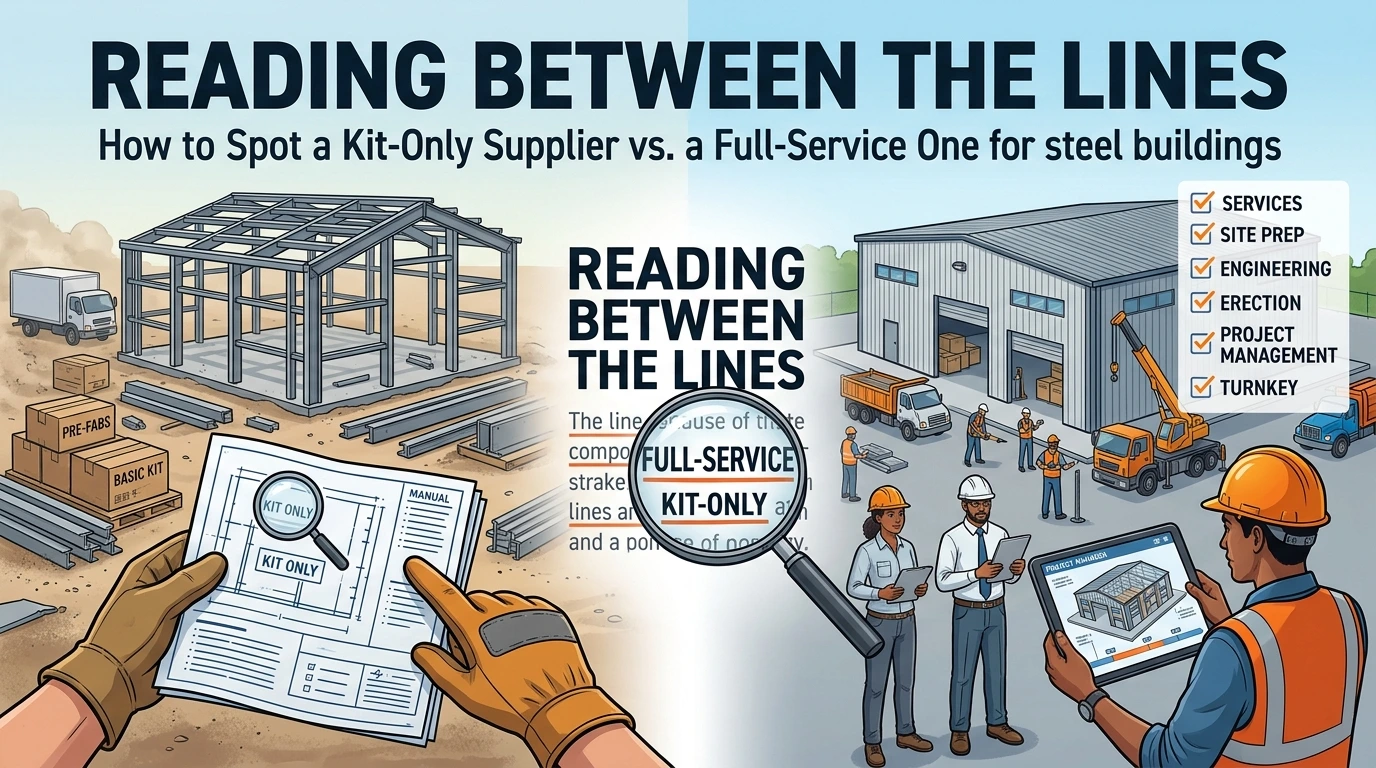
Buying from a Canadian manufacturer sidesteps that surtax entirely, along with the customs brokerage fees, ocean freight, and currency-exchange risk that come with an imported kit. It also means the steel is engineered against Canadian snow-load and freeze-thaw data rather than a “global grade” spec built for a milder climate. The full breakdown of how the surtax works, what it applies to, and how domestic buyers avoid it is in save 25% on tariffs with Canadian-made steel farm buildings.
For farm operations, this is a straightforward risk-management decision: a domestic build gives you a final quote that stays final, instead of one that’s a moving target tied to trade policy.
Proof It Works: What Switching to Steel Actually Changes
Numbers on a spec sheet are one thing; a working farm’s before-and-after is another. One Prairie grain and livestock operation replaced an aging wood barn and machine shed , one that had a section of roof collapse under hail and wind , with a clear-span steel building sized for their equipment and feed storage. The result, measured over the following year, was roughly a 30% cut in routine maintenance and repair costs, a 20% drop in insurance premiums, and a payback period of roughly 4–5 years instead of the 10–15 years typical of a conventional build.
That’s the kind of outcome data worth reading in full before you commit to a design, because it shows exactly which line items move and by how much: see the full case study on how farmers save 30% with a steel agricultural building.
The pattern isn’t unique to one farm. Fewer major repair events per year, lower fire/wind insurance risk ratings, and a wide-span layout that speeds up equipment movement during planting and harvest are consistent outcomes across steel conversions , which is exactly the “operation outcome” most farmers are actually searching for when they start comparing building materials.
Beyond Equipment Storage: Steel and Farm Family Life
A farm operation isn’t only barns and machine sheds , for a lot of Canadian families, the building decision also touches where they live. Prefab steel barndominium kits (a steel-framed structure that combines a workshop or storage bay with a residence) have become a practical option for farm families who need living space close to the operation without the cost and timeline of a conventional custom home.
The appeal isn’t just aesthetic. A steel barndominium shares the same durability and low-maintenance profile as a farm’s other steel structures, goes up faster than a stick-built home, and can be sized to grow with the family. The specific advantages for farm households , from build speed to long-term flexibility , are covered in top 5 benefits of prefab barndominium kits for farm family life.
Steel Greenhouses vs. Traditional Greenhouses: Which Fits Your Operation
For operations that grow produce, ornamentals, or start seedlings, the greenhouse structure itself is a production asset, not just storage. Traditional wood or aluminum-frame greenhouses are common, but they carry the same long-term weaknesses as wood barns: shorter structural lifespan, more frequent repair, and less resistance to Canadian snow and wind loads.
Steel-framed greenhouses trade some of the light, traditional aesthetic for structural strength , heavier snow-load tolerance, a longer service life, and lower long-term maintenance, which matters when a collapsed frame in February means a lost growing season, not just a repair bill. The full side-by-side on cost, durability, light transmission, and climate control between the two approaches is in steel greenhouse vs. traditional greenhouse: which is better for your farm.
Why Infrastructure Decisions Matter More When Farm Incomes Are Tight
None of this happens in a vacuum. Canadian farm income is shaped by commodity prices, input costs, weather, and increasingly trade policy, and margins can swing hard from one year to the next. When income is unpredictable, a building that quietly drains cash into repairs, higher insurance, and downtime is a bigger liability than it looks on paper, because it removes flexibility exactly when you need it most.
Understanding the current income picture for Canadian farms , and where fixed costs like buildings and insurance fit into that picture , helps frame the building decision as what it actually is: a fixed-cost and risk-management choice, not a one-time purchase. That context is covered in Canadian farm incomes.
The connection is direct: a structure with lower annual upkeep and more predictable insurance costs gives an operation more room to absorb a bad commodity year, while a structure that keeps needing emergency repairs eats into the margin regardless of how the season went.
Planning a Steel Farm Building Project: What to Sort Out First
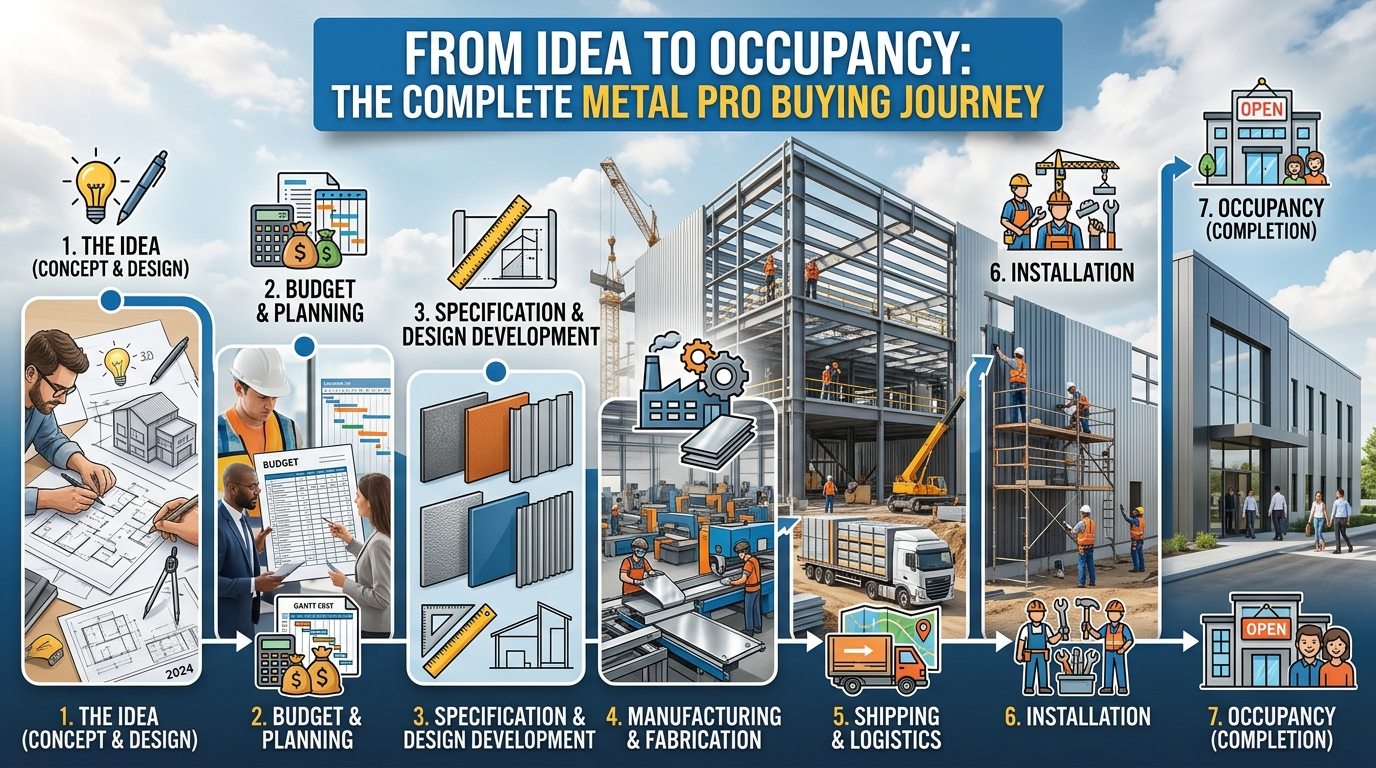
Before requesting quotes, most farm operations get better results by nailing down a handful of decisions up front:
- Purpose and layout : equipment storage, livestock housing, feed storage, greenhouse, or a mix, since each changes door sizes, floor treatment, and interior clearance.
- Regional snow and wind load : a building engineered for Prairie snow load isn’t the same spec as one for coastal wind exposure; get province-specific engineering, not a generic default.
- Size for growth, not just today : steel structures are easy to extend later, but planning bay spacing for a future addition now avoids a costlier retrofit.
- Origin of the steel : domestic vs. imported changes the final price by roughly a quarter once the current surtax and freight are factored in.
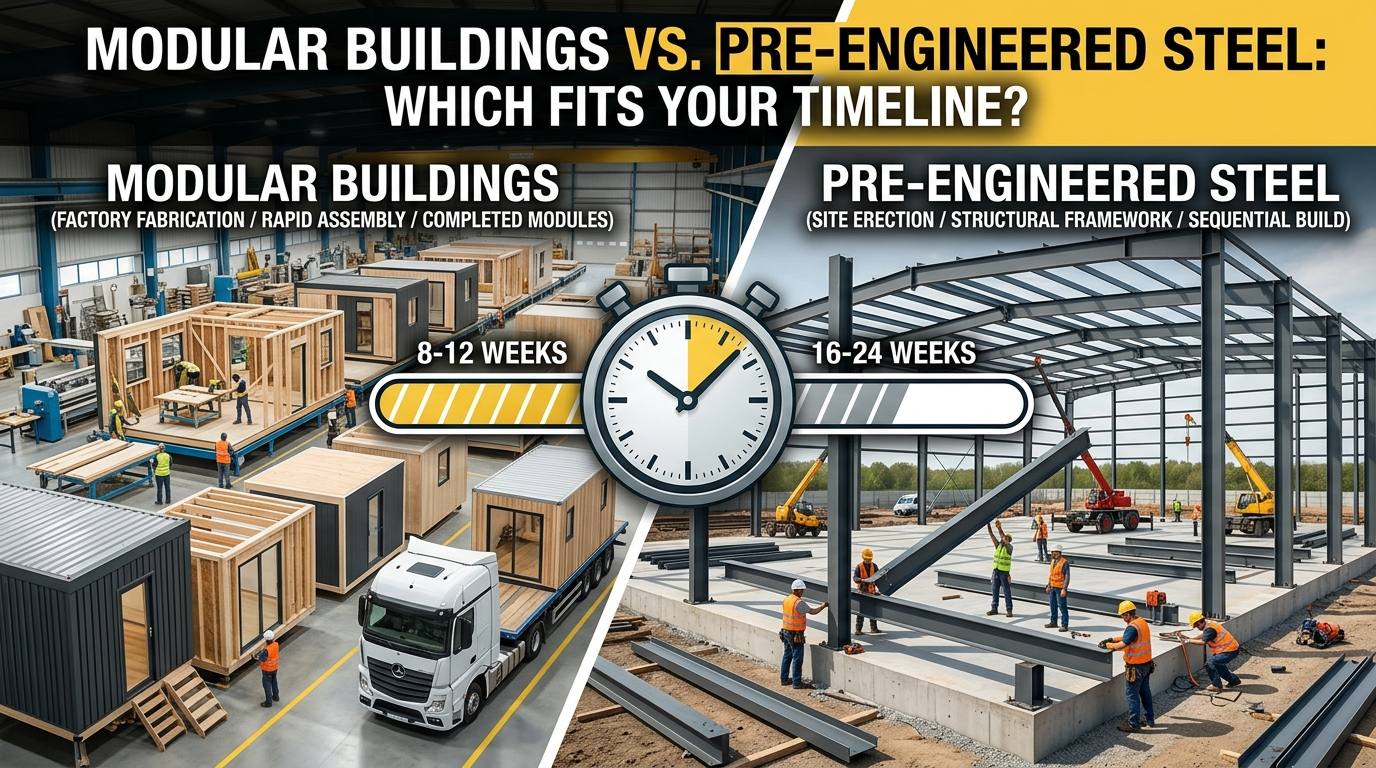
- Financing and timeline : pre-engineered components typically erect in weeks rather than months, which matters if the current structure is already failing.
Frequently Asked Questions
The Bottom Line
The outcome Canadian farmers are actually looking for isn’t a steel building , it’s fewer repair bills, predictable insurance, equipment that’s protected through the worst of the winter, and infrastructure that doesn’t quietly erode a tight margin. Steel delivers that more consistently than wood or imported alternatives, and the current tariff structure makes Canadian-made steel the more financially sound choice on top of the durability case. Whether the next project is a machine shed, a livestock barn, a greenhouse, or a home on the property, the same structural logic applies: build once, with the right materials, for the climate you’re actually farming in.