
You’ve seen the photos. A black steel home on open land, clean lines against a wide Canadian sky. Warm wood inside, high ceilings, light pouring through oversized windows.
It looks exactly like what you want.
But somewhere between the inspiration images and an actual builder conversation, things get murky. Pricing feels vague. Finish options are confusing. Nobody gives you real answers, not for Canada, not for your budget.
That gap is frustrating. You know what you want. You just need someone to tell you what it actually takes to get there.
This guide does exactly that. Exterior finishes, interior design ideas, honest costs, and climate considerations all in one place.
Costs your first question? Bookmark our full Metal Barndominium Cost Guide , we’ll reference it throughout.
Why Are So Many Canadians Choosing Black for Their Barndominium?
Black isn’t a trend. It’s a decision.
There’s a reason the modern farmhouse and industrial aesthetic has taken hold across Canada and black sits right at the centre of it. It’s bold without being loud. It’s timeless without being boring. And on a rural property, it makes a statement that’s hard to ignore.
But choosing black for your barndominium exterior isn’t just about looks. There’s real logic behind it.
Black Is a Timeless Choice , Not a Passing Phase
Neutral tones come and go. Black doesn’t.
Think about it: black windows, black fixtures, black hardware , these have dominated residential design for over a decade now. A black barndominium exterior fits naturally into that language. It doesn’t date itself the way a trendy colour might in five years.
That matters when you’re building something meant to last 40, 50, or 60 years.
Black and Steel Were Made for Each Other
Metal buildings have a natural industrial edge. Black leans into that and elevates it.
Where a beige or grey panel can look agricultural, a matte black steel panel reads intentional. Designed. The material and the finish reinforce each other in a way few other colour choices can match. It’s one of the most requested finishes Metal Pro sees from residential clients and it’s easy to understand why once you see it done right.
“Will It Look Too Dark or Cold?” Let’s Address That Directly
This is the most common hesitation, and it’s a fair one.
The answer depends entirely on how the exterior is designed. An all-black box with no variation can feel heavy. But black paired with warm wood accents, generous windows, and thoughtful roofline detail? That reads premium, not cold. We’ll cover exactly how to achieve that balance in the next section.
How Black Barndominiums Photograph and How They Actually Live
Here’s something worth knowing: black exteriors are incredibly photogenic. High contrast against snow, green fields, or a sunset sky they photograph beautifully. That’s part of why they dominate Pinterest and Instagram feeds.
But they also live well. Dark exteriors hide dust, surface weathering, and minor imperfections that lighter colours tend to show. For a rural property that sees mud seasons, gravel roads, and hard winters, that’s a practical win.
A Note on Resale Value
Black barndominiums stand out in rural real estate markets in a good way.
A well-built, well-designed black steel home on acreage is memorable. It photographs well in listings. And as the barndominium market matures in Canada, distinctive builds command attention. That’s not a guarantee, but it’s a real pattern worth considering.
If you’re still weighing your options, here’s how barndominiums compare to manufactured homes on long-term value before you commit.
Black Barndominium Exterior Design Ideas That Actually Work
This is where the vision starts to take shape.
Black gives you a strong foundation to work with. But the best black barndominium exteriors aren’t just black they’re black plus something. A contrast material, a texture variation, a roofline detail that breaks up the mass.
Here are the combinations that actually work in real Canadian builds.
The All-Black Monochrome Exterior
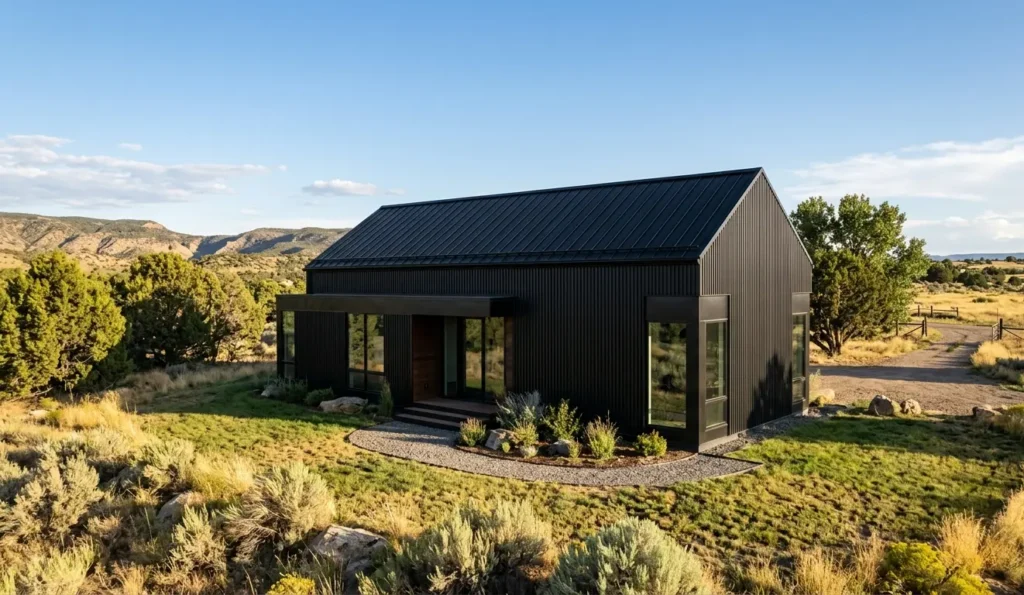
Sometimes the boldest move is full commitment.
Matte black steel panels, black trim, black standing seam roof no contrast, no breaks. When it works, it’s striking. Clean, architectural, deliberate.
But it only works under the right conditions. Large lots with open sightlines. Rural or semi-rural settings where the building has room to breathe. Properties where the landscape itself provides the contrast.
The risk with going all-black is ending up with something flat and lifeless. The fix isn’t adding colour, it’s varying texture. Ribbed wall panels paired with smooth trim and a matte standing seam roof create visual depth without breaking the colour story. Different surfaces catch light differently, and that movement is what keeps a monochrome exterior from feeling like a warehouse.
Black + Natural Wood Accents (The Modern Rustic)
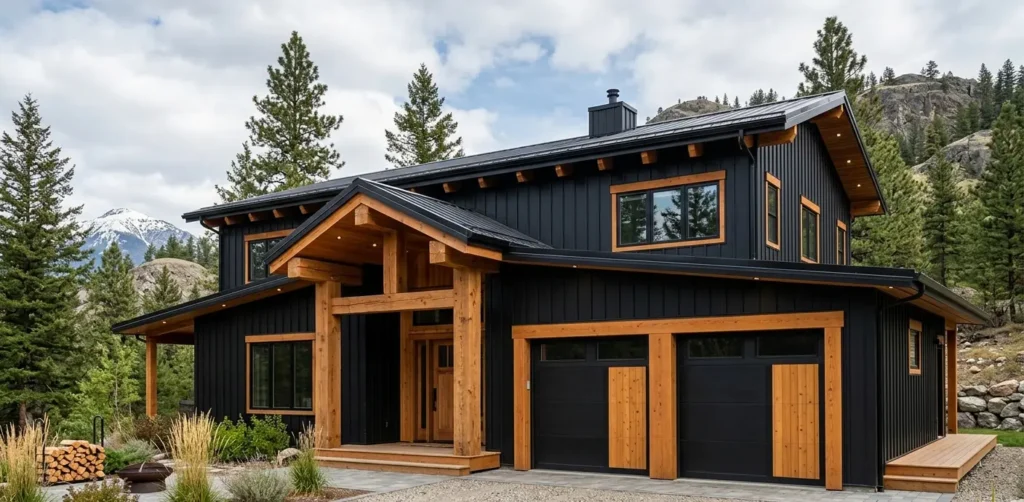
This is the most popular combination for Canadian barndominium builds and it’s not hard to see why.
Cedar or Douglas fir entry beams, wood soffits, timber garage surrounds, warm wood against matte black steel creates an immediate contrast that reads as intentional design. It’s the warm-cool balance that makes a building feel like a home rather than a structure.
The practical concern is maintenance. Raw cedar requires upkeep, especially through Canadian freeze-thaw cycles. A low-maintenance alternative worth knowing about: wood-look composite cladding panels. They deliver the same visual warmth with significantly less long-term effort.
Black + Concrete or Stone Base
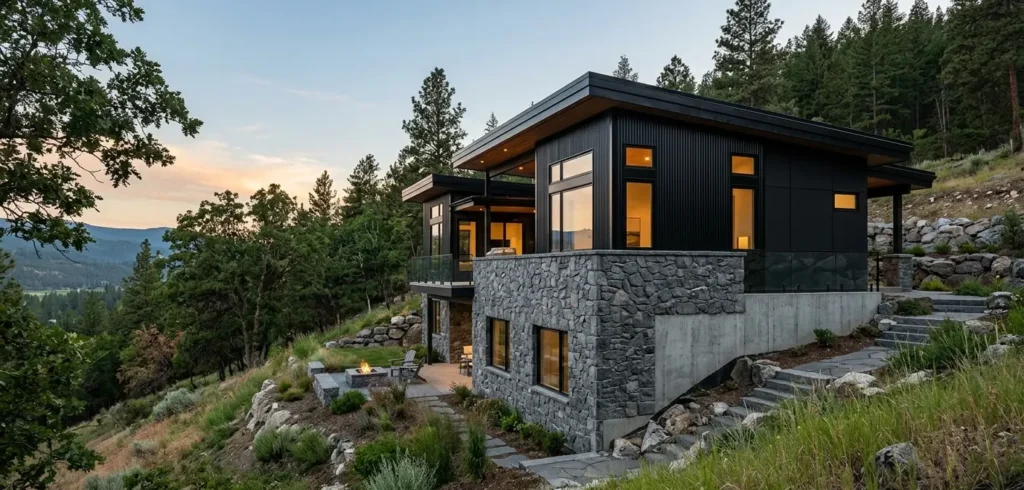
This combination is about visual weight and it works especially well on sloped lots or walk-out basement builds.
A stone veneer or poured concrete pony wall at the base grounds the building. The black steel above it feels intentional rather than just sitting on the land. The contrast between the rough texture of stone and the clean lines of steel is subtle but effective.
For multi-level or hillside builds, this approach also helps the structure feel connected to its site. It doesn’t look dropped onto the land, it looks like it belongs there.
Black with Large-Format Windows (The Glass Play)
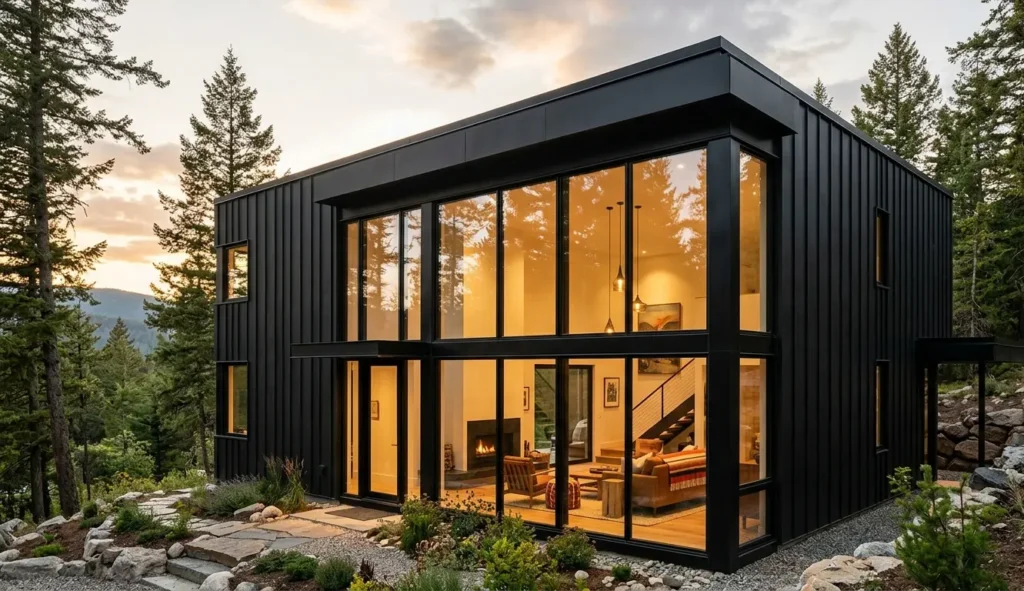
Nothing counters the weight of a dark exterior like generous glazing.
Floor-to-ceiling windows are the natural counterpoint to black steel. They bring warmth, light, and life to an exterior that could otherwise feel closed off. This is also where a lot of the interior value gets unlocked , more on that in the interior section.
One decision worth thinking through early: black-frame windows versus dark bronze. Against black steel panels, true black frames disappear into the wall which can look seamless and intentional. Dark bronze creates a subtle contrast that adds warmth. Neither is wrong, but it’s a choice worth making deliberately rather than defaulting to whatever’s in stock.
Glass tinting is another consideration for Canadian climates. Low-e coatings are standard and worth the investment for thermal performance. Darker tints can complement the exterior aesthetic but may affect light quality inside something to weigh carefully on north-facing elevations.
The Black Barndominium + Shop Combo
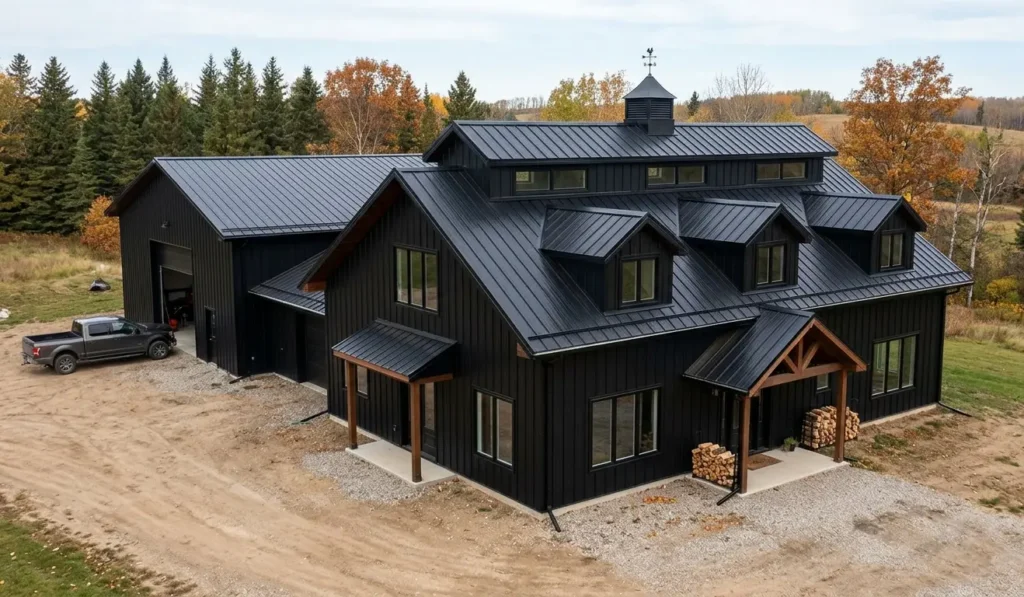
This is the most requested layout from Metal Pro clients and it’s one of the most practical configurations for rural Canadian properties.
An attached shop or garage in matching black creates a cohesive, purposeful exterior. The key to making it look like a designed building rather than an add-on is roofline variation. A monitor roof, a shed roof addition, or even a simple change in ridge height between the living space and the shop breaks up the massing. Without that variation, a large black building risks looking like a commercial structure rather than a home.
Small roofline details overhangs, cupolas, covered entry features do a lot of work on a black barndominium. They’re worth budgeting for.
What Finishes Give a Barndominium Its Black Exterior? (And Which Last Longest)
Inspiration is one thing. Product decisions are another.
This is where a lot of people get lost and where getting it right actually matters. The finish you choose determines how your black barndominium looks in year one, year ten, and year twenty. In a Canadian climate, that gap between a quality coating and a budget one shows up fast.
Here’s what you need to know before you spec anything.
Steel Panel Profiles for Black Exteriors
Not all steel panels read the same way and the profile you choose affects how the colour lands.
The three most common profiles you’ll encounter are R-panel, PBR panel, and standing seam. R-panel and PBR are exposed fastener systems. They’re cost-effective and durable, but they carry an agricultural look that works better on shops and outbuildings than on residential builds. Deep ribs catch shadow and create a more textured appearance which can work with black, but reads as utilitarian rather than refined.
Standing seam is the residential standard for good reason. Clean vertical lines, no exposed fasteners, and a sleeker profile that pairs naturally with the black barndominium aesthetic most people are after. It costs more but it looks the part.
For a black barndominium where the exterior finish is central to the design, standing seam is almost always the right call on the walls and roof. R-panel or PBR can still make sense for an attached shop or agricultural portion of the build where budget matters more than visual refinement.
Paint Systems and Coatings What “Black” Actually Means
Here’s the conversation most suppliers skip: not all black panels are the same black.
The coating system underneath the colour chip is what determines how that black looks after five Canadian winters and whether it still looks good after fifteen.
Two systems dominate the steel building industry:
- PVDF (Kynar) is the premium standard. It’s a fluoropolymer coating with exceptional UV resistance, chalk resistance, and colour retention. For dark colours especially black this matters enormously. Black absorbs more UV radiation than lighter colours, which accelerates fading and chalking in lower-quality coatings. A quality PVDF system holds its finish significantly longer and is the right choice for any black barndominium where appearance is a priority.
- SMP (polyester) is the standard entry-level coating. It performs adequately in moderate conditions but shows its limitations on dark colours in high-UV environments, think Alberta summers or BC’s southern interior. Fading and chalking appear earlier, and the fix is repainting, which costs more in the long run than paying for quality upfront.
Finish sheen is another decision: matte, satin, or gloss. Matte black dominates the barndominium aesthetic for good reason , it’s less reflective, hides minor surface variation, and reads as deliberate and premium. Gloss black can look striking but shows every fingerprint, scratch, and surface imperfection. Satin sits in between and works well if you want some depth without full gloss.
Metal Pro’s steel panels come in multiple black and charcoal options with CSA-approved coating systems engineered for Canadian temperature swings , not warm-climate aesthetics applied to a northern market.
Roofing Options for Black Barndominiums
Your roof is as visible as your walls on most rural properties and the decisions here carry both aesthetic and practical weight.
Standing seam roofing is the clear preference for residential black barndominiums. No exposed fasteners means no potential leak points at the fastener locations, a cleaner visual profile, and better long-term performance through Canadian freeze-thaw cycles. The cost premium over exposed fastener roofing is real , roughly $4–$8 per square foot more but it delivers on both aesthetics and durability.
Exposed fastener roofing is a reasonable choice for shop or agricultural portions of a build where cost efficiency matters more than visual refinement.
- On colour: matching the roof to the walls in true black creates a seamless, monolithic look. Charcoal rather than true black on the roof is a common choice that adds subtle contrast while keeping the palette cohesive. Both work , the right answer depends on how much visual separation you want between the roof plane and the walls.
- One practical note specific to Canadian builds: black standing seam roofs shed snow efficiently. The dark surface absorbs heat and accelerates melt. That’s a genuine functional benefit in heavy snow regions , but it means snow guards and proper drainage planning matter more, not less.
Trim, Soffit, and Fascia , Where the Details Make the Difference
This is where the gap between a custom build and a metal shed becomes visible.
Trim quality and trim decisions are what separate a barndominium that looks designed from one that looks like a kit went up. On a black exterior, you have two main directions: match or contrast.
Matching trim , black on black , creates a seamless, architectural look. It works best when the building has strong roofline detail and window presence to provide the visual variation. Without those elements, all-black trim can flatten the exterior.
Contrasting trim , bright white, warm wood, or natural metal , creates definition and breaks up large wall planes. White trim against black steel is a classic combination that reads clean and residential. It’s forgiving on simpler building forms and adds a farmhouse quality that many barndominium owners are after.
Gutters and downspouts deserve more attention than they usually get. On a black building, mismatched gutters in standard white or galvanized metal look like an afterthought. Matte black or dark bronze gutters integrate cleanly. Placement matters too , downspouts on the front elevation of a well-designed barndominium should be positioned with the same intentionality as any other exterior element.
Black Barndominium Interiors: How to Make Dark Feel Like Home
A black barndominium exterior makes a bold first impression. But inside, the goal is different. You want comfort, light, and balance.
Many homeowners worry the interior will feel too dark. In reality, interior brightness depends on layout, lighting, and materials, not the exterior color.
With the right design choices, a black barndominium can feel open, warm, and highly livable.
Open-Concept Layouts That Maximize Light and Space
Open-concept layouts are standard in barndominiums for a reason. They work.
Large, uninterrupted spaces allow natural light to travel freely across the home. This reduces shadows and prevents the interior from feeling closed in.
A typical layout combines:
- Living room
- Dining area
- Kitchen
Ceiling height also plays a major role.
- Higher ceilings (10–14 feet or more) create volume.
- Vaulted or sloped ceilings add depth and improve light distribution.
- Fewer walls and higher ceilings make the space feel brighter and more expansive.
Interior Color Palettes That Balance a Dark Exterior
The most effective interiors rely on contrast.
A dark exterior pairs best with a lighter interior palette. This creates visual balance and prevents the home from feeling heavy.
Common combinations include:
- White or soft neutral walls to reflect light
- Warm wood tones for cabinets and accents
- Light or mid-tone flooring to ground the space
For those who prefer a bold look, darker interiors can work , but require careful control.
- Use dark tones as accents, not the dominant color
- Layer in warm lighting to soften the effect
- Maintain enough contrast to avoid a flat, dim appearance
A balanced mix of light and dark elements creates a more comfortable environment.
Incorporating Exposed Steel Elements
Barndominiums offer a structural advantage: visible framing.
Exposed steel beams and columns can become key design features.
- Black steel beams create a clean, modern look
- Metal railings add an industrial edge
- Minimalist lighting complements the structure
To keep the space from feeling too industrial, pair steel with natural materials.
Wood finishes, soft textiles, and warm lighting help balance the harder surfaces.
Flooring, Cabinetry, and Material Choices
Material selection directly affects how the interior feels.
Polished concrete is one of the most practical flooring options.
- Durable and long-lasting
- Easy to maintain
- Works well with radiant heating systems
Other flooring options, such as engineered wood or luxury vinyl, can also add warmth while maintaining durability.
Cabinetry plays a key role in visual balance.
- Natural wood cabinets soften the contrast with black accents
- Matte finishes reduce glare and maintain a modern aesthetic
Feature walls can add depth without overwhelming the space.
- Shiplap for a clean, modern farmhouse look
- Board-and-batten for texture
- Wood paneling for warmth and contrast
Using a few strong elements is more effective than over-designing every surface.
Designing a Functional Loft Space
Lofts are a defining feature of many barndominiums.
They increase usable space without expanding the building footprint.
Typical uses include:
- Bedrooms or guest areas
- Home offices
- Additional living or relaxation spaces
Proper proportions are essential.
Adequate ceiling height ensures both levels feel comfortable and usable. Poorly planned lofts can feel cramped and limit functionality.
Railing design contributes to both safety and aesthetics.
- Steel railings maintain a modern look
- Wood railings introduce warmth and softness
A well-designed loft enhances both the function and character of the home.
Lighting and Comfort Considerations
Lighting is the most important factor in how the interior feels.
A combination of natural and artificial lighting works best.
- Large windows bring in daylight
- Layered lighting (ambient, task, accent) improves usability
- Warm light temperatures create a more inviting atmosphere
Insulation and ventilation also play a critical role.
Proper insulation keeps the home comfortable year-round. Ventilation helps prevent condensation, especially in metal structures.
These elements matter far more than exterior color when it comes to comfort.
Final Thoughts
A black barndominium interior does not have to feel dark or cold.
When designed properly, it can feel bright, balanced, and welcoming.
Focus on:
- Open layouts
- Balanced color palettes
- Thoughtful material choices
- Effective lighting
These decisions define the living experience.
- The exterior creates the statement.
- The interior determines how the home actually feels to live in.
What Does It Cost to Build a Black Barndominium in Canada?
Cost is where expectations usually fall apart.
Many homeowners start with the price of a building kit. Then they realize that number only covers part of the project. A full barndominium includes far more than the shell.
Understanding the real cost early helps avoid budget overruns and poor decisions later.
Does Black Cost More Than Other Colours?
In most cases, yes but not for the reason many expect.
The added cost comes from the coating system used on black panels. Dark colors require higher-quality finishes to resist fading and wear over time.
Two common coating systems are used:
- SMP (polyester): lower cost, moderate durability
- PVDF (Kynar): higher cost, superior fade and chalk resistance
Premium PVDF coatings typically add about $1.50 to $3.00 per square foot compared to standard finishes.
While this increases upfront cost, it often reduces long-term maintenance and repainting expenses.
Typical Cost Ranges in Canada
Barndominium pricing varies widely depending on size, design, and finish level.
It helps to separate the cost into two categories.
Shell Kit (Structure Only)
This includes the steel frame, exterior panels, roof, and trim.
- Average range: $35 to $70 per square foot
This does not include interior work, utilities, or labor.
Full Build (Turnkey Home)
This includes everything required to complete the home.
- Foundation and site preparation
- Insulation and mechanical systems
- Interior finishes and labor
Typical full-build costs in Canada range from $150 to $300+ per square foot.
For a more detailed breakdown by size and scenario, see the full guide:
Metal Barndominium Cost Guide →
What Black Design Choices Add to the Budget
The black exterior itself is only part of the total cost. Design elements used alongside it often have a bigger impact.
Common upgrades include:
| Black Barndominium Add-On | Estimated Cost Range (CAD) |
| Premium black PVDF coating system | $1.50–$3.00 / sq ft |
| Cedar or wood accent package | $8,000 – $25,000 |
| Standing seam roof upgrade | $4 – $8 / sq ft |
| Large-format window package | $15,000 – $40,000 |
| Black-frame window upgrade | $2,000 – $8,000 |
These features are often what create the high-end look associated with modern black barndominiums.
Common Budget Mistakes to Avoid
Cost overruns usually come from planning gaps, not unexpected surprises.
Some of the most common mistakes include:
- Underestimating the cost of windows and glazing
- Overlooking finishing details like trim and soffits
- Choosing lower-quality coatings to save money upfront
- Focusing only on square footage instead of design complexity
A smaller, well-designed home can cost more than a larger, basic structure.
Planning a More Accurate Budget
A realistic budget starts with the full project scope.
It helps to:
- Base estimates on total build cost, not just the shell
- Decide on finish quality early in the planning stage
- Include a contingency budget of 10–20%
- Prioritize visible and long-term materials
These steps reduce the risk of compromises later in the build.
Final Thoughts on Cost
A black barndominium can be built within a wide range of budgets.
However, achieving a durable and well-designed result requires careful planning and informed choices.
The exterior color may define the style, but material quality, layout, and detailing ultimately determine the final cost.
Will a Black Metal Exterior Hold Up in Canadian Weather?
A common concern with black barndominiums is durability in harsh climates.
Canadian weather brings a mix of extreme cold, snow, wind, and seasonal temperature swings. Many homeowners wonder whether a dark metal exterior can handle these conditions over time.
The answer depends less on the color and more on the materials, coatings, and construction methods used.
Heat Absorption and Interior Comfort
Black surfaces absorb more heat than lighter colors. However, this does not directly affect indoor comfort.
Interior temperature is controlled by insulation, ventilation, and HVAC systems.
In well-built barndominiums:
- Insulated wall and roof systems limit heat transfer
- Ventilated assemblies help regulate temperature
- Energy-efficient windows reduce solar gain
In Canadian climates, where winters are long and summers are moderate, heat absorption is rarely a major issue.
Expansion and Contraction of Metal Panels
Steel naturally expands and contracts with temperature changes. Dark panels may experience slightly higher surface temperatures, which can increase movement.
Modern metal building systems are designed to accommodate this.
- Fastening systems allow for controlled movement
- Panel spacing is planned during installation
- Sealants and joints are designed for flexibility
When properly installed, thermal movement does not affect structural performance.
Fade Resistance and Coating Quality
Color retention is one of the most important factors for black exteriors.
Darker finishes tend to show fading more visibly over time, especially in areas with high UV exposure.
The type of coating used makes a significant difference.
- SMP (polyester) coatings offer a lower upfront cost but may fade sooner
- PVDF (Kynar) coatings provide better resistance to fading, chalking, and UV damage
Higher-quality coatings maintain appearance and performance over longer periods, making them a common choice for residential builds.
Snow, Ice, and Roof Performance
Black metal roofs can offer practical benefits in snowy regions.
They absorb sunlight, which can help accelerate snow melt. This may reduce long-term snow accumulation compared to lighter-colored roofs.
Roof design is still the most important factor.
- Adequate slope improves drainage
- Standing seam systems help shed snow more efficiently
- Snow guards may be needed to control sliding
Proper planning ensures safe and effective performance during winter months.
Moisture Control and Ventilation
Moisture management is critical in any metal building.
Condensation can occur when warm interior air meets cold metal surfaces. This is not caused by color but by temperature differences and poor airflow.
Effective systems include:
- Insulation with vapor barriers
- Ventilated wall and roof assemblies
- Proper air sealing
These measures help prevent condensation and maintain indoor air quality.
Long-Term Performance in Canadian Conditions
A well-designed black barndominium can perform reliably in Canadian climates.
Durability depends on several key factors:
- Structural systems designed for local snow and wind loads
- High-performance coatings suited for temperature fluctuations
- Proper installation and detailing
Buildings engineered for Canadian conditions are better equipped to handle freeze-thaw cycles and seasonal extremes.
Final Thoughts
A black metal exterior can hold up well in Canadian weather when built correctly.
The most important considerations are material quality, coating performance, and construction methods.
When these elements are in place, the exterior color becomes a design choice rather than a limitation.
5 Mistakes People Make When Planning a Black Barndominium (And How to Avoid Them)
Designing a black barndominium looks simple on the surface. Clean lines, dark panels, minimal palette.
In reality, small decisions make a big difference.
The wrong choices can quickly turn a modern design into something that feels unfinished or overly industrial.
Understanding the most common mistakes helps prevent costly changes later.
Choosing the Wrong Panel Profile
Not all steel panels create the same visual effect.
Some profiles are designed for agricultural or industrial buildings. When used on residential projects, they can make the home look more like a shop than a house.
- Exposed fastener panels (like R-panel) have a more utilitarian look
- Standing seam panels create a cleaner, more residential appearance
Selecting the right panel profile is one of the most important early design decisions.
Using Low-Quality Coatings on Dark Panels
Black finishes highlight imperfections more than lighter colors.
Lower-grade coatings tend to fade, chalk, or wear unevenly over time. This is especially noticeable on dark exteriors exposed to sunlight and weather.
Higher-performance coatings, such as PVDF systems, provide better long-term color stability.
Choosing a durable finish upfront helps maintain appearance and reduces future maintenance.
Overlooking Roofline Design
Simple roof shapes are common in metal buildings, but they can feel flat on larger structures.
A basic gable roof without variation may make the building appear more like a warehouse than a home.
Design elements that improve visual interest include:
- Extended overhangs
- Mixed rooflines (such as shed or monitor roofs)
- Covered entryways or porches
These features add depth and help define the overall look.
Underestimating the Importance of Windows
Dark exteriors benefit from natural light.
Without enough windows, the building can feel closed off from the outside and less inviting.
Larger or more strategically placed windows:
- Improve interior brightness
- Create visual contrast on the exterior
- Enhance the connection between indoor and outdoor spaces
Planning window placement early ensures both functional and aesthetic benefits.
Ignoring Local Building Requirements
Not all metal building systems are designed for Canadian conditions.
Snow loads, wind resistance, and building codes vary by region. Using a system that does not meet local requirements can lead to delays or additional costs during construction.
Working with designs and materials suited for local standards helps ensure compliance and long-term performance.
Final Thoughts
A successful black barndominium comes down to planning and attention to detail.
Choosing the right materials, proportions, and design elements ensures the final result matches the original vision.
Avoiding these common mistakes can save time, reduce costs, and improve the overall quality of the build.
Why Canadian Homeowners Choose Metal Pro for Their Black Barndominium
Choosing the right builder affects how well your barndominium performs over time. Design alone is not enough materials and engineering matter just as much.
Metal Pro stands out by focusing on durability, compliance, and customization for Canadian conditions.
Built for Canadian Climate
Structures are designed to handle snow loads, wind, and temperature swings. This reduces long-term performance issues and construction risks.
CSA-Certified Systems
CSA A660 certification ensures the building meets Canadian engineering standards. This helps with permits and avoids costly delays.
Durable Black Finishes
High-performance coatings improve fade resistance and long-term appearance. This is especially important for dark exteriors exposed to UV and weather.
Custom Design Support
Each project is tailored to the homeowner’s layout and use. This leads to better functionality and a more cohesive design.
Design Your Black Barndominium with Confidence
A black barndominium works when design and planning are aligned. The exterior creates the statement, but materials, layout, and execution determine how well the home performs over time.
Balancing a dark exterior with a bright, functional interior ensures the space feels comfortable and livable. Careful planning from the start helps avoid compromises later.
If you’re ready to move forward, the next step is to turn your ideas into a real plan. Get a custom design and quote tailored to your layout, finishes, and budget, and start building with clarity instead of guesswork.