
The permit is approved. The financing is lined up. The quote is sitting in your inbox.
Then you call a contractor, and the earliest crew start is eight months away.
That wait hurts. A building season slips by. Your money sits idle while equipment stays outside, and the plan you worked on for months stalls over one missing thing: people to build it.
Steel buildings are the answer to Canada’s construction labour shortage because their components are engineered and fabricated off-site, then assembled by smaller crews. That means fewer skilled trades, shorter schedules and more predictable costs than conventional construction.
In this article, you’ll see why the shortage hits traditional builds the hardest. You’ll learn how steel changes the math. You’ll also find out where you will still need local help, so nothing catches you off guard.
Canada’s Construction Labour Shortage: What’s Really Happening
The shortage is real, but it doesn’t hit every region or project the same way. Here is what the latest numbers show.
Construction is one of Canada’s biggest employers. BuildForce Canada says the industry employs more than 1.6 million people.
Many of those workers are close to retirement. BuildForce’s 2026-2035 outlook projects that 21% of the workforce will retire by 2035, with too few new entrants to replace them.
Jobs are also hard to fill. In Q2 2026, construction had a job vacancy rate of 4.0%, well above the 2.8% for the private sector overall. That works out to about 49,700 open positions, based on Statistics Canada estimates.
Some regions feel it more than others. In Atlantic Canada, New Brunswick could see as many as 6,600 workers retire by 2035, or 20% of its 2025 labour force. Nationally, CMHC’s Spring 2026 report found that skilled labour shortages are still a major constraint, causing project delays and postponements.
This won’t fix itself quickly. The workforce is aging, and new tradespeople are entering more slowly than others leave. Demand isn’t fading either. BuildForce expects non-residential employment to stay above 2025 levels through 2035, with labour pressures continuing in many regions.
For more on where this trend is heading, see our latest labour news post
So what does that mean when the project is yours?
What the Labour Shortage Is Costing You
The shortage doesn’t just slow your build. It quietly drains money, time and peace of mind.
Here’s where it shows up.
- Long waits. Crews are booked months out. Some quotes expire before anyone is free to start.
- Rising, unpredictable costs. Bids creep up while you wait. Change orders often follow.
- Schedule slips. In Canada, a slip can mean losing the building season. One missed window can push your project back a full year.
- Carrying costs. Financing, rent and lost revenue keep adding up while the site sits empty.
- Stress. The project keeps getting pushed. Every call to a contractor ends with “maybe next quarter.”
These costs look different depending on who you are.
Farmers and ranchers
Harvest doesn’t wait for your crew. Equipment and grain sit exposed while the new shed stays on paper.
Business owners
Every month closed is revenue lost. Your lease keeps running, and your customers go elsewhere.
Developers and contractors
Late trades mean penalty clauses. They also mean unhappy clients who may not call you next time.
Homeowners
The shop or garage you planned never gets started. The tools stay in the driveway, and the plan slides another year.
None of this means your project is doomed. But it does mean the way you build matters more than ever.
Why Traditional Construction Is Hit the Hardest
Not every build suffers equally. Traditional construction takes the biggest hit.
The reason is simple. Wood-frame and masonry buildings depend on many skilled trades working in order. Framers, carpenters, masons, roofers and others each need their turn.
If one trade shows up late, the next one waits. A single delay can ripple through the whole schedule.
Then there’s the weather. Most of the work happens on your site, outdoors, over many weeks. That means more exposure to rain, snow, frost and spring thaw. It also means more chances for mistakes and rework.
Labour is also a large and changing part of the budget. When trades get scarce, prices move. And on a build with this many hands involved, a price swing touches the whole project.
Put it together, and you can see the problem. Traditional building asks for the most people, in the most steps, in the least predictable conditions. That is exactly what a shortage punishes.
Steel offers a different approach. It isn’t just another material. It changes how the work gets done, and where.
Want the deeper side-by-side? Read our full guide: Pre-Engineered Steel Building vs. Conventional Construction in Canada.
Why Steel Buildings Are the Answer: 5 Ways They Reduce Your Labour Problem
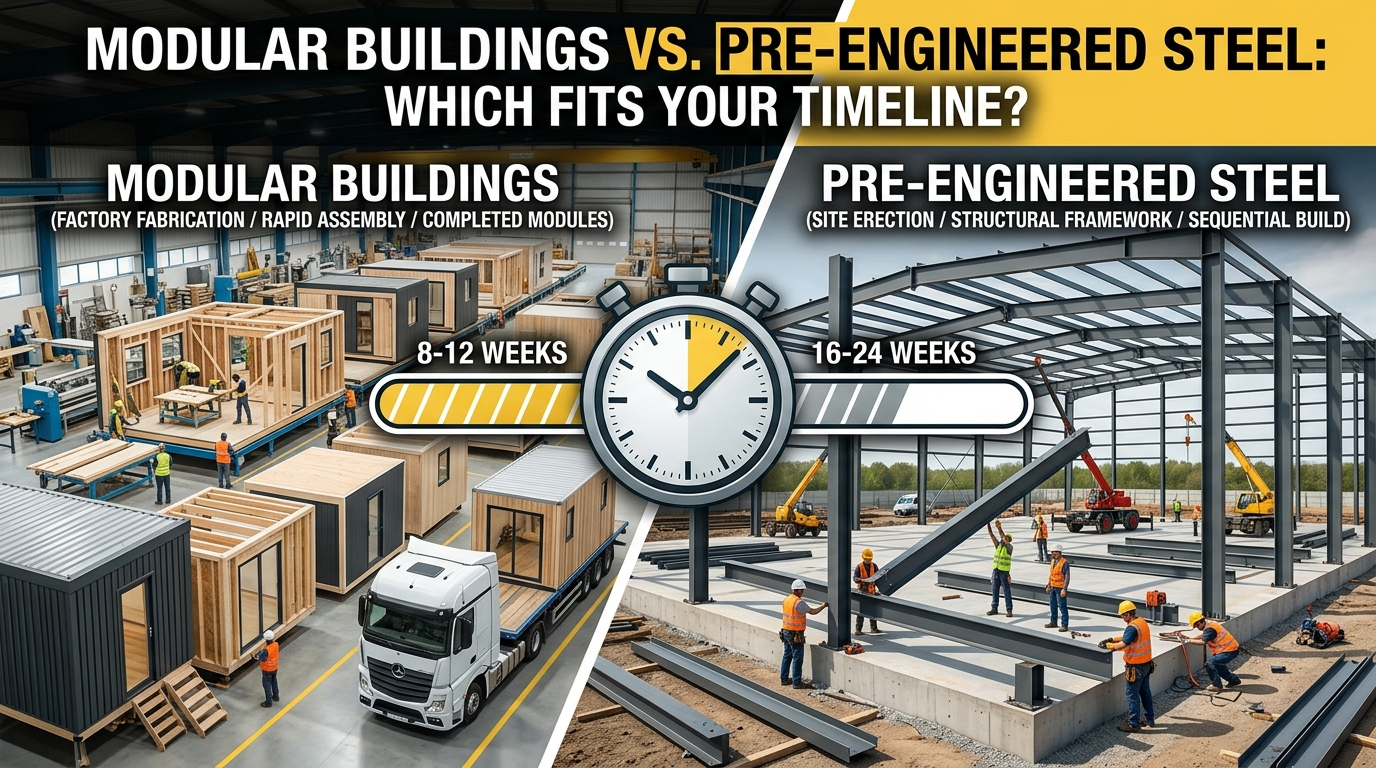
Steel buildings reduce your labour problem by moving most of the work off your site and into a factory. What arrives is a labelled, ready-to-assemble package that a smaller crew can put together.
Here are five ways that helps.
1. Fewer workers on site
The problem: A traditional build needs a big crew, and big crews are hard to book.
The steel answer: The frame arrives precut, pre-punched and labelled. Crews don’t measure, cut or guess. They match the parts and bolt them together, so a smaller team can do the job.
2. Work moves off-site
The problem: On-site work depends on skill, weather and daily conditions. That leads to variation and mistakes.
The steel answer: Steel components are fabricated in a controlled setting. Precision happens in the factory, not on your lot. That means less skilled labour at your site and fewer surprises when the parts arrive.
3. Fewer trades to book
The problem: Every extra trade is another phone call, another wait and another chance for delay.
The steel answer: Bolt-together assembly replaces much of the framing, carpentry and masonry work. You still need some trades, which we cover later. But you have fewer crews to line up. Curious how the connections work? See Bolt-Up vs. Weld-Up Metal Building Systems.
4. Faster builds mean less weather risk
The problem: Long builds stay exposed to Canadian winters and spring thaw. Bad weather means lost days.
The steel answer: A shorter on-site window means fewer days exposed to the elements. You have a better chance of finishing before the snow flies. For a realistic schedule, check the Steel Building Construction Timeline.
5. Predictable schedule and cost
The problem: Late changes and rework push budgets up and dates back.
The steel answer: An engineered package comes with stamped drawings. Details are settled before the build starts. That reduces change orders and late-stage surprises. To make sure you’re comparing quotes fairly, read How to Compare Steel Building Quotes.
What it adds up to
Put these five together, and the payoff is simple. Your building opens before the season starts. Your equipment sits under cover before the first snow. And you get your weekends back.
Steel vs. Wood vs. Concrete: The Labour Comparison
Let’s compare the three common options through one lens only: labour. This isn’t about strength or price. It’s about how many people you need, and how much can go wrong when people are scarce.
Steel still needs a foundation and some local trades. But it asks for less on-site labour overall.
| Labour factor | Pre-engineered steel | Wood frame | Poured or masonry concrete |
| Skilled trades required | Fewer. Mainly erection, plus foundation and finishing | Many. Framers, carpenters, roofers and more | Many. Formwork, rebar, pour crews or masons |
| Typical crew size | Smaller | Medium to large | Medium to large |
| On-site build time | Shorter | Moderate | Longer |
| Weather sensitivity | Lower, thanks to the shorter on-site window | Higher until the building is enclosed | Higher, especially during pours and curing |
| Schedule predictability | Higher, because parts are made off-site | Lower, since trades depend on each other | Lower, since steps depend on curing and weather |
| Exposure to labour price swings | Lower, because less of the budget is on-site labour | Higher | Higher |
These are general patterns, not guarantees. Every site, region and crew is different.
Still, the pattern is clear. The more work happens on your lot, the more a shortage can hurt.
Want the full picture beyond labour? See Steel vs. Wood Frame and Steel or Concrete: 6 Key Factors.
Steel Doesn’t Remove the Need for Trades. Here’s What Still Needs People.
Let’s be honest. A steel building won’t build itself.
It reduces the labour you need. It doesn’t erase it. Knowing where you’ll still need people helps you plan ahead and avoid delays.
Where labour still fits
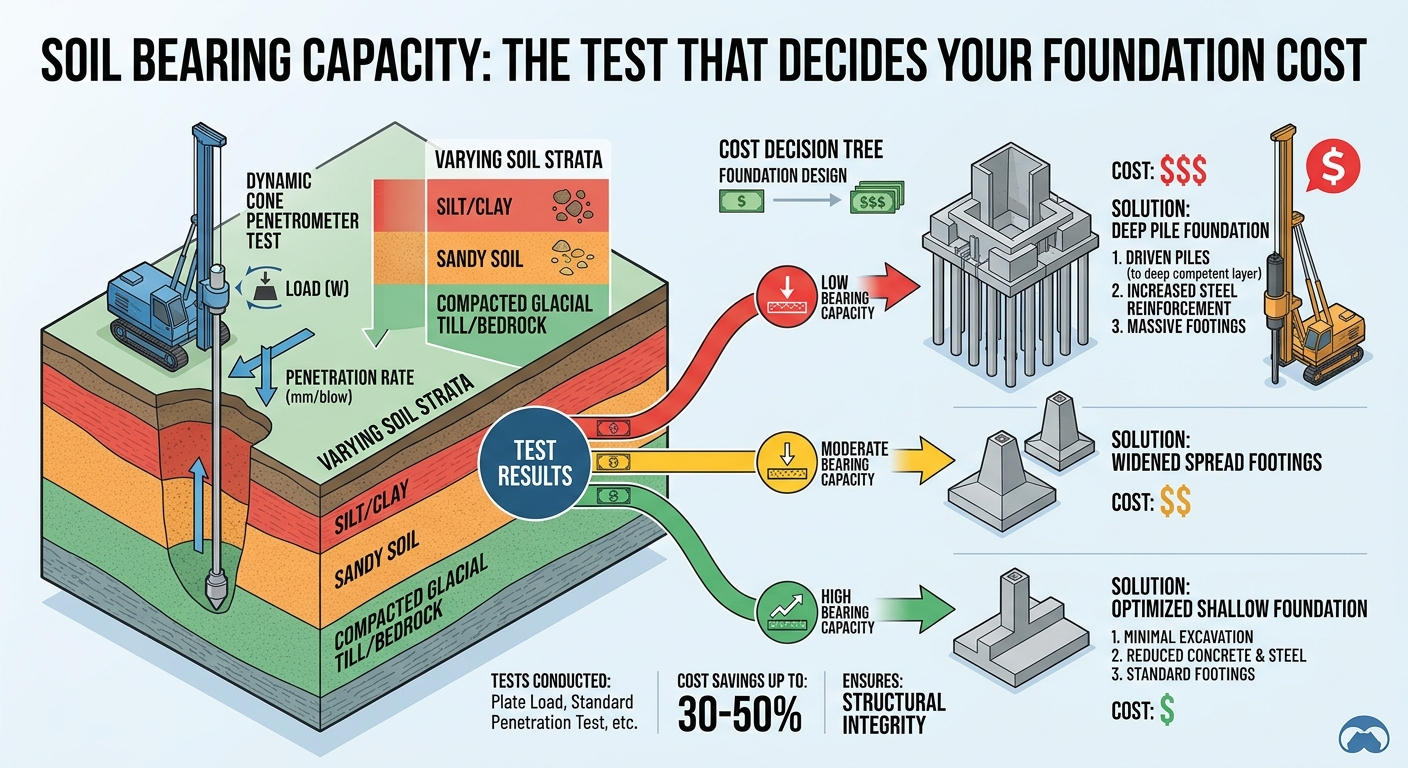
The foundation. Every building needs one. That usually means an excavator and a concrete crew.
Erection. Someone has to put the pieces together. For smaller buildings, that can be you and a few helpers. For larger ones, you’ll want an experienced crew.
Finishing. If your building needs power, heat or cooling, you’ll need an electrician and an HVAC pro.
Three tips to avoid delays
- Book early. Line up your foundation and erection crews while your building is being manufactured. Don’t wait until it ships.
- Plan the site early. Clear access, level ground and a delivery spot save days later.
- Pick your path. Decide whether you’ll assemble it yourself or hire an installer. The earlier you choose, the easier the scheduling.
Your labour map: 7 stages
| Stage | Local trades needed? |
| 1. Dream | None |
| 2. Design | None |
| 3. Price | None |
| 4. Permit | None |
| 5. Prepare | Yes: excavation and foundation |
| 6. Build | Yes: erection (you or a crew) |
| 7. Move In | Some: electrical, HVAC and other finishing |
Four of the seven stages need no local trades at all. That’s a lot of project you can move forward today, even when crews are booked.
Want the full walkthrough? See From Idea to Occupancy: The Complete Metal Pro Buying Journey and How Buying a Metal Pro Building Works: DIY Kit or Installer Referral.
Who Benefits Most From Building With Steel Right Now
Steel helps anyone stuck waiting on crews. But some groups feel the payoff more than others.
Farmers and ranchers
Your calendar runs on seasons, not contractor schedules. A steel building can go up before planting or harvest, so equipment and grain get covered on time. A smaller crew also means fewer people to coordinate during your busiest weeks.
Learn more: Why Steel Storage Buildings Are Perfect for Farms.
Business owners
Every week of construction is a week without customers. Steel gets retail, warehouse and commercial space open sooner. That means revenue starts earlier, and your lease or loan isn’t running on an empty building.
Learn more: Benefits of Commercial Steel Buildings.
Developers and contractors
Your reputation depends on dates you can keep. Steel’s off-site fabrication and smaller on-site crews give you a schedule you can commit to. That means fewer penalty clauses and fewer awkward calls with clients.
Homeowners and hobbyists
That shop or garage has been “next year’s project” for a while. With fewer trades to chase, it’s much more likely to actually get built. You can spend your weekends using it, not waiting on it.
Learn more: Steel Garage Canada: What Ownership Is Really Like.
How Metal Pro Building Helps You Build Despite the Shortage
We can’t fix Canada’s labour shortage. But we can help you build around it.
Think of Metal Pro as your guide. Our job is to take the guesswork out, so fewer things can stall your project. Here’s how.
- Engineered, stamped drawings. Your details are settled up front. That means fewer revisions and less back-and-forth once work begins.
- Labelled, ready-to-assemble components. Every part arrives marked and ready to bolt together. That’s what lets a smaller crew do the job.
- One point of contact. You won’t juggle suppliers or chase answers from five different people. You talk to one team that knows your project.
- Support lining up your crews. We help you plan your foundation and erection crews while your building is being made. That’s where most delays start, so it’s where we help most.
- Canadian-made, CWB-certified quality. Our steel work meets CSA A660, so you know what you’re getting.
You still make the decisions. We just make sure you have the right information at the right time.
Ready to see which stages need local crews on your project? Tell us what you’re building, and we’ll show you where you need help and where you don’t.
Frequently Asked Questions
Stop Waiting on Trades. Start Building.
Remember the project that was ready, but the crew wasn’t?
Now picture the other version. The permit is approved. The financing is set. This time, your building is already being made while your foundation crew gets booked.
Weeks later, the frame arrives labelled and ready. A small crew bolts it together. The building goes up before the season ends. Your equipment is under cover, and the stress is gone.
That’s what steel changes. You need fewer workers on site. Your timeline gets shorter. And your costs become easier to predict.
The labour shortage isn’t going away soon. But you don’t have to wait on it.
Ready to get started? Request a free quote, or talk with a Metal Pro Building specialist about your project. We’ll show you which stages need local crews and which don’t.